Australia has confirmed its first major wildlife deaths from the highly pathogenic H5N1 avian influenza virus on the mainland, prompting warnings from the Federal Government and conservation experts that the country is entering what could become one of its most significant wildlife disease emergencies in decades.
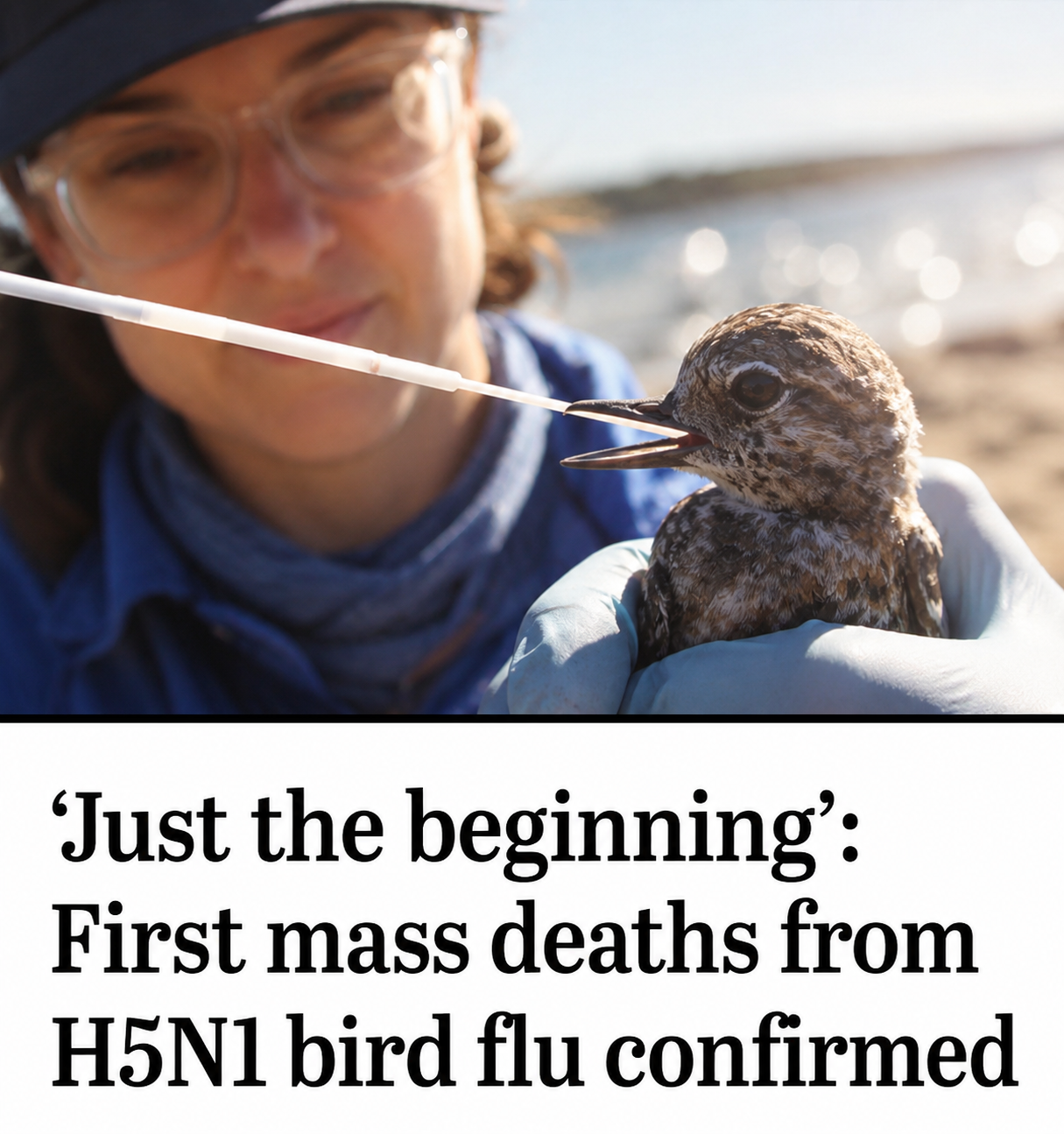
Federal authorities announced that a silver gull and dozens of greater crested terns found in South Australia had tested positive for the H5N1 strain of avian influenza, marking Australia’s first confirmed mass mortality event involving the virus since it reached the mainland.
The infected birds were discovered in Robe and at Baudin Rocks, off South Australia’s south-east coast, where wildlife officers have been monitoring bird colonies following growing concerns that the disease had established itself in native wildlife populations. The detections represent a significant escalation after Australia confirmed the arrival of H5N1 on the mainland earlier this year.
Agriculture Minister Julie Collins said the developments were deeply concerning but not unexpected, noting that overseas experience had shown widespread wildlife losses become almost inevitable once the virus establishes itself in wild bird populations.
“Sadly, we do know that once the H5 bird flu is spreading in wildlife, and the natural environment, it is not possible to avoid significant losses – which is what we are starting to see now,” Collins said.
She warned Australians should expect to witness increasing numbers of sick and dead wild birds as the outbreak expands across affected regions, while emphasising that the current risk to the general public remains low.
Environment Minister Murray Watt described the confirmed deaths as “just the beginning” of what could become a lengthy and difficult battle to protect Australia’s unique wildlife.
Authorities have begun expanding surveillance efforts across coastal ecosystems, with wildlife officers closely monitoring seabirds, seals, Australian sea lions and other marine mammals known to be susceptible to the virus.
Australia’s poultry industry is also on heightened alert.
Although the current detections involve wild animals, officials are preparing for the possibility that the virus could eventually reach commercial poultry operations, potentially requiring rapid quarantines, movement restrictions and mass culling to contain outbreaks.
Australia experienced a reminder of the industry’s vulnerability in 2024 when outbreaks of different avian influenza strains led to the destruction of approximately two million chickens, causing nationwide egg shortages and significant disruption to food supplies. However, authorities stress the current H5N1 outbreak is genetically different from the strains responsible for those earlier incidents.
The H5N1 clade currently circulating globally has already caused unprecedented losses overseas.
Since emerging as a worldwide wildlife threat, the virus has killed more than 300 million birds and other animals across multiple continents, devastating seabird colonies while spreading into mammals including seals, sea lions, foxes, dolphins, porpoises and otters.
The scale of international mortality has prompted scientists to describe the outbreak as the largest wildlife disease event ever recorded.
BirdLife Australia chief executive Kate Millar compared Australia’s latest detections with the arrival of H5N1 in South America during 2022.
Within months of first appearing there, the virus spread thousands of kilometres along coastlines, wiping out millions of seabirds and causing catastrophic losses among marine mammals.
Scientists fear Australia could experience a similar pattern as migratory seabirds continue moving around the country’s coastline.
BirdLife Australia’s Head of Science, Dr Michael MacDonald, said watching healthy seabird colonies collapse overseas had been among the most distressing experiences of his career.
Having previously worked with the Royal Society for the Protection of Birds in the United Kingdom during Britain’s H5N1 outbreaks, he recalled the overwhelming sense of helplessness as entire breeding colonies disappeared within weeks.
He said the priority now was reducing every additional pressure on vulnerable wildlife populations, because the virus itself cannot realistically be eliminated from wild ecosystems once established.
One of Australia’s leading conservation biologists, Professor John Woinarski, warned the disease could spread rapidly beyond coastal regions.
He said unusually heavy monsoonal rainfall had created extensive inland wetlands across central Australia, attracting large numbers of pelicans, ibis, gulls and waterfowl capable of transporting the virus deep into the Murray-Darling Basin and other inland waterways.
Such movements could expose numerous native bird species that have so far remained unaffected.
Professor Woinarski also warned Australia’s native mammals could face significant consequences.
Species including Tasmanian devils, quolls and potentially even platypuses may become infected after scavenging dead birds or coming into contact with contaminated environments.
Internationally, H5N1 has already demonstrated an ability to infect an unusually wide range of mammal species, increasing concerns that Australia’s unique fauna may prove especially vulnerable.
Officials have urged Australians to avoid any direct contact with sick, injured or dead birds.
Birds affected by H5N1 may show neurological symptoms, including difficulty standing, walking or flying, as well as respiratory distress, unusual behaviour, tremors or sudden death.
People who discover multiple dead birds in one location are encouraged to report the incident immediately to state agriculture or biosecurity authorities rather than attempting to remove carcasses themselves.
Authorities have also renewed longstanding advice against feeding wild birds.
BirdLife Australia said feeding species such as silver gulls, magpies and waterbirds encourages unnaturally large gatherings, increasing opportunities for the virus to spread rapidly between individuals.
Australia’s Chief Veterinary Officer, Dr Beth Cookson, similarly urged the public not to create situations where large numbers of wild birds congregate, warning that dense feeding sites can significantly accelerate transmission.
The Federal Government has committed approximately $113 million towards strengthening Australia’s preparedness and response to highly pathogenic avian influenza.
The funding includes enhanced surveillance, laboratory testing, emergency response planning, strengthened biosecurity measures for poultry farms and expanded feral animal control programs targeting foxes, feral cats and pigs, all of which may contribute to spreading disease or placing additional pressure on already stressed wildlife populations.
Conservation groups say those measures will become increasingly important as Australia enters the spring breeding season.
Large breeding colonies of seabirds and waterbirds provide ideal conditions for avian influenza to spread rapidly through thousands of closely nesting animals.
Jack Gough, Chief Executive of the Invasive Species Council, warned Australians should prepare themselves emotionally for confronting scenes similar to wildlife losses witnessed during the Black Summer bushfires and South Australia’s recent harmful algal bloom.
He said the outbreak would soon become impossible for most Australians to ignore as increasing numbers of sick and dead animals appeared in coastal communities.
Despite the growing impact on wildlife, health authorities continue to advise that the risk to the broader public remains low.
Human infections with H5N1 remain rare and generally occur only after prolonged, close contact with infected animals or contaminated environments.
Food safety authorities also continue to advise that properly cooked poultry products and eggs remain safe to consume.
For wildlife experts, however, the outlook is considerably more sobering.
While previous disease outbreaks have affected individual species or regions, H5N1 has demonstrated an unprecedented capacity to spread across continents, infect hundreds of animal species and persist within wild ecosystems.
As Australia confronts its first widespread mainland wildlife outbreak, scientists believe the country’s unique biodiversity now faces one of its greatest disease-related challenges in modern history, with the full ecological consequences unlikely to become clear for many months.






