One Nation leader Pauline Hanson is facing renewed criticism after excluding journalists from the ABC, The Guardian and The Age from a Melbourne press conference announcing the party’s first candidates for the 2026 Victorian state election, a move that has reignited debate about media access, political accountability and freedom of the press in Australia.
The event marked the official launch of One Nation’s Victorian election campaign and introduced the party’s initial slate of candidates, including newly appointed Victorian leader Warren Pickering. However, the campaign announcement was quickly overshadowed by controversy after it emerged that three major Australian news organisations had not been invited to attend.
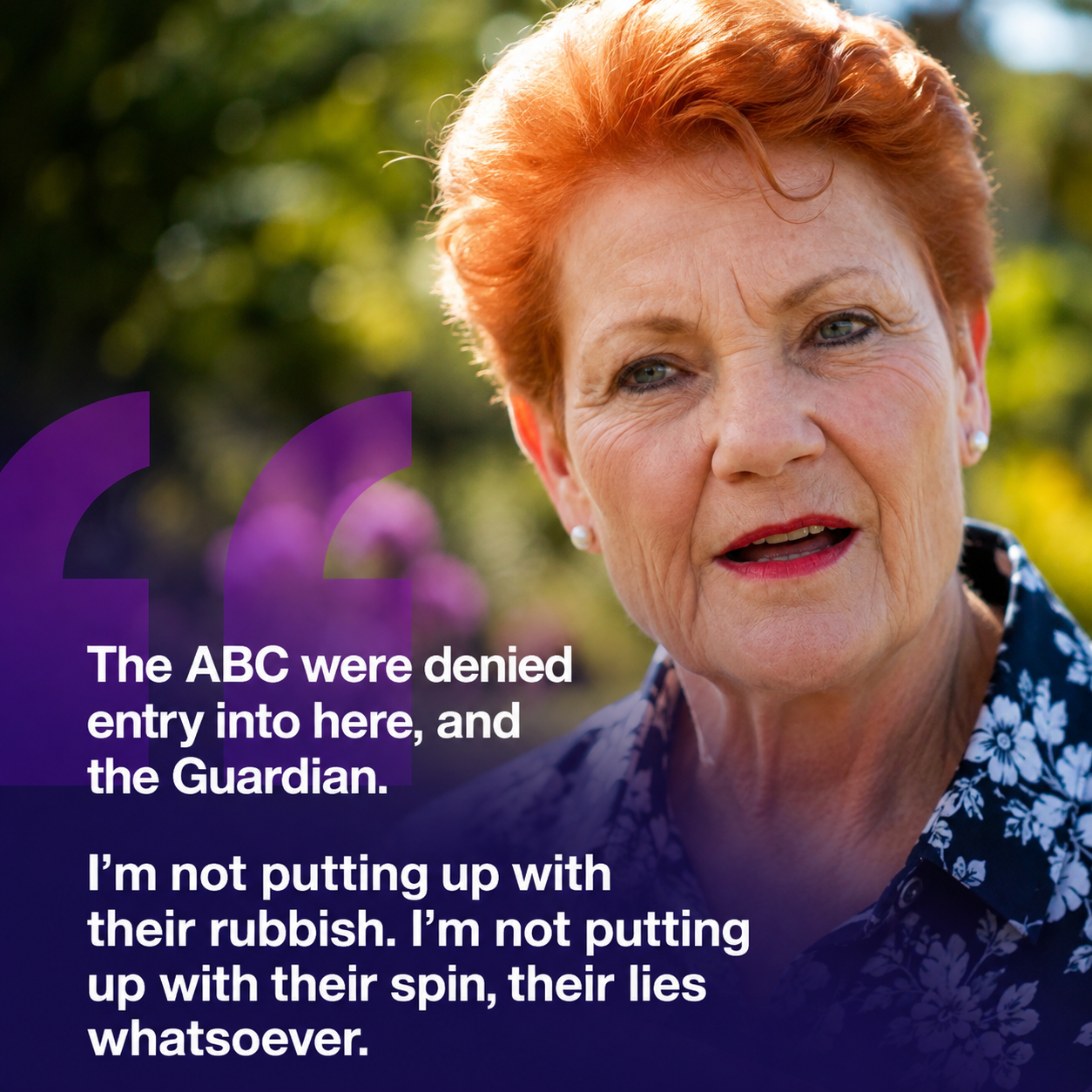
Speaking after the decision became public, Hanson defended the exclusion, arguing that the ABC, The Guardian and The Age had repeatedly demonstrated bias against her party and that she was no longer prepared to provide them with opportunities to attend her media events.
According to Hanson, the outlets had consistently misrepresented One Nation’s policies and positions, claiming their reporting was designed to create political narratives rather than fairly cover the party’s activities. She said she would instead engage with media organisations she believed reported more accurately on One Nation’s campaign.
The decision immediately drew condemnation from political opponents and media advocates.
Greens senator Sarah Hanson-Young accused Hanson of avoiding legitimate scrutiny, describing the One Nation leader as “running scared of scrutiny” and calling her a “political coward” for refusing to face questions from journalists whose reporting she disliked.
Hanson-Young argued that politicians seeking public office should expect robust questioning from all sections of the media rather than selecting which organisations are permitted to attend press conferences.
“If you want to govern, you need to be prepared to answer difficult questions,” she said in comments reported after the event.
The controversy comes as One Nation attempts to significantly expand its presence in Victorian politics ahead of the state election scheduled for November.
At the Melbourne launch, Hanson unveiled eight candidates who will contest seats across Victoria and confirmed that Warren Pickering would lead the party’s state campaign while contesting the lower house seat of Pakenham, one of Labor’s most marginal electorates.
Among the candidates announced were former Liberal Party member Colleen Harkin, Geelong councillor Chris Burson, current MP Rikkie-Lee Tyrrell, filmmaker Mark Nicholson, Fiona Lopez, Aaron Sandford and Natalie Adams, as One Nation seeks to capitalise on dissatisfaction with both major parties.
During the campaign launch, Hanson criticised the Allan Labor Government over crime, education, infrastructure spending and regional services, promising that One Nation would campaign heavily on law and order, government accountability and cost-of-living pressures.
She also flagged further policy announcements in the months leading up to polling day, including proposals targeting government spending and major infrastructure projects.
While the policy announcements received attention, the media ban rapidly became the dominant political story surrounding the event.
Journalists from the excluded organisations reported they had not been informed of the time or location of the press conference, effectively preventing them from attending.
Asked whether all media outlets should have access to campaign events in a democratic system, Hanson responded that she did not believe the ABC treated One Nation fairly and maintained that the broadcaster had demonstrated ongoing hostility towards her party.
The dispute is not the first confrontation between Hanson and sections of the Australian media.
In June, during her first address to the National Press Club, Hanson launched a personal attack on The Guardian‘s senior political reporter Sarah Martin after being questioned about the employment of her daughter within the party.
Hanson described the journalist as “trashy” and warned she would no longer grant her interviews, while also signalling that both The Guardian and the ABC could be excluded from future One Nation events.
That confrontation prompted criticism from the Media, Entertainment and Arts Alliance, which described the comments as an attack on press freedom, while politicians from both Labor and the Coalition argued that elected representatives should be willing to answer questions from all accredited media organisations regardless of editorial differences.
Media access has increasingly become a political issue in Australia as parties exercise greater control over campaign events, social media messaging and direct communication with supporters.
Political parties are generally entitled to determine who attends privately organised campaign events, but critics argue that excluding major news organisations from official campaign announcements reduces opportunities for public scrutiny and weakens democratic accountability.
Supporters of Hanson, meanwhile, argue that political parties are under no obligation to provide access to media outlets they believe have consistently reported unfairly on their activities.
The latest dispute has also intensified discussion about One Nation’s campaign strategy in Victoria.
Recent polling has suggested the party hopes to expand its representation beyond the crossbench, with Hanson repeatedly stating that voters frustrated by Labor and the Liberal-National Coalition are increasingly willing to consider alternative parties.
The appointment of Warren Pickering as Victorian leader forms part of that strategy, with the party aiming to field candidates across the state rather than concentrating solely on upper house contests.
Outside the Melbourne launch, protesters gathered to demonstrate against Hanson and One Nation, resulting in a visible police presence around both the daytime press conference and an evening fundraising event.
The protests reflected the polarising role Hanson continues to occupy in Australian politics nearly three decades after first entering federal Parliament.
Throughout her political career, Hanson has remained one of Australia’s most recognisable and controversial political figures, regularly attracting both passionate supporters and equally vocal critics over issues including immigration, multiculturalism, Indigenous affairs and national identity.
In recent months, her political activities have continued to generate headlines, including speeches on immigration policy, overseas appearances and renewed debate surrounding One Nation’s broader platform.
Whether the decision to exclude selected media organisations proves politically beneficial remains uncertain.
Supporters argue the move reinforces One Nation’s long-standing message that sections of the mainstream media are hostile towards the party.
Critics, however, contend that refusing access to journalists undermines public confidence by limiting opportunities for independent questioning and transparent reporting.
As Victoria’s election campaign gathers momentum, the dispute is likely to remain part of the broader conversation surrounding One Nation’s bid to increase its parliamentary representation, with questions over media access now becoming almost as prominent as the policies the party hopes to promote.






