The founders of Australian country clothing brand Ringers Western have publicly declared their support for Pauline Hanson and One Nation, delivering a blunt critique of Australia’s immigration settings, rising government debt and what they describe as increasing political correctness.
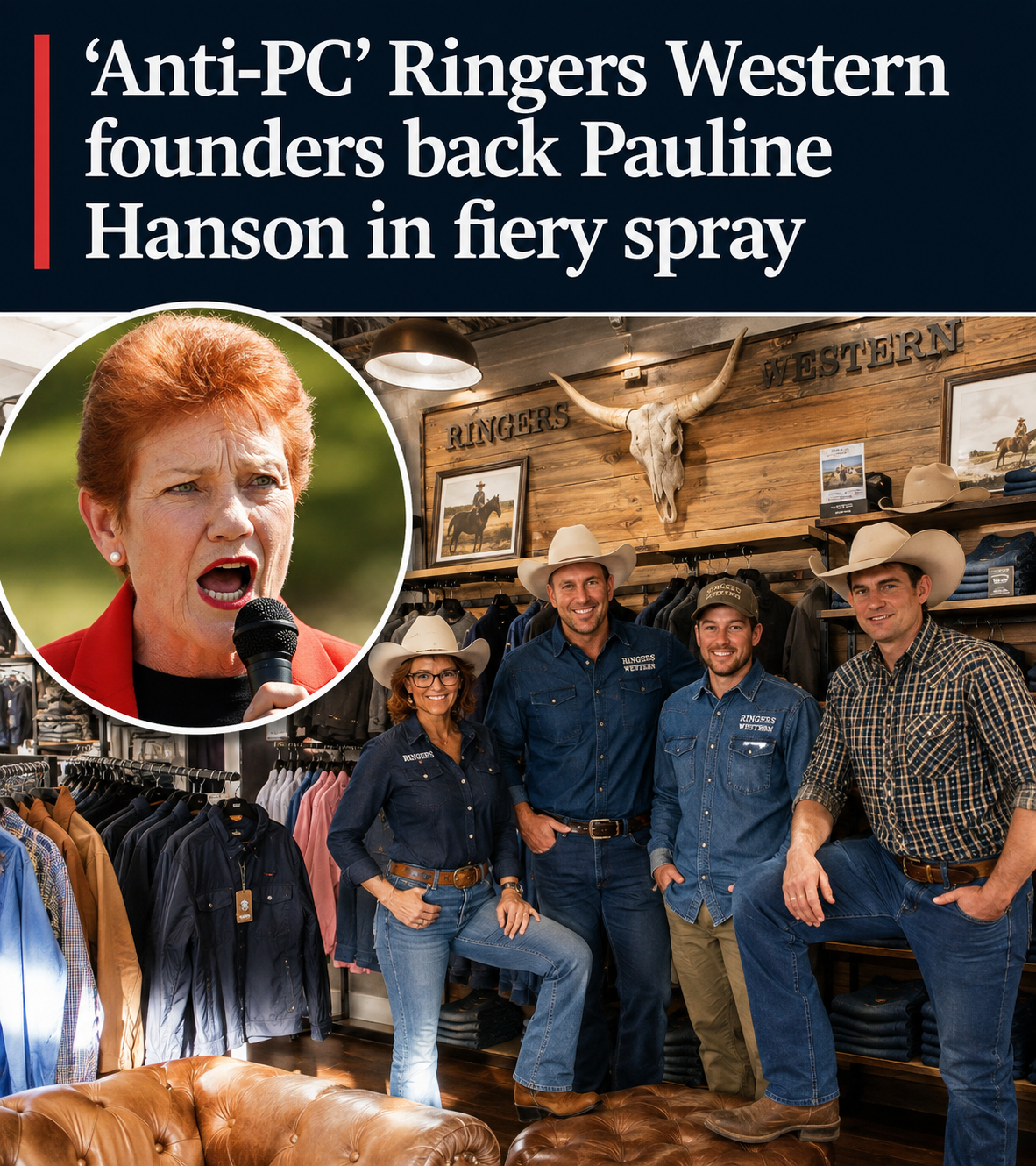
The comments have attracted widespread attention because Ringers Western has grown from a family-operated Queensland business into one of Australia’s best-known rural lifestyle brands, with a strong following among farmers, tradies, regional communities and country Australians.
Rather than limiting themselves to business matters, the founders used their platform to voice support for One Nation leader Pauline Hanson while criticising several directions they believe Australia has taken in recent years.
Their remarks focused heavily on immigration levels, government spending, national debt and debates surrounding transgender policies—issues that have become central themes in Australia’s increasingly polarised political landscape.
While some supporters praised the founders for speaking openly, others questioned whether business leaders should publicly align themselves with political parties.
The intervention comes at a time when Pauline Hanson and One Nation have experienced renewed political momentum, with immigration, housing affordability and cost-of-living pressures dominating national debate ahead of future elections. Recent polling and campaign activity have seen the party continue to position itself as an alternative to both Labor and the Coalition on these issues.
According to the founders, Australia has moved too far away from what they regard as common-sense policies. They argued that large-scale migration has placed increasing pressure on housing, infrastructure and essential public services while government debt continues to climb.
They also criticised what they described as an increasingly restrictive political culture, saying Australians should be able to discuss controversial issues without fear of being labelled or silenced.
Those themes closely mirror several longstanding positions promoted by Pauline Hanson’s One Nation, particularly regarding migration levels, national identity and government spending. The party has consistently argued that immigration should be substantially reduced while prioritising Australian citizens in economic and social policy.
Immigration has become one of the defining political issues in Australia over the past several years. Population growth, record overseas migration following the pandemic, housing shortages and pressure on rental markets have intensified public discussion about whether current migration settings remain sustainable.
Supporters of lower migration argue that reducing intake would ease pressure on housing supply, transport networks and public infrastructure.
Others contend that skilled migration remains essential to addressing workforce shortages across healthcare, construction, agriculture and many other sectors of the economy.
Economists generally note that migration contributes to long-term economic growth while also acknowledging that rapid population growth can place short-term pressure on housing and infrastructure if supply fails to keep pace.
The founders’ criticism also extended to government debt and public spending.
Australia’s gross public debt increased substantially during the COVID-19 pandemic as governments introduced large-scale economic support measures. While many economists viewed those measures as necessary to prevent deeper recession, debate has continued over how quickly governments should return budgets to stronger fiscal positions.
One Nation has regularly argued for tighter government spending, lower public debt and reduced bureaucracy, presenting those policies alongside calls for tax reform and changes to immigration settings.
The founders additionally criticised transgender policies, another issue that has become increasingly prominent within Australian political debate.
Questions surrounding participation in women’s sport, education policy and government recognition of gender identity have divided political parties, advocacy groups and sections of the public.
Pauline Hanson has repeatedly argued that biological sex should remain central to policies affecting women’s spaces and sporting competitions, making the issue one of several cultural debates regularly highlighted by One Nation.
The comments from the Ringers Western founders reflect a broader trend in which high-profile business owners and public figures have become increasingly willing to express political opinions openly rather than remaining publicly neutral.
Some supporters argue that business leaders have every right to participate in democratic debate as private citizens.
Critics counter that companies with diverse customer bases risk alienating consumers when they publicly endorse political parties or controversial policy positions.
Australia has witnessed similar debates in recent years as major companies and sporting organisations have taken positions on constitutional recognition, Indigenous issues, climate policy, diversity initiatives and social reforms.
Supporters of the founders praised what they described as honesty and a willingness to challenge prevailing political narratives.
Others argued that Australia’s complex policy challenges cannot be reduced to slogans and that immigration, economic management and social issues require more nuanced discussion.
The debate also reflects broader shifts occurring across Western democracies, where culture-war issues increasingly influence voting behaviour alongside traditional concerns such as employment, taxation and healthcare.
For Pauline Hanson, endorsements from recognisable figures outside formal politics can help reinforce her party’s appeal among regional and conservative voters who feel their concerns have been overlooked by the major parties.
However, political endorsements from prominent business figures can also energise critics and attract increased scrutiny of both the individuals involved and the companies they represent.
One Nation has recently intensified campaigning around immigration, crime, government spending, housing affordability and national identity as it seeks to expand its parliamentary representation. Hanson has also continued to argue for significant reductions in migration while promoting policies she says place Australians first.
Whether the Ringers Western founders’ endorsement influences voters remains uncertain, but it demonstrates how debates over immigration, national identity and cultural issues continue to move beyond Parliament into Australian business and public life.
As Australia approaches future electoral contests, questions surrounding migration, economic management, housing affordability and social policy appear likely to remain central to national political discussion—ensuring that outspoken interventions from high-profile Australians will continue attracting significant public attention.






