Liberal deputy leader Jane Hume has firmly rejected suggestions that the Liberal Party could one day enter a formal coalition with Pauline Hanson’s One Nation, declaring there are “no plans” and “no intention” for such an arrangement despite recent comments from several senior Coalition figures that prompted renewed political speculation.
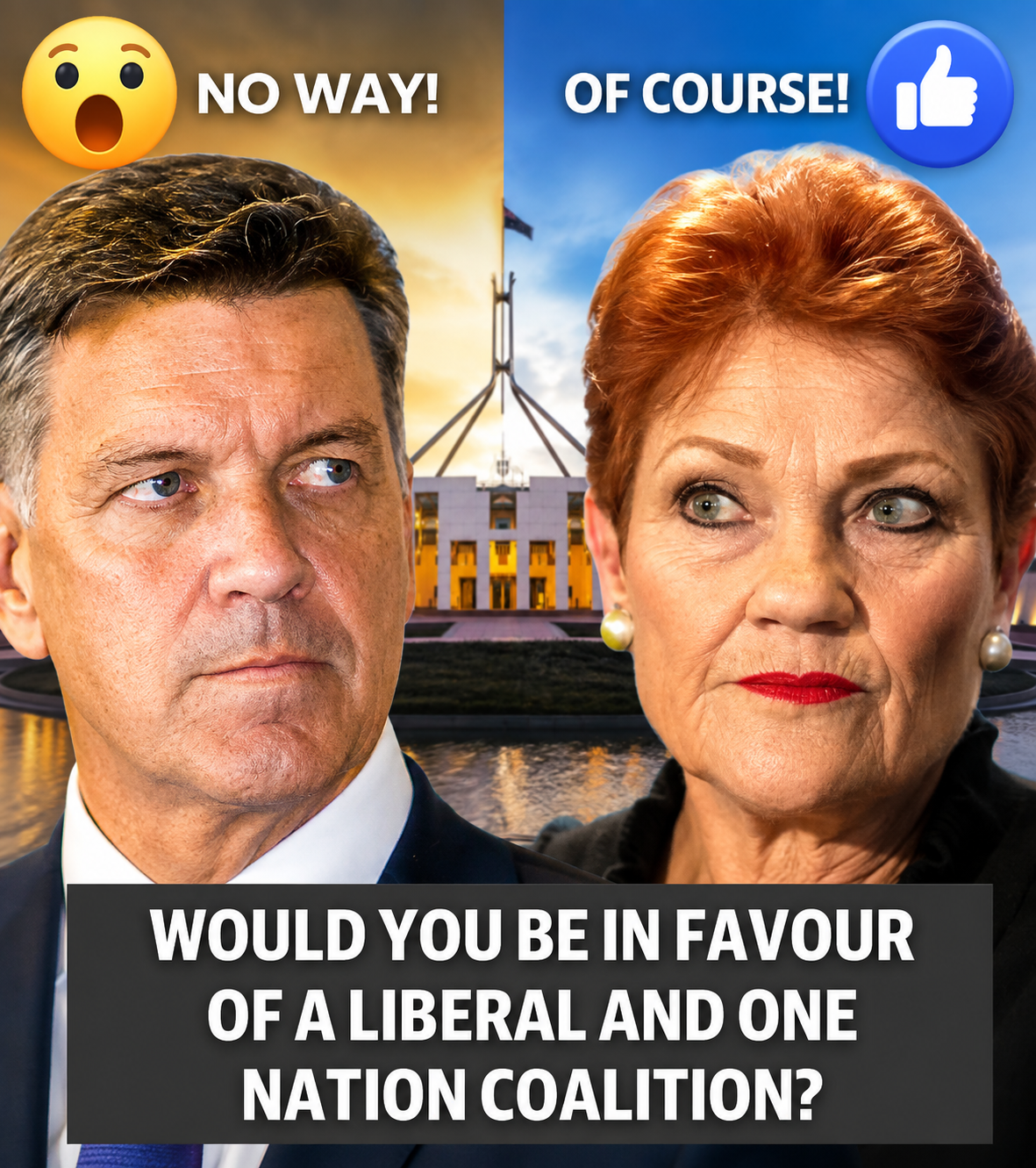
Appearing on ABC’s Insiders, Senator Hume repeatedly dismissed the prospect of a Liberal–One Nation coalition, stressing that the Coalition’s longstanding partnership with the National Party remained unchanged.
“No, no, we will not be governing in coalition with One Nation,” Senator Hume said.
“We are not forming a coalition with One Nation. I think we couldn’t be any clearer than that.”
She emphasised that the Liberal Party was already part of Australia’s long-established Liberal–National Coalition, describing that relationship as the foundation of conservative government for decades.
“That coalition has been a foundation of very successful governments for 80 years now, and it will continue to be so,” she said.
Her comments were widely interpreted as an attempt to clarify the Opposition’s position after several Coalition figures appeared less definitive when questioned about future parliamentary arrangements involving One Nation.
The renewed debate began earlier in the week after Liberal frontbencher Andrew Bragg was asked whether the Coalition would consider working with Pauline Hanson’s party if post-election numbers required additional parliamentary support.
Initially dismissing the question as premature, Senator Bragg said any decision would depend on the political landscape after the next federal election.
“We’ll work out if there needs to be a coalition, we’d work it out then,” he said during an interview on the Today program.
When pressed on whether he was leaving the possibility open, Bragg replied that the Coalition would consider “whoever would be interested in being in a coalition with us, if that’s what the numbers were.”
Those remarks immediately generated speculation that sections of the Liberal Party might be reconsidering their relationship with One Nation following the party’s recent electoral gains and improving polling.
Although Senator Hume sought to close down that discussion, interviewers continued questioning whether a future minority parliament could force the Coalition to rely on One Nation’s support even without forming a formal coalition agreement.
Hume repeatedly described those questions as hypothetical, noting that Australia is not expected to hold another federal election for at least 18 months.
“Governments have formed minority governments in the past with all sorts of parties,” she said.
“Our intention is to win outright, and we do that by making sure that we present a credible plan and a credible team to deliver that plan.”
When asked again whether the Coalition would accept parliamentary support from One Nation in a hung parliament, Hume avoided directly answering the scenario, instead returning to the distinction between minority support agreements and a formal coalition.
“I’ve said that we have no plans, no intention … to have a coalition with One Nation.”
“That is our commitment.”
“We are already in coalition. We plan to govern as a Liberal–National coalition.”
The exchange highlighted an important constitutional distinction within Australian politics.
A formal coalition involves parties jointly forming government, sharing Cabinet positions and agreeing on a common governing platform.
By contrast, minority governments can remain in office through confidence-and-supply arrangements or issue-by-issue parliamentary support from crossbench members or minor parties without entering a formal coalition agreement.
That distinction has become increasingly relevant as Australia’s political landscape has become more fragmented over the past two decades.
Federal elections have produced a growing number of crossbench MPs and senators, making negotiations with minor parties increasingly significant in both houses of Parliament.
One Nation has benefited from that trend.
Founded by Pauline Hanson in 1997, the party has traditionally campaigned on reducing immigration, lowering government spending, supporting regional Australia and adopting tougher positions on crime and national identity.
Recent polling has suggested the party has strengthened its support in several parts of regional Australia, placing additional pressure on the Coalition in conservative electorates.
That improved polling has inevitably prompted questions about whether closer cooperation between the Coalition and One Nation could emerge after the next election if neither major political bloc secures a parliamentary majority.
For Liberal strategists, however, the issue remains politically sensitive.
While some conservative voters support stronger cooperation with One Nation, others within the Liberal Party argue that any formal alliance could alienate moderate supporters in metropolitan electorates.
Hume’s intervention therefore appeared designed to reassure both internal party members and the broader electorate that the Liberal Party has not changed its longstanding position regarding formal coalition arrangements.
Her remarks also reinforced the Coalition’s continuing commitment to its partnership with the National Party, which has existed in various forms at the federal level since the 1920s and remains Australia’s longest-running political alliance.
Despite Hume’s categorical rejection of a coalition with One Nation, questions about future parliamentary cooperation have not disappeared entirely.
They continue to arise because Australia’s electoral system can produce minority governments where formal coalition agreements are unnecessary but parliamentary support from crossbench parties may still become politically important.
Another senior Coalition figure also contributed to the discussion over the weekend.
Speaking earlier on Sunday, frontbencher Dan Tehan declined to categorically rule out accepting parliamentary support from One Nation in the event of a hung parliament, arguing that the composition of the next House of Representatives could not be predicted in advance.
Asked whether he would simply reject any support from Pauline Hanson’s party, Tehan responded that Australians would ultimately determine the makeup of the next parliament through the election.
“Who knows what the Australian people will present when it comes to a parliament,” he said, noting that minority governments have previously relied on support from parties outside formal governing coalitions.
His comments were interpreted by some observers as leaving open the possibility of parliamentary cooperation with One Nation under certain circumstances, even if no formal coalition agreement were ever negotiated.
The remarks followed similar comments from Opposition Leader Angus Taylor earlier this year.
Taylor initially appeared reluctant to completely dismiss the prospect of future cooperation with One Nation while the party’s polling numbers were climbing sharply and the Coalition faced increasing pressure in several conservative electorates.
More recently, however, Taylor has sharpened his criticism of One Nation as opinion polling suggested the party’s rapid surge had begun to stabilise in some parts of the country.
The changing rhetoric reflects the difficult political balancing act confronting the Coalition.
On one hand, Liberal strategists are attempting to regain conservative voters who have shifted toward One Nation on issues such as immigration, cost-of-living pressures, energy policy and national identity.
On the other hand, senior Liberals remain conscious that any perception of moving too close to Pauline Hanson’s party could undermine support among moderate voters in metropolitan electorates that are essential to winning government.
That strategic tension has become more pronounced as Australia’s political landscape has become increasingly fragmented.
Both major parties have faced growing competition from minor parties and independents, reducing the likelihood that either Labor or the Coalition will consistently secure comfortable parliamentary majorities without negotiating with crossbench members.
Political analysts have noted that while formal coalitions remain relatively rare outside the longstanding Liberal–National partnership, minority governments supported by independents or smaller parties have become an increasingly familiar feature of Australian politics at both federal and state levels.
For that reason, questions about confidence-and-supply agreements and crossbench support have become more common whenever opinion polls suggest neither major bloc may secure an outright majority.
Senator Hume nevertheless insisted the Coalition’s objective remained straightforward.
Rather than planning for minority government negotiations, she said the Opposition’s focus was on presenting policies capable of winning a parliamentary majority in its own right.
That position also aligns with the Coalition’s longstanding public message that its governing partnership remains exclusively between the Liberal Party and the National Party.
Pauline Hanson, meanwhile, has previously indicated that One Nation is not actively pursuing a formal coalition agreement with the Coalition.
However, she has also made clear that she would not necessarily oppose discussions should political circumstances after a future election make them relevant.
Those comments have continued to fuel speculation whenever polling indicates One Nation could hold the balance of power in either chamber of Parliament.
Although Senator Hume’s emphatic rejection was intended to settle the issue, political observers note that Australia’s parliamentary system often requires parties to distinguish between a formal governing coalition, confidence-and-supply agreements and issue-by-issue legislative cooperation.
Those arrangements carry different constitutional and political implications, even though they are frequently discussed together during election campaigns.
As campaigning gradually intensifies ahead of the next federal election, questions surrounding the Coalition’s relationship with One Nation are likely to remain under close scrutiny, particularly if opinion polls continue to show strong support for Pauline Hanson’s party among conservative voters.
For now, however, the Liberal Party’s official position remains unchanged.
Jane Hume has stated repeatedly that the Coalition intends to contest the election as the established Liberal–National partnership and has no intention of entering a formal coalition with One Nation, despite continuing questions over what parliamentary arithmetic may require if Australia again produces a closely divided parliament.






