An African-born man convicted of sexually abusing a three-year-old boy has been allowed to remain in Australia after the Administrative Review Tribunal (ART) ruled that deporting him to Zambia would cause significant hardship, despite acknowledging the seriousness of his criminal history.
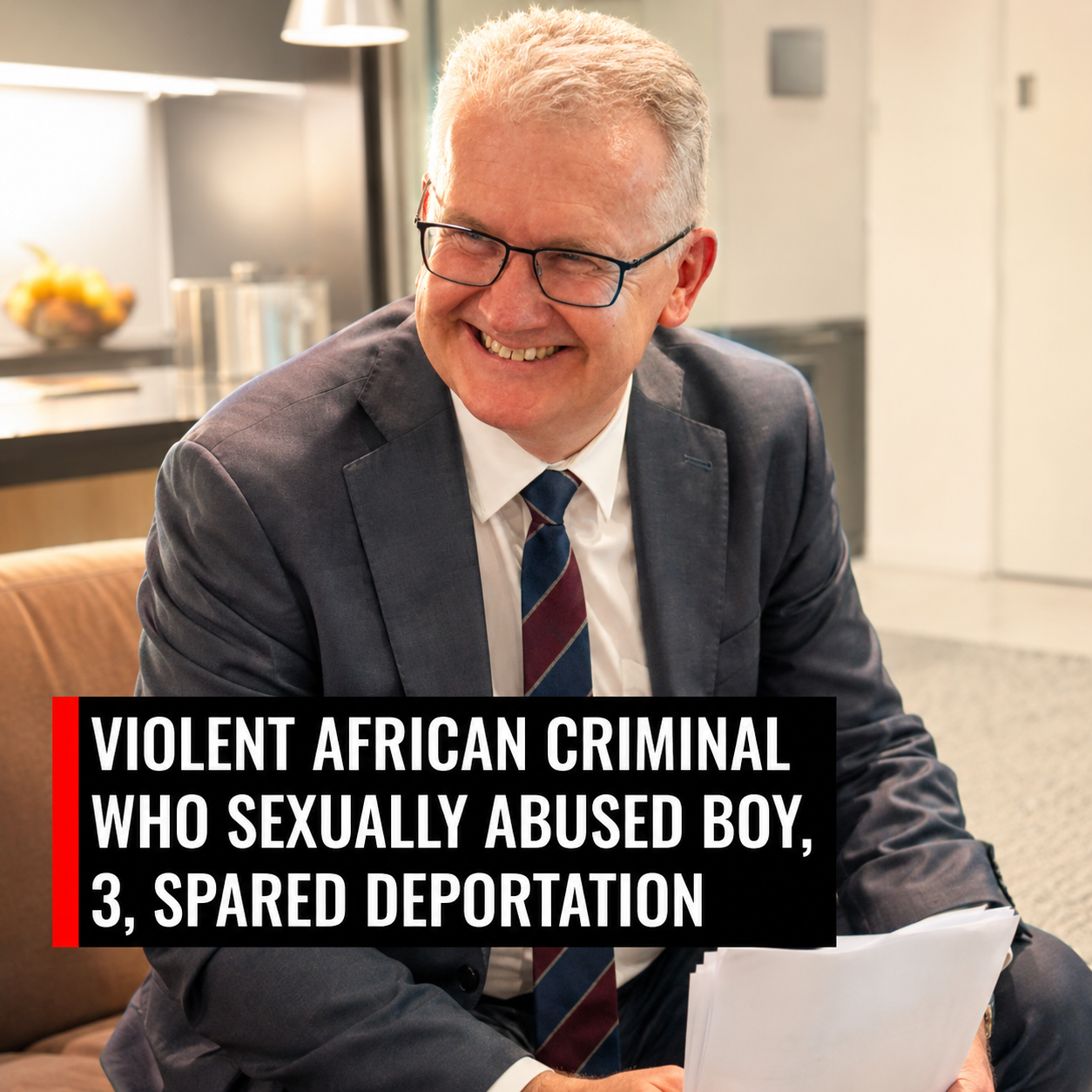
The 42-year-old, identified only as SNZZ for legal reasons, had his partner visa cancelled in May after failing Australia’s character test. However, the tribunal overturned that decision last week after weighing a range of factors required under Ministerial Direction 110, the migration direction issued by Immigration Minister Tony Burke that governs how visa cancellation appeals are assessed.
The ruling has renewed debate over Australia’s deportation laws, particularly after a series of recent tribunal decisions in which non-citizens convicted of serious offences have successfully challenged visa cancellations under the same policy framework.
According to the tribunal decision, SNZZ first arrived in Australia in 2004 on a student visa to study nursing. Although he never completed his studies and accumulated an extensive criminal record over the following two decades, he was later granted a partner visa in 2011 through sponsorship by his then-wife.
His criminal offending escalated over many years. The tribunal heard he accumulated almost 100 criminal convictions, including offences involving child sexual abuse, domestic violence, assault, threats of violence, drink driving and other criminal conduct.
Among the most serious offences was his 2007 conviction on two counts of indecent dealing with a child under 13 after sexually abusing a three-year-old boy. Despite the gravity of the offending, he received a 12-month community-based order rather than imprisonment.
Several years later, in 2012, he was convicted after threatening to behead his former wife’s partner while carrying a machete. The court imposed a suspended sentence.
In 2020, he was again convicted, this time for assaulting a sleeping partner during a domestic violence incident while intoxicated. He was fined $750.
The tribunal also heard that after losing his driver’s licence following a drink-driving crash in 2014, SNZZ became homeless for approximately nine years while continuing to accumulate criminal convictions. Despite his extensive offending, he reportedly spent little or no time in prison before his visa cancellation.
When considering whether the visa cancellation should stand, ART General Member Fraser Robertson concluded that SNZZ clearly failed Australia’s character test and accepted that his child sexual abuse conviction was a serious offence.
The tribunal further found that several primary considerations under Direction 110—including protecting the Australian community, community expectations and family violence considerations—all favoured cancelling the visa.
However, the tribunal determined that other factors ultimately outweighed those concerns.
In particular, the decision noted that the child sexual abuse offence occurred more than 20 years ago and had not been repeated. Evidence before the tribunal indicated that SNZZ was currently assessed as presenting a low risk of committing further sexual offences.
Mr Robertson therefore concluded that the level of protection presently required by the community was relatively limited.
The tribunal also examined the practical consequences of deportation.
It accepted that SNZZ would face considerable hardship if returned to Zambia, where he reportedly has few remaining family or community connections after spending more than two decades living in Australia.
The decision stated that he would likely struggle to obtain appropriate treatment for post-traumatic stress disorder (PTSD), alcoholism and other mental health issues if removed from Australia.
According to the tribunal, these obstacles represented significant impediments to his successful reintegration into Zambia.
Another major consideration involved his children.
The tribunal found that SNZZ has four children who are minors. Although evidence indicated he has had only limited contact with them for many years—and that several are in foster care while another lives with his mother—the tribunal concluded that cancelling his visa would nevertheless be contrary to their best interests.
The youngest child, an 11-year-old daughter currently in state care, reportedly has little relationship with her father. The tribunal heard that SNZZ admitted he did not know her surname.
Despite these circumstances, the tribunal concluded that maintaining the possibility of future parental involvement weighed against deportation.
Summarising the competing considerations, Mr Robertson wrote that the arguments supporting cancellation were anchored largely in historical offending and a risk that had since diminished, whereas the humanitarian considerations—including hardship on return and impacts on the man’s children—were current and substantial.
As a result, the tribunal exercised its discretion to restore the visa.
The decision has once again focused attention on Ministerial Direction 110, which has been politically contentious since it replaced the previous migration direction in 2023 and remained in force throughout 2024 and beyond.
Direction 110 requires decision-makers to consider multiple factors when reviewing visa cancellations. These include protection of the Australian community, community expectations, family violence, the best interests of minor children, a person’s ties to Australia, legal consequences of removal and the practical impediments they may face if deported.
Critics argue the framework gives excessive weight to humanitarian considerations in cases involving serious criminal offenders.
Supporters, however, contend the direction simply requires tribunals to undertake an individual assessment balancing public safety with Australia’s legal obligations and humanitarian principles.
The SNZZ case is not the first controversial decision under Direction 110.
Earlier this year, the ART restored visas for several other non-citizens with significant criminal histories after applying the same legal framework. Those decisions have generated ongoing political debate over whether the migration system appropriately reflects community expectations regarding serious offenders.
Under Australia’s Migration Act, Immigration Minister Tony Burke retains personal powers to intervene in individual cases and cancel visas directly in circumstances considered appropriate. Decisions personally made by the minister cannot generally be reviewed by the Administrative Review Tribunal.
The minister has exercised those personal powers in several high-profile matters, illustrating the distinction between ordinary tribunal reviews conducted under Direction 110 and direct ministerial intervention available under migration law.
The latest ruling is likely to add further pressure on the federal government as debate continues over whether Direction 110 appropriately balances public safety, rehabilitation, Australia’s international obligations and the rights of long-term residents with extensive criminal histories.
For now, the tribunal’s decision means SNZZ will remain in Australia unless further action is taken under the minister’s personal intervention powers or through other available legal mechanisms.






