One Nation leader Pauline Hanson has formally declared that Australia’s richest woman, mining billionaire Gina Rinehart, paid for several flights during her recent European trip, ending weeks of speculation over who funded parts of the controversial overseas visit.
The declaration, lodged on the Senate register of interests, confirms Rinehart covered multiple flights between London, Rome and Sicily, as well as Hanson’s tickets to the Dolce & Gabbana fashion shows held on July 13 and 14.
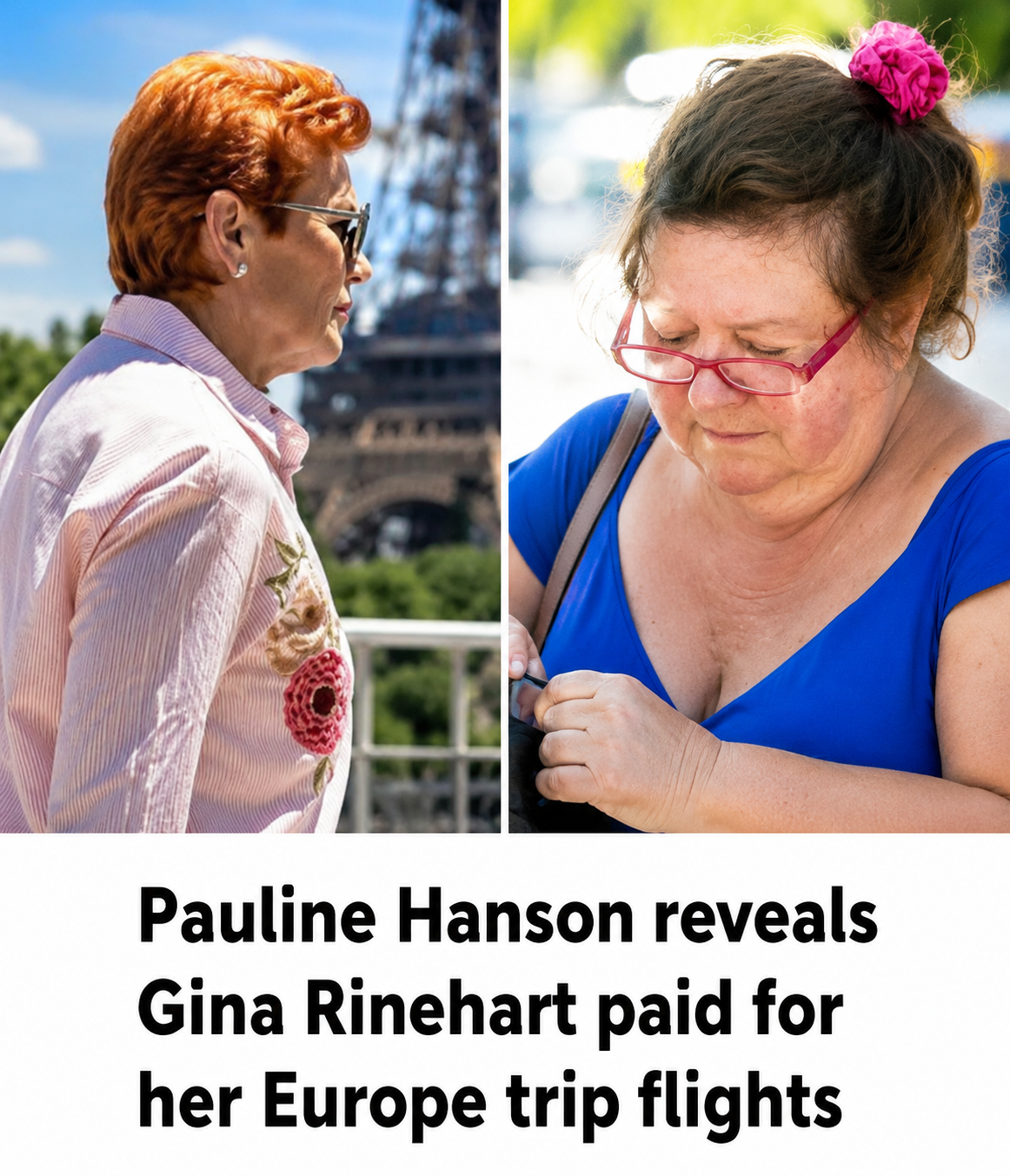
Hanson stressed that while Rinehart assisted with transportation and event access, she personally paid for her accommodation, meals and everyday expenses throughout the trip.
The disclosure follows widespread public attention after photographs emerged showing Hanson and Rinehart together beside a swimming pool at the luxury Grand Hotel San Pietro in Taormina, Sicily. The coastal resort town has become internationally recognised in recent years after featuring in the television series The White Lotus.
When the images first surfaced, questions were immediately raised about whether the mining magnate had financed Hanson’s European itinerary.
At the time, the Queensland senator declined to provide detailed financial information, saying only that she appreciated Rinehart’s support and would disclose any gifts in accordance with parliamentary rules.
That formal declaration has now been made, providing greater clarity about the extent of Rinehart’s financial assistance.
Under the parliamentary disclosure system, federal MPs and senators are required to declare certain gifts, sponsored travel and financial interests to promote transparency and allow the public to understand relationships that could potentially influence public office.
Although the declaration confirms Rinehart funded several travel expenses, Hanson maintains Australian taxpayers did not contribute to the overseas trip.
“It didn’t cost the taxpayer one cent for my trip overseas. Not one cent,” Hanson said after returning to Australia.
She also emphasised that accommodation, food and other personal expenses were paid from her own funds.
That statement has attracted attention because rooms at the five-star Grand Hotel San Pietro can cost well over €850 (around A$1,300) per night during the European summer season.
It remains unclear whether Hanson stayed at the luxury hotel for the duration of her visit or simply met Rinehart there while staying elsewhere.
The trip generated significant political debate well before the financial disclosures were released.
During her time in Europe, Hanson attended a conservative political conference, appeared on a podcast hosted by British far-right activist Tommy Robinson and unexpectedly appeared at a Dolce & Gabbana fashion event in Italy.
Her interview with Robinson, whose real name is Stephen Yaxley-Lennon, drew widespread criticism in Australia after Hanson made comments about immigration policy and Australia’s historical White Australia policy.
Critics argued her remarks appeared to suggest Australia’s migration challenges began after the dismantling of the White Australia policy during the second half of the twentieth century.
Hanson later rejected suggestions that she supports the White Australia policy, saying those interpretations misrepresented her position.
Supporters, including members of her party and political allies, have also insisted she does not advocate for the former policy, which historically restricted non-European immigration into Australia before being progressively dismantled from the late 1940s and formally abandoned during the 1970s.
Another element of Hanson’s European itinerary involved travelling to the English town of Luton alongside Robinson, where they spoke with local residents about immigration and social issues.
The visit formed part of what Hanson described as a “fact-finding mission” aimed at examining migration policies and their social impacts.
Her overseas activities prompted criticism from political opponents and community organisations, while supporters argued the senator was entitled to examine policy issues internationally.
The latest disclosure also highlights the close relationship that has developed between Hanson and Rinehart over recent years.
Hanson has repeatedly acknowledged receiving financial support from the mining billionaire through donations and other declared assistance.
Earlier this year, Hanson disclosed that Rinehart had provided a light aircraft valued at approximately $2 million as well as $2 million in cash support.
She has consistently argued those donations have been fully disclosed in accordance with parliamentary requirements.
“Everything’s declared, and I really appreciate all that,” Hanson said while defending the relationship.
She also argued major political parties routinely receive substantial financial backing from corporations, business interests and wealthy individuals without attracting the same level of public scrutiny.
“I’m not going to apologise for that because for years, the major political parties have been getting millions and millions and millions out of other organisations, corporations, banks, you name it,” Hanson said.
Parliamentary records also indicate Rinehart has made her private aircraft available to Hanson on several occasions since December last year, including interstate travel within Australia and one previous overseas journey to Florida.
The senator has maintained that each instance has been properly declared through the parliamentary register.
Questions have also been raised about whether any part of the European trip was funded using money raised through One Nation’s campaign opposing Prime Minister Anthony Albanese.
Hanson has not publicly detailed whether any campaign funds contributed to the travel, and the latest parliamentary disclosure addresses only gifts and benefits provided by Rinehart.
The issue arrives during a period of heightened scrutiny over political donations, sponsored travel and transparency across Australian politics.
Disclosure requirements are designed to ensure elected representatives publicly record gifts, sponsored travel and financial interests that exceed reporting thresholds, allowing voters to assess potential conflicts of interest.
Political donations themselves remain lawful in Australia provided they comply with federal and state electoral laws, while sponsored travel and gifts must also be declared where parliamentary rules require.
The relationship between Hanson and Rinehart has attracted particular attention because both are influential voices on issues including energy policy, mining, regional development and opposition to a number of Labor government policies.
Despite ongoing criticism from opponents, Hanson has continued to defend the support she has received from Australia’s richest woman, describing Rinehart as “a very proud, patriotic Australian” whose backing reflects shared political values rather than any improper influence.
With the latest declaration now publicly available, questions surrounding who funded key parts of Hanson’s European itinerary have largely been answered, although debate over the political implications of such high-profile financial support is likely to continue both inside and outside Parliament.






