The extraordinary leadership turmoil that has reshaped Victorian politics has prompted renewed scrutiny of the state’s economic direction, fiscal position and political future, with broadcaster Michael McLaren arguing the events of the past two days should serve as a warning for governments across Australia.
Following the resignation of Jacinta Allan as Premier and the rapid elevation of Ben Carroll to Victoria’s top political office, McLaren said the leadership change should not distract from what he believes are the deeper problems confronting the state.
Rather than viewing the political drama as an isolated leadership dispute, he argued it reflected years of policy decisions that have steadily weakened Victoria’s economic position, damaged business confidence and contributed to growing public dissatisfaction ahead of the November state election.
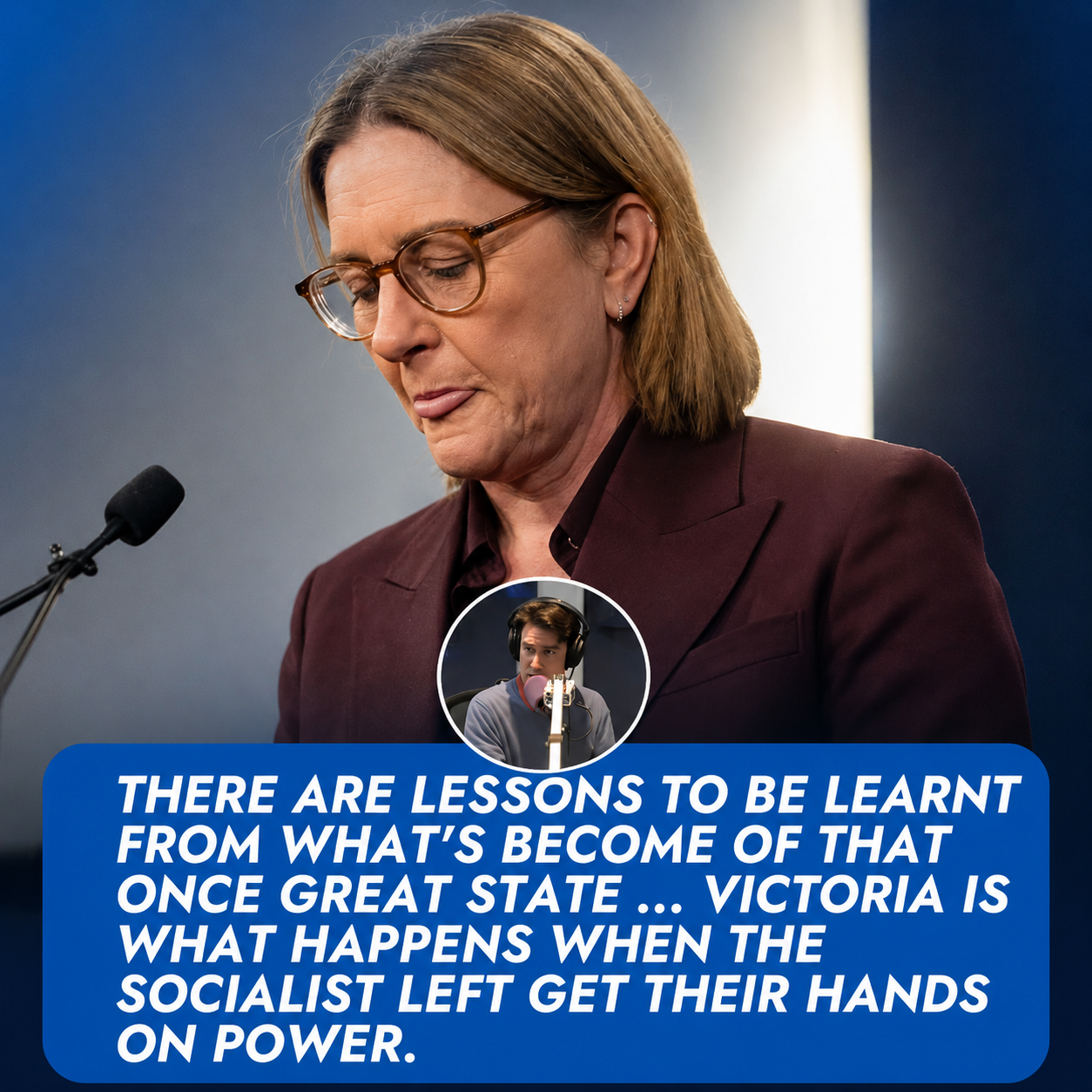
Speaking after the dramatic change of leadership within the Victorian Labor Party, McLaren reflected on the broader legacy of the state’s recent political history.
He argued that the events unfolding in Melbourne represented far more than a routine change of premier, describing them instead as the culmination of years of mounting economic pressure, political instability and declining public confidence.
“The last 48 hours in Victorian politics should be a reminder for the rest of the country about what not to do,” McLaren said during his commentary.
His criticism extended well beyond the leadership contest itself.
McLaren claimed Victoria’s current challenges were the consequence of governments that had, in his view, failed to balance economic growth with increasing public expenditure while allowing major infrastructure projects to expand dramatically in both scope and cost.
Central to his criticism was Victoria’s massive infrastructure program, commonly referred to as the Big Build.
The multibillion-dollar package includes dozens of transport projects ranging from level crossing removals and new railway stations to road upgrades, tunnels and the Metro Tunnel project. Successive Labor governments have promoted the program as the largest transport infrastructure investment in the state’s history, arguing it is essential to accommodate population growth and modernise Melbourne’s transport network.
Supporters of the Big Build point to thousands of construction jobs created across Victoria, improved public transport capacity and long-term economic benefits expected from reduced congestion and better freight connections. The government has consistently argued that major infrastructure investment is necessary to prepare the state for future population growth while supporting employment during periods of economic uncertainty.
Critics, however, argue that escalating project costs, mounting public debt and construction disruptions have undermined many of those benefits.
McLaren described the Big Build as “probably the very sour cherry on top of the stale and mouldy cake that is Victoria’s economy,” suggesting it had become symbolic of broader concerns about government spending and fiscal management.
His remarks reflect a wider debate that has intensified as Victoria’s debt has continued to rise following years of significant infrastructure investment, pandemic-related expenditure and slower-than-expected revenue growth.
Economic analysts have noted that Victoria’s net debt has increased substantially since the COVID-19 pandemic, placing growing pressure on future state budgets through higher interest repayments. The government has maintained that borrowing to fund long-term infrastructure remains a responsible investment that will generate economic returns over coming decades, while opponents argue tighter fiscal discipline is required.
McLaren also criticised Victoria’s handling of the COVID-19 pandemic, revisiting one of the most divisive chapters in the state’s recent history.
Victoria experienced some of the world’s longest cumulative lockdowns during the pandemic as governments sought to contain repeated outbreaks of COVID-19. Supporters of the restrictions argued they were necessary to protect public health and prevent hospitals from becoming overwhelmed during periods before widespread vaccination.
Opponents, however, contended that the prolonged restrictions imposed heavy costs on businesses, workers, students and mental health while leaving lasting economic consequences that continued well beyond the end of the pandemic.
McLaren suggested those decisions formed part of a broader pattern that had weakened confidence in Victoria’s political leadership.
He also argued that the influence of trade unions over government decision-making had contributed to the state’s current difficulties, claiming policymakers had failed to maintain an appropriate balance between organised labour, business interests and broader economic priorities.
Those comments reflect long-running political debate within Victoria, where Labor has traditionally maintained close relationships with sections of the trade union movement. Supporters argue unions play an important role in protecting workers’ wages, workplace safety and employment conditions, while critics contend excessive union influence can increase construction costs, reduce productivity and discourage private investment.
Crime also featured prominently in McLaren’s assessment of Victoria’s recent performance.
He argued the state had developed a reputation for rising crime, an issue that has become increasingly prominent in political debate following several high-profile violent incidents across Melbourne and regional Victoria. Community safety is expected to be one of the defining issues of the upcoming election campaign, with both Labor and the Coalition promising tougher measures to address repeat offenders and violent crime.
The political backdrop has become even more volatile following Jacinta Allan’s resignation after mounting pressure within the parliamentary Labor Party. Her departure ended a relatively brief premiership that followed Daniel Andrews’ resignation and triggered another significant leadership transition only months before Victorians head to the polls.
Ben Carroll’s elevation to Premier has provided Labor with an opportunity to reset its political message before the election, although the government now faces the challenge of convincing voters that a change in leadership represents a genuine change in direction rather than simply a change in personnel.
For opposition parties, the leadership upheaval has reinforced arguments that Victoria requires broader political change after more than a decade of Labor government.
Whether voters ultimately share that assessment remains one of the central questions heading into the election campaign.
Public opinion polling has suggested Labor faces a significantly more competitive electoral environment than in previous elections, with the Coalition seeking to regain government and minor parties attempting to expand their parliamentary representation.
McLaren used a striking analogy to describe what he sees as Melbourne’s political culture.
“I guess if syndromes could also have sister-city relationships like councils do, then Stockholm could well find a kindred spirit in Melbourne,” he said, suggesting some Victorians continued to defend governments despite what he viewed as years of policy failures.
The comment referenced Stockholm syndrome, a psychological term describing situations in which hostages or victims develop positive feelings toward those holding power over them. While clearly rhetorical, the analogy underscored McLaren’s broader argument that political loyalty should not prevent voters from critically assessing government performance.
Supporters of the Victorian Labor Government strongly reject such characterisations. They argue the state continues to attract strong population growth, remains one of Australia’s largest economic contributors and has delivered record investment in transport infrastructure, schools, hospitals and renewable energy projects. Government ministers have consistently maintained that difficult fiscal decisions were necessary to respond to unprecedented challenges created by the pandemic while continuing to invest for future generations.
They also point to Victoria’s diversified economy, world-class universities, advanced manufacturing sector, major sporting events and growing technology industries as evidence the state’s long-term economic fundamentals remain strong despite current budgetary pressures.
Nevertheless, concerns surrounding cost-of-living pressures, housing affordability, business confidence, government debt and community safety are expected to dominate political debate throughout the election campaign.
For voters, the coming months will present a choice between Labor’s argument that continuity and long-term investment remain the best path forward and opposition claims that a change of government is necessary to restore economic confidence and improve public services.
McLaren’s comments have therefore resonated beyond talkback radio because they reflect many of the issues likely to define Victoria’s election: leadership, debt, infrastructure spending, crime, business confidence and the broader direction of the state’s economy.
As campaigning intensifies, Victorians will ultimately decide whether the recent leadership change represents the fresh start Labor hopes to project or whether it reinforces the growing appetite for political change highlighted by critics such as Michael McLaren.
The debate surrounding Victoria’s direction has become increasingly prominent because it extends beyond questions of political leadership. Economists, business groups, unions and policy analysts have all offered differing assessments of the state’s performance, particularly in relation to infrastructure spending, debt levels and long-term economic growth.
Supporters of Labor’s approach argue that large-scale investment has positioned Victoria for decades of future population growth. Projects delivered under the Big Build banner include new rail tunnels, level crossing removals, upgraded regional rail services, freeway improvements and station redevelopments. Government ministers have consistently argued these projects will improve productivity, reduce travel times and support economic activity well into the future.
Critics acknowledge the importance of infrastructure investment but question whether the scale and timing of spending have placed excessive pressure on the state’s finances. Rising construction costs, labour shortages and project delays have fuelled concerns about budget blowouts, with opposition parties arguing that better financial management is required to restore investor confidence.
Business organisations have also highlighted broader economic challenges affecting Victoria, including higher operating costs, increased payroll expenses, inflationary pressures and ongoing difficulties facing small businesses recovering from the pandemic. Many employers continue to report concerns about labour shortages in some industries while also navigating higher interest rates and weaker consumer spending.
The state government has defended its economic record by pointing to continued employment growth, major private-sector investment and Victoria’s status as one of Australia’s largest contributors to national economic output. Ministers argue that strong infrastructure spending has helped sustain jobs during periods of global economic uncertainty and created long-term assets that will benefit future generations.
Crime has become another defining issue ahead of the election. Recent high-profile violent incidents have intensified public concern about community safety, prompting both government and opposition parties to announce tougher policing initiatives, youth justice reforms and additional funding for frontline law enforcement. The issue is expected to remain central throughout the campaign as each party attempts to convince voters it has the most effective approach to improving public safety.
Housing affordability is also likely to feature prominently. Victoria, like much of Australia, continues to experience strong demand for housing alongside limited supply, contributing to higher rents and increasing pressure on first-home buyers. Governments at both state and federal levels have introduced policies intended to encourage new housing construction, but affordability remains one of the issues consistently identified by voters as a major concern.
The leadership transition from Jacinta Allan to Ben Carroll has added another layer of uncertainty to an already competitive political environment. Carroll has pledged to focus on integrity, economic management and restoring public confidence while attempting to distance his administration from some of the controversies that affected the previous government.
Opposition parties, meanwhile, argue that changing the premier does not alter the underlying record of a government that has been in office for more than a decade. They contend voters should assess Labor on its overall performance rather than its new leadership team, while Labor insists fresh leadership provides an opportunity to renew priorities before Victorians return to the polls.
Minor parties are also hoping to benefit from growing dissatisfaction with the traditional political contest. Recent polling suggests a larger share of voters are considering alternatives outside Labor and the Coalition, reflecting broader trends seen across several Australian jurisdictions in recent years. Although Australia’s preferential voting system often favours major parties, stronger support for independents and minor parties has become an increasingly important feature of state and federal elections.
McLaren’s commentary resonates because it touches on many of these broader debates rather than focusing solely on the leadership spill itself. His criticism reflects concerns held by some sections of the community regarding government debt, economic competitiveness, infrastructure spending and the role of organised labour. At the same time, supporters of the government’s record argue those criticisms overlook significant investment in hospitals, schools, transport and public services that they believe will continue delivering benefits long after the current political cycle has ended.
Ultimately, the coming Victorian election is shaping up as a referendum not only on Labor’s leadership but also on competing visions for the state’s future. Voters will be asked to decide whether the government’s long-term investment strategy deserves another mandate or whether it is time for a different approach to managing the economy, supporting business, addressing crime and restoring confidence in state government.
As campaigning accelerates, the issues highlighted by Michael McLaren are likely to remain at the centre of political debate. Regardless of whether voters agree with his assessment, the leadership upheaval has intensified scrutiny of Victoria’s economic performance and ensured that the election will be fought on far more than personalities alone. Questions surrounding fiscal responsibility, infrastructure priorities, community safety, business confidence and public trust are now expected to shape one of the most consequential Victorian elections in recent years.






