Australia’s next national Census is still weeks away, yet it has already become one of the country’s most hotly debated public issues.
Rather than focusing on population growth, housing affordability or migration trends, much of the discussion has centred on a new section of the questionnaire asking Australians about their gender identity and sexual orientation.
The questions, which will appear for the first time in the 2026 Census, have triggered passionate reactions across the country. Supporters argue they reflect the reality of modern Australia and will help governments make better-informed decisions, while critics believe they cross a line by asking people to disclose highly personal information to the government.
As Census night approaches, what is usually considered a routine national exercise has evolved into a broader conversation about privacy, inclusion, government data collection and the changing nature of Australian society.
The Australian Bureau of Statistics (ABS) conducts the Census every five years to create the country’s most comprehensive snapshot of its population. Every household is legally required to complete the Census, making it one of the largest statistical collections undertaken anywhere in Australia.
The information gathered influences billions of dollars in government spending and long-term planning. Census data is used when deciding where new schools should be built, how hospitals should be expanded, which transport projects receive funding, where aged-care facilities are needed and how emergency services prepare for future population growth.
Businesses, universities, researchers, charities and local councils also rely heavily on Census information when planning future services and investment.
Because of its importance, even relatively small changes to the questionnaire often attract public attention. This year, however, the debate has become considerably more intense.
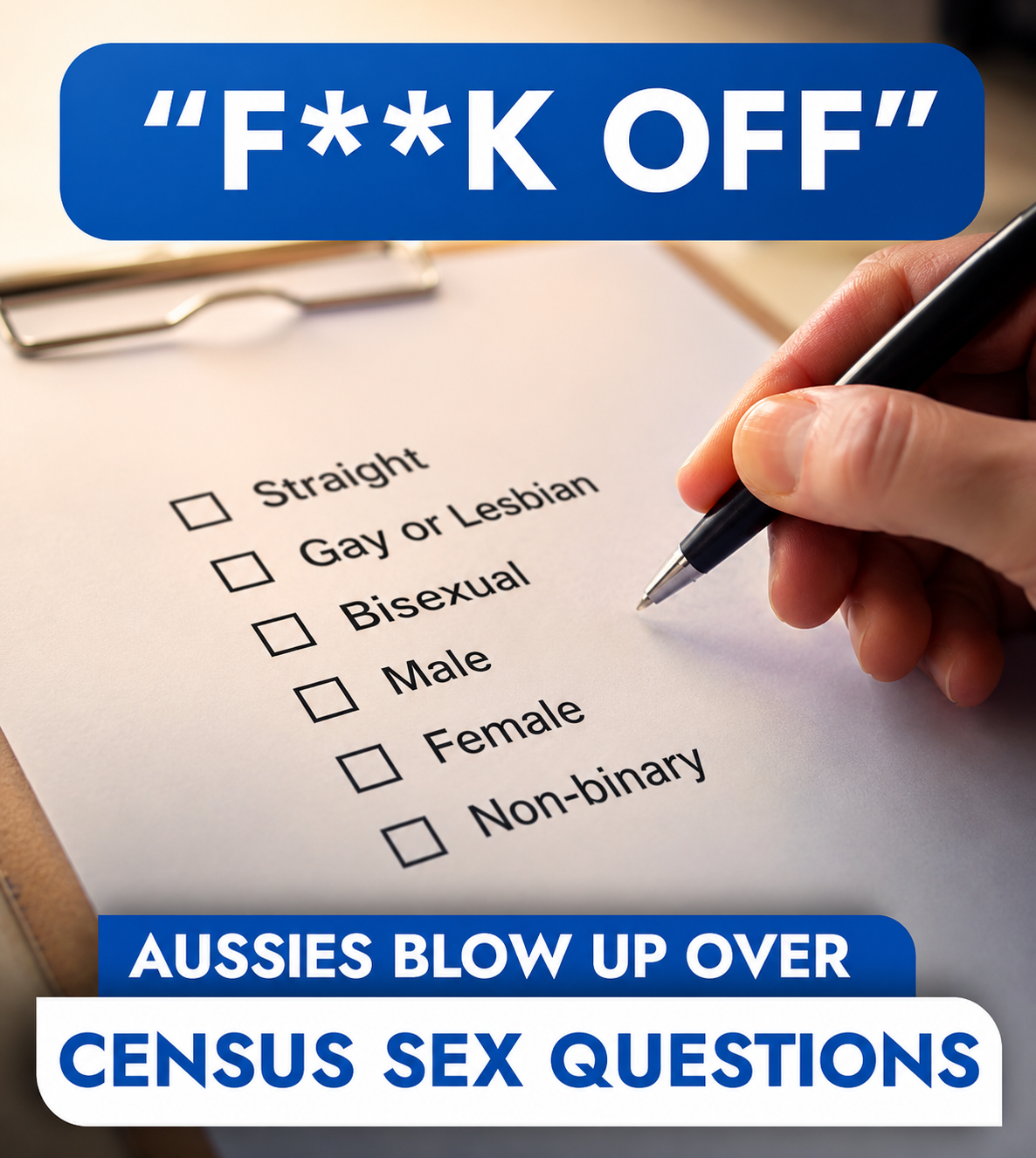
For the first time, Australians aged 16 years and over will be invited to answer separate voluntary questions about both gender identity and sexual orientation.
The questionnaire first asks respondents about their sex recorded at birth before asking how they currently identify their gender. A separate question then asks respondents to describe their sexual orientation.
The ABS says these questions were developed after years of research, consultation and extensive public testing involving thousands of Australians from different cultural, religious and demographic backgrounds.
Officials argue the new data will fill significant gaps in Australia’s understanding of its own population.
According to the bureau, governments currently lack comprehensive nationwide statistics about LGBTQ+ Australians. Existing information often comes from smaller surveys rather than a complete national count.
Better information, the ABS argues, can improve health planning, mental health programs, aged-care services, housing policy and community support by ensuring resources are directed where they are most needed.
Despite those assurances, many Australians remain unconvinced.
Social media has been flooded with criticism from people questioning why the government needs to know such personal details.
Some argue the information has no connection to planning roads or hospitals, while others believe questions about sexuality belong entirely within an individual’s private life.
One concern repeatedly raised involves families completing the Census together.
Unlike many government forms that individuals complete privately, the Census is commonly filled out around the kitchen table by parents and children working through the questionnaire together.
Critics say the new questions could create awkward situations in households where teenagers may not yet have discussed their sexuality or gender identity with family members.
Others argue that parents should decide when and how such conversations take place rather than having them prompted by a government survey.
Supporters reject those criticisms.
They point out that the questions are entirely optional, meaning respondents can simply choose “Prefer not to answer” if they feel uncomfortable providing the information.
Unlike the Census itself, which is compulsory under Australian law, these particular questions carry no obligation to answer.
Advocacy groups also argue that reliable national statistics are essential if governments are serious about reducing inequality.
Without accurate data, they say it becomes difficult to identify whether particular communities experience poorer health outcomes, higher rates of discrimination or reduced access to essential services.
The debate reflects a broader shift in Australia’s demographic landscape.
Over recent decades, the Census has gradually evolved from a relatively simple population count into a sophisticated statistical tool capturing information about education, employment, disability, unpaid caring responsibilities, ancestry, languages spoken at home, religion, housing and internet access.
Each expansion has generated discussion about where governments should draw the line between collecting useful information and protecting personal privacy.
This year’s additions represent perhaps the most sensitive changes introduced in many years because they involve deeply personal aspects of individual identity.
The ABS insists privacy has remained central throughout the development process.
Under Australian law, Census information is protected by strict confidentiality provisions.
Individual responses cannot legally be shared with agencies including the Australian Taxation Office, Services Australia, police or immigration authorities.
Only aggregated statistical information is released publicly, preventing individuals or households from being identified.
Employees handling Census data are also subject to strict legal obligations, with severe penalties applying to anyone who unlawfully discloses confidential information.
Privacy protections have become increasingly important as more Australians complete the Census online.
Digital submission has become the preferred method in recent years, allowing households to complete their forms more quickly while enabling the ABS to process information more efficiently.
The bureau says extensive cybersecurity measures are in place to protect personal information throughout the collection process.
The controversy surrounding this year’s Census did not emerge overnight.
For several years, governments, researchers and advocacy organisations debated whether questions relating to gender identity, sexual orientation and variations of sex characteristics should be included.
Extensive testing was carried out to determine whether respondents clearly understood the proposed questions and whether the resulting data would be statistically reliable.
One proposed question relating to variations of sex characteristics was ultimately removed after testing found many respondents misunderstood its meaning, reducing confidence in the quality of the data.
The questions on gender identity and sexual orientation, however, produced stronger results during testing and were ultimately approved for inclusion.
Even so, public opinion remains sharply divided.
Some Australians see the changes as evidence that official statistics should evolve alongside society.
Others believe governments are gradually expanding the amount of personal information they seek from citizens without sufficient justification.
The disagreement illustrates how the Census has become more than simply a population count.
It has become a reflection of Australia’s changing social values, political debates and expectations around privacy.
Whatever Australians think about the new questions, millions of households will complete the Census on August 11, making it one of the largest coordinated national exercises undertaken during the year.
The results will shape government planning well into the next decade, influencing decisions affecting education, healthcare, transport, housing, emergency management and countless other public services.
They will also provide the first nationwide picture of how Australians responded to the Census’ most controversial questions.
Whether the data ultimately settles the debate or fuels further discussion remains to be seen. What is already certain is that the 2026 Census has generated far more public attention than many previous collections, demonstrating how rapidly changing social issues can transform even a long-established statistical survey into a national talking point.
Beyond the immediate political debate, the controversy also raises broader questions about how governments collect information in an increasingly diverse society. National statistical agencies around the world have been updating their questionnaires to better reflect changing demographics, family structures and social identities. Australia is not alone in facing the challenge of balancing the demand for more comprehensive data with public expectations around privacy.
Countries including Canada, New Zealand and the United Kingdom have gradually expanded demographic questions in recent years as governments seek better information to support evidence-based policymaking. In many cases, officials argue that reliable national data allows public funding to be directed more efficiently and helps identify communities that may otherwise remain underrepresented in official statistics.
Supporters of Australia’s new Census questions argue the same principle applies here. They say decisions about healthcare, mental health services, aged care, education and community support should be based on accurate population data rather than assumptions or small-scale surveys.
Medical researchers have long argued that understanding population characteristics can help governments identify disparities in health outcomes. Community organisations also maintain that comprehensive national data allows policymakers to measure whether existing services are reaching the people they are intended to assist.
Critics, however, remain unconvinced that the potential policy benefits outweigh concerns about privacy. Some Australians believe governments should limit Census questions to information directly related to housing, employment, education and population counts rather than expanding into subjects they consider deeply personal.
Others worry that each new Census gradually broadens the scope of government data collection, raising concerns about where future questionnaires might eventually draw the line. Although privacy protections remain strong under Australian law, sceptics argue public trust is just as important as legal safeguards.
The Australian Bureau of Statistics has repeatedly responded to those concerns by emphasising that strict confidentiality rules have protected Census information for more than a century. Individual responses are never published, and identifying information cannot legally be released to other government departments for compliance, taxation, policing or immigration purposes.
Instead, the data is processed into anonymous statistical datasets used to analyse national and regional trends. When Census results are released, they appear as aggregated figures showing patterns across suburbs, cities, states and demographic groups rather than revealing information about individual households.
The ABS also notes that participation in the Census helps ensure Australia’s electoral boundaries, infrastructure planning and community funding accurately reflect population changes. Rapid population growth in some regions and declining populations in others make accurate data increasingly important for governments attempting to allocate finite public resources.
Population data collected through the Census also supports private sector decision-making. Businesses use demographic information when determining where to open new stores, expand distribution networks or invest in regional communities. Universities and researchers rely on Census datasets to study long-term changes in Australian society, while charities use the information to identify areas experiencing disadvantage or increased demand for support services.
For many Australians, however, those practical benefits remain secondary to concerns about personal privacy. The debate illustrates how modern governments increasingly face competing expectations from the public. Citizens expect services to be planned efficiently using accurate information, yet many also expect governments to minimise the amount of personal information they collect.
That tension has become one of the defining themes of the 2026 Census.
With Census night approaching, households across Australia will soon begin receiving instructions explaining how to complete the questionnaire online or request a paper form if preferred. Most respondents are expected to complete the Census digitally, continuing the shift toward electronic data collection that has accelerated over recent Census cycles.
The bureau has encouraged Australians to read the accompanying guidance carefully, particularly regarding the optional nature of the new gender identity and sexual orientation questions. Officials hope this will reduce confusion and reassure respondents that they remain free to select “Prefer not to answer” if they do not wish to disclose that information.
Whether that reassurance changes public opinion remains uncertain.
The discussion surrounding this year’s Census has already demonstrated that demographic data collection is no longer viewed simply as an administrative exercise. Instead, it has become intertwined with wider debates about identity, privacy, representation and the evolving relationship between citizens and government.
As millions of Australians prepare to complete the compulsory survey on August 11, the Census will once again provide the country’s most comprehensive picture of who Australians are, where they live and how the nation continues to change.
It will also reveal how Australians responded to one of the most significant updates to the Census questionnaire in decades—a change that has already sparked strong opinions well before the first forms are submitted. Regardless of where individuals stand on the issue, the discussion itself has ensured that the 2026 Census will be remembered not only for the statistics it produces but also for the national conversation it has ignited about privacy, inclusion and the future of official data collection in Australia.






