A breathtaking wildlife encounter captured off the New South Wales coast is offering scientists a rare glimpse into one of nature’s least-observed events, after a drone operator filmed what researchers believe is the first-ever drone footage of a humpback whale giving birth.
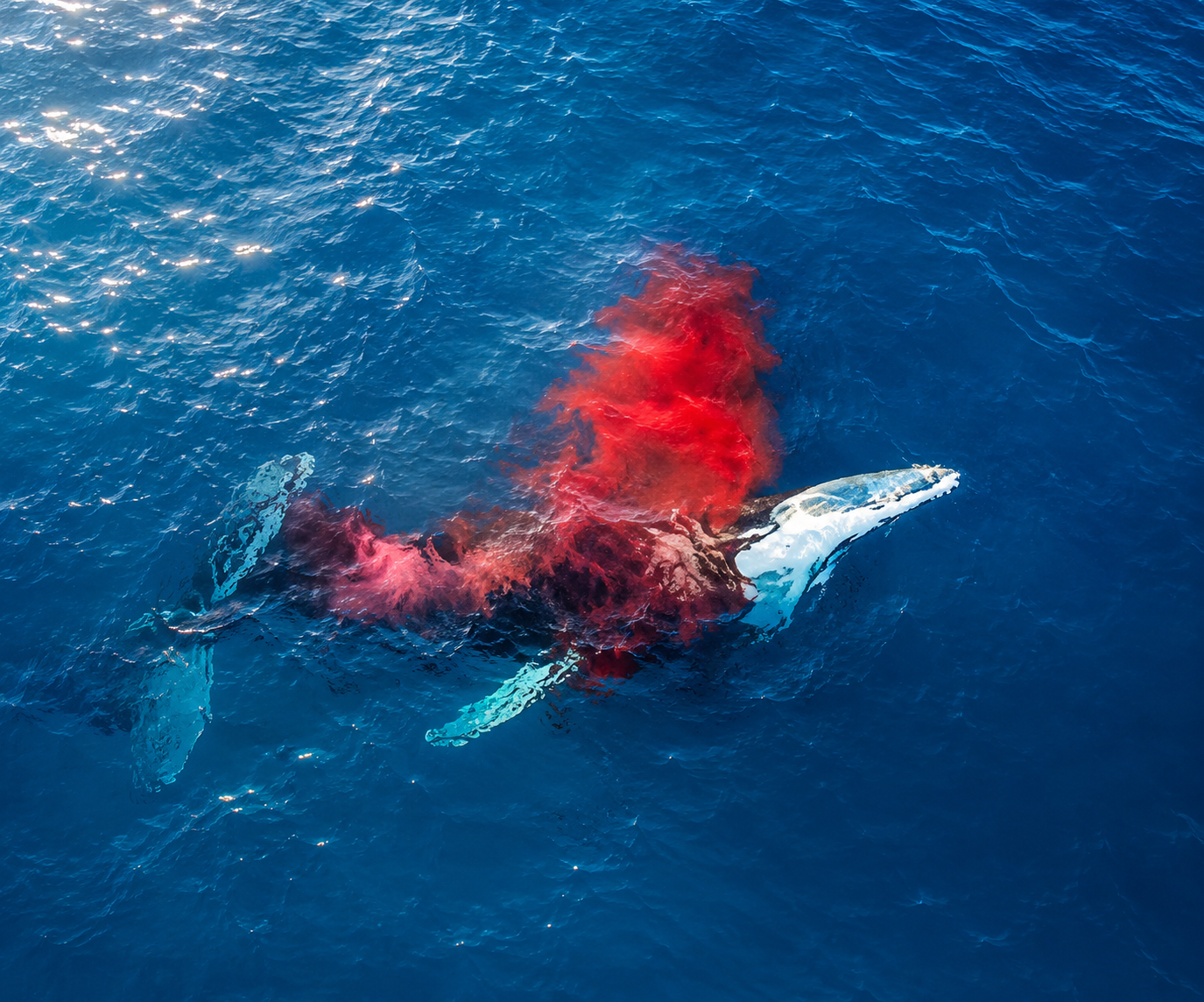
The extraordinary moment unfolded off Kingscliff on Tuesday afternoon, where Organisation for the Rescue and Research of Cetaceans in Australia (ORRCA) volunteer Alex Forrest was monitoring the annual humpback whale migration when he noticed one whale behaving differently from the rest of the pod.
What initially appeared to be an unusually slow-moving female whale soon became one of the rarest marine wildlife events ever documented.
Within moments, Mr Forrest witnessed a sudden burst of red beneath the surface before a newborn calf emerged and instinctively swam toward the ocean’s surface to take its first breath.
The remarkable footage has been hailed by marine scientists as a potentially significant contribution to the understanding of humpback whale reproduction, an area of marine biology that remains surprisingly mysterious despite decades of whale research.
An unexpected encounter during a routine observation
Mr Forrest has spent years documenting Australia’s annual humpback whale migration and has filmed thousands of whales from above using drones.
Even with that extensive experience, he immediately realised something unusual was unfolding.
“There was this one female whale going unusually slow, but she wasn’t sleeping,” Mr Forrest recalled after the encounter.
Moments later, he noticed what appeared to be a reddish plume spreading through the water.
Initially unsure what he was witnessing, he briefly wondered whether the whale had encountered a predator or suffered an injury.
“All of a sudden red just spurted out and there was a plumage,” he said.
“I had no idea until it reached the surface.”
Only seconds later did the astonishing reality become clear as the newborn calf surfaced beside its mother.
The drone remained more than 100 metres away from the whales throughout the observation, complying with New South Wales Biodiversity Conservation Regulations governing drone operations around marine mammals.
A world-first drone recording
According to ORRCA, humpback whale births have only been successfully recorded on video three times previously anywhere in the world.
This latest footage is believed to represent the fourth documented recording of the phenomenon and the first ever captured using a drone.
The significance extends well beyond the spectacular images themselves.
Marine researchers say aerial footage provides perspectives that were previously impossible to obtain safely, allowing scientists to observe whale behaviour without placing boats close to animals during one of the most sensitive periods of their lives.
Unlike observations made from vessels, drone footage can reveal movement patterns, interactions between mother and calf and behavioural responses while maintaining a safe distance that minimises disturbance.
For researchers who study humpback whales, opportunities like this are exceptionally rare because births generally occur underwater, often in remote tropical breeding grounds far from observers.
Scientists call the footage extraordinary
Macquarie University whale scientist Dr Vanessa Pirotta described the footage as an extraordinary scientific moment.
She noted that humpback whales are among the most closely watched whale species on Earth, with millions of people observing their migrations every year.
Yet witnessing an actual birth remains exceptionally uncommon.
“This is incredible,” Dr Pirotta said.
“People watch humpback whales every single year. They’re the world’s most watched whale.”
She said one of the most remarkable aspects of the footage was watching the newborn calf instinctively swim toward the surface immediately after birth.
Like all mammals, humpback whale calves must breathe air almost immediately after entering the world.
Dr Pirotta said the newborn appeared to know exactly what to do.
“When your baby wants to come it’ll come,” she explained.
“The fact that baby knew exactly what to do, which was to rise to the surface, was a very special moment.”
New insights into humpback whale behaviour
ORRCA Head of Research Annie Post believes the footage could provide valuable comparisons with the handful of previously documented whale births.
One detail immediately caught researchers’ attention.
Unlike some previously recorded births where females were accompanied by escort whales, this mother appeared to be travelling alone when she gave birth.
“She seemed to be travelling alone and on her own when she gave birth,” Ms Post said.
Comparing this event with earlier documented births may help researchers better understand whether humpback whales consistently seek isolation during labour or whether behaviour varies depending on environmental conditions and population dynamics.
Ms Post said the recording will undergo scientific peer review before becoming part of the growing body of international research into marine mammals.
She believes every new observation helps researchers identify behavioural trends that would otherwise remain impossible to detect.
“The more data we can collect, the more we can pick up on any trends,” she said.
Changing understanding of where whales give birth
The location of the birth has generated particular interest among scientists.
For many years, researchers believed humpback whales generally gave birth in warm tropical breeding waters before beginning their migration south with newborn calves.
However, the Kingscliff sighting suggests births may occur farther along migration routes than previously understood.
University of New South Wales PhD candidate Jane McPhee-Frew said the observation adds another piece to a rapidly evolving understanding of humpback whale ecology.
She believes the event may reflect both Australia’s recovering humpback whale population and advances in observation technology.
Drones have dramatically increased researchers’ ability to monitor whale behaviour without disturbing the animals, allowing events that previously would have gone unnoticed to be documented in remarkable detail.
“It’s building a picture of how animals and the environment change through space and time,” Ms McPhee-Frew said.
“How we think we have got something figured out but turns out there’s a little bit more to it.”
Australia’s humpback whale recovery
Australia’s east coast humpback whale population has experienced one of the world’s most successful conservation recoveries.
Commercial whaling during the twentieth century reduced humpback whale numbers dramatically, placing the species under severe pressure.
Following the international moratorium on commercial whaling and decades of conservation efforts, populations have steadily recovered.
Each year, tens of thousands of humpback whales migrate along Australia’s east coast between Antarctic feeding grounds and warmer northern breeding waters.
The migration has become one of Australia’s most spectacular wildlife events, attracting researchers, tourism operators and whale watchers from around the world.
The increasing number of whales travelling close to shore has also improved opportunities for scientific observation.
Researchers say this population recovery, combined with modern drone technology and improved photographic equipment, is making it possible to witness behaviours that were once considered almost impossible to document.
The growing role of drones in marine science
Drone technology has transformed marine wildlife research over the past decade.
Scientists now use drones to estimate whale size, monitor body condition, observe feeding behaviour, identify injuries, assess entanglements and even collect biological samples using specially designed equipment.
Because drones can operate quietly from above while maintaining legal separation distances, they reduce stress on whales compared with close vessel approaches.
The Kingscliff footage demonstrates how recreational operators working alongside conservation organisations can also make meaningful contributions to science.
Rare observations captured by experienced drone pilots are increasingly becoming valuable research records, particularly during seasonal whale migrations where thousands of hours of monitoring are required to document uncommon behaviours.
A rare glimpse into one of nature’s hidden moments
Although millions of people watch humpback whales every year, witnessing a birth remains one of the rarest events in marine biology.
Most calves are born underwater, often at night or in remote offshore waters where there are no observers.
The Kingscliff recording provides scientists with an opportunity to carefully study the mother’s movements, the calf’s first moments of life and the surrounding environmental conditions.
Researchers hope continued analysis of the footage will improve understanding of humpback whale reproduction, migration timing and maternal behaviour, while helping shape future conservation strategies for one of Australia’s most iconic marine species.
For Alex Forrest, what began as another routine afternoon documenting the annual whale migration became a once-in-a-lifetime encounter that may leave a lasting mark on marine science.






