A dramatic new political megapoll has delivered one of the most striking snapshots yet of Queensland’s rapidly changing political landscape, suggesting One Nation is emerging as a serious electoral force while the Liberal National Party faces the prospect of its weakest federal performance in decades if current trends continue.
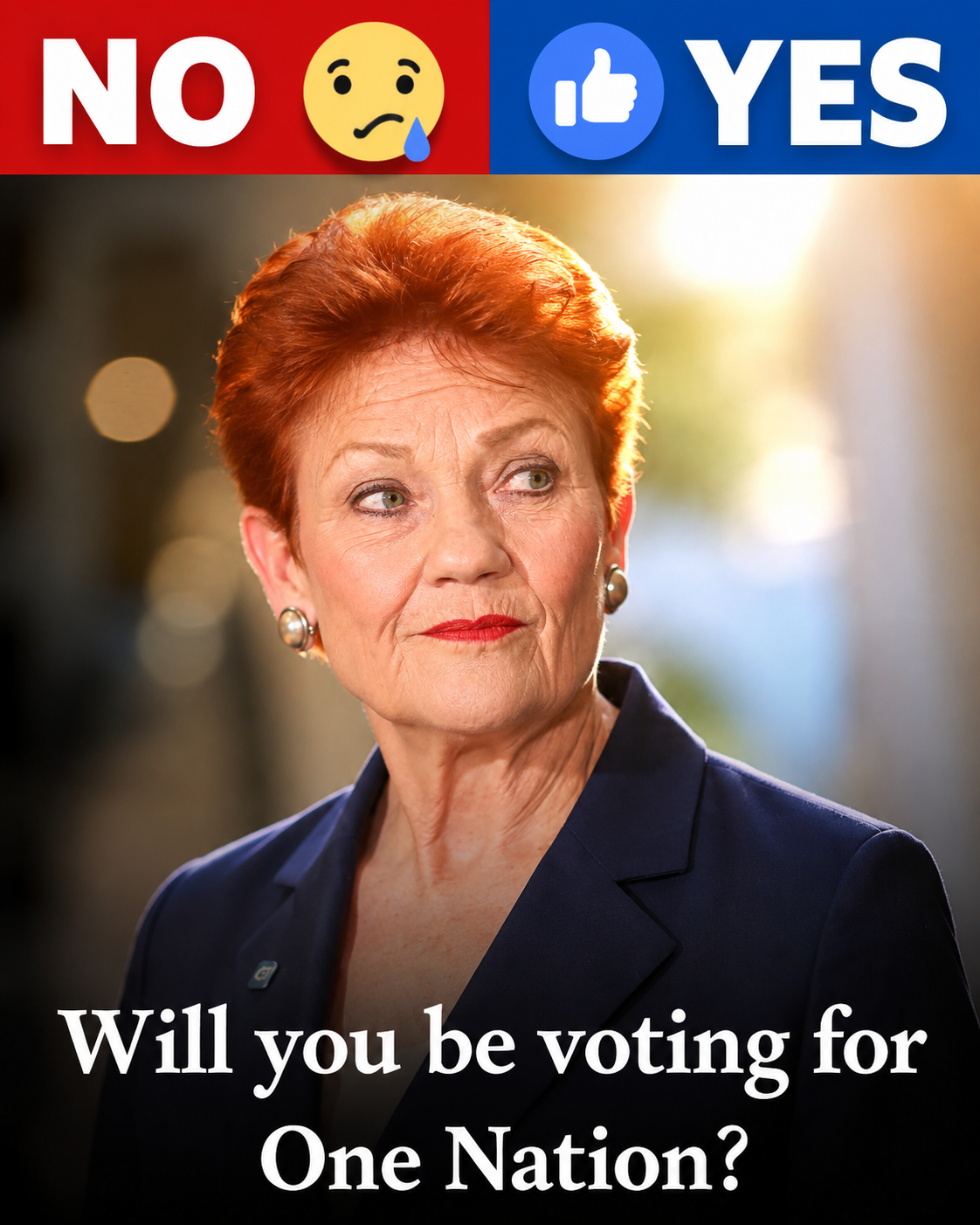
The polling, based on an extensive electorate-by-electorate model, indicates Pauline Hanson’s One Nation has continued building momentum across Queensland, potentially positioning the party as one of the biggest beneficiaries of growing voter dissatisfaction with Australia’s traditional political parties.
Although election day remains some time away and polling represents only a snapshot of current voter sentiment, the figures have already intensified debate over whether Queensland could become the centre of the most significant political realignment seen in Australian federal politics for a generation.
The survey suggests that support for the Liberal National Party has deteriorated sharply across numerous regional and outer metropolitan electorates that have historically formed the backbone of conservative politics.
Rather than those voters moving directly to Labor, however, much of the shift appears to be flowing towards One Nation, a development that would fundamentally reshape Queensland’s electoral map if replicated at a federal election.
For decades, Queensland has been regarded as one of the Coalition’s strongest states.
The merger between the Liberal Party and the National Party in Queensland created the Liberal National Party in 2008, producing a unified conservative movement that has frequently dominated federal contests throughout much of the state.
Regional Queensland, agricultural communities and many outer suburban electorates have traditionally delivered comfortable margins for Coalition candidates, helping determine the balance of power nationally.
The latest polling suggests that electoral dominance can no longer be taken for granted.
According to the modelling, One Nation has significantly expanded beyond its traditional protest-vote status and is now competing directly for seats previously considered safely held by the LNP.
Political analysts say this reflects a broader trend that has been developing over several election cycles.
Rather than viewing One Nation solely as a vehicle for expressing dissatisfaction, increasing numbers of conservative voters appear willing to consider the party as a genuine governing alternative.
Much of that shift has been driven by economic pressures affecting households throughout Queensland.
Cost-of-living concerns continue to dominate public discussion, with families facing higher mortgage repayments, rising rents, elevated grocery prices and increasing insurance premiums following repeated natural disasters across parts of the state.
Housing affordability has also become an increasingly important political issue.
Queensland’s strong interstate migration has placed significant pressure on property markets in Brisbane, the Sunshine Coast, the Gold Coast and many regional centres.
As demand has continued to outpace housing supply, both purchase prices and rental costs have climbed rapidly, placing additional strain on younger Australians and lower-income households.
Migration policy remains another prominent issue influencing voter attitudes.
One Nation has consistently argued for lower migration levels, claiming current population growth is worsening housing shortages, infrastructure congestion and pressure on public services.
The party has also campaigned heavily on crime, youth offending, energy affordability and support for regional industries, issues that resonate strongly in many Queensland electorates.
Meanwhile, the LNP faces the difficult challenge of defending its traditional conservative base while also attempting to remain attractive to moderate urban voters.
Political strategists have long warned that this balancing act has become increasingly difficult as Australian politics grows more fragmented.
Taking tougher positions on migration or cultural issues risks alienating centrist voters in metropolitan Brisbane, while adopting more moderate policies may encourage conservative supporters to drift towards One Nation.
That strategic dilemma has become one of the defining challenges confronting conservative parties not only in Queensland but across Australia.
Labor also continues to face considerable electoral pressure despite the apparent contest between the LNP and One Nation.
While some metropolitan electorates remain relatively favourable for Labor, dissatisfaction over inflation, taxation, housing affordability and healthcare costs has affected support for the federal government in many parts of Queensland.
Consequently, the state’s electoral contest increasingly resembles a three-way competition rather than the traditional Labor-versus-Coalition battle that dominated Australian politics for generations.
The polling also reflects growing volatility among Queensland voters.
Electors who once remained loyal to a single political party throughout their lives now appear considerably more willing to change their vote from one election to the next in response to economic conditions, leadership performance and policy priorities.
This decline in long-term party loyalty has created greater opportunities for smaller parties capable of presenting themselves as alternatives to the political establishment.
Pauline Hanson has sought to position One Nation squarely within that space.
Her party argues that both Labor and the Coalition have failed to address rising living costs, immigration pressures, energy prices and regional development, themes that continue to feature prominently throughout One Nation’s campaigning.
The latest polling therefore represents more than simply a shift in party preferences.
It raises broader questions about whether Queensland voters are undergoing a structural political realignment that could reshape federal elections for years to come.
Even so, experienced election analysts caution against interpreting the modelling as a definitive prediction.
Australian election campaigns often produce substantial movement during their final weeks, particularly after leaders’ debates, policy launches and preference negotiations begin influencing undecided voters.
Queensland has historically produced dramatic election swings in both directions, making it one of Australia’s least predictable political battlegrounds despite its reputation as conservative heartland.
The coming federal campaign is therefore expected to test whether One Nation’s current polling momentum represents a temporary protest vote or the beginning of a much more enduring political transformation.
One of the most significant questions raised by the latest polling is whether Queensland’s political changes represent a temporary reaction to current economic pressures or a more permanent restructuring of the state’s conservative vote.
Historically, Queensland has often acted as the Coalition’s electoral firewall. Strong performances across regional centres, mining communities and outer suburban electorates have repeatedly compensated for weaker Liberal results in inner-city areas of Sydney and Melbourne.
If the latest polling were broadly reflected at a federal election, that long-standing electoral equation could change dramatically.
Rather than simply losing support to Labor, the LNP would face competition from a party appealing to many of the same conservative voters.
Such a shift would create an entirely different electoral challenge.
Unlike previous elections, where the Coalition’s primary objective was preventing Labor gains, future campaigns may increasingly require defending traditional conservative seats against One Nation while simultaneously competing with Labor in metropolitan Queensland.
Electoral analysts note that three-cornered contests can significantly complicate campaign strategy under Australia’s preferential voting system.
Votes cast for One Nation do not necessarily translate directly into parliamentary seats. Much depends on where those votes are concentrated, the quality of local candidates, and how preferences are ultimately distributed after lower-polling candidates are excluded.
Australia’s House of Representatives uses full preferential voting, requiring candidates to secure an absolute majority after preferences are distributed.
As a result, primary vote alone rarely determines the final outcome.
Preference agreements between parties, local campaign dynamics and candidate recognition frequently prove decisive in closely contested electorates.
For One Nation, converting increased statewide support into actual seats would therefore require more than simply maintaining favourable polling numbers.
The party would need well-organised local campaigns, experienced candidates and sufficient campaign resources across dozens of electorates.
Those organisational challenges have historically limited the parliamentary success of smaller parties, even when public support has risen sharply.
Nevertheless, Pauline Hanson’s party enters the next federal contest from a considerably stronger position than in many previous campaigns.
Over recent years, One Nation has consistently expanded its policy focus beyond immigration and national identity to include cost-of-living pressures, housing affordability, energy prices, regional development and support for small businesses.
These issues continue to dominate voter concerns across much of Queensland.
Queensland’s economy has experienced substantial population growth since the COVID-19 pandemic, fuelled by interstate migration from New South Wales and Victoria.
While that influx has stimulated economic activity, it has also increased pressure on housing supply, transport infrastructure, health services and local government resources.
Property prices in Brisbane have risen sharply over recent years, while regional centres including Toowoomba, Townsville, Mackay and the Sunshine Coast have also experienced significant increases in housing demand.
Rental affordability remains a major concern for many households, particularly younger Australians entering the housing market for the first time.
These economic pressures have become central themes in political campaigning throughout the state.
Crime has likewise become a dominant election issue.
Youth offending, particularly in parts of regional Queensland, has attracted sustained public attention, with both state and federal political leaders proposing different approaches to policing, sentencing and community safety.
One Nation has argued for tougher criminal justice policies, while the major parties have also increasingly emphasised law-and-order measures in response to voter concerns.
Energy policy remains another area of sharp political disagreement.
The Coalition has proposed expanding nuclear generation as part of Australia’s future electricity mix, while Labor continues prioritising renewable energy investment.
One Nation has advocated its own combination of lower energy costs, expanded domestic resource development and greater support for traditional industries.
These competing policy platforms are likely to become increasingly prominent as the next election approaches.
The latest polling also reflects a broader trend evident across many established democracies.
Traditional centre-left and centre-right political parties have increasingly faced challenges from smaller movements capable of capitalising on public frustration with economic conditions, government institutions and perceived political consensus.
Australia has generally experienced this trend more gradually than several comparable nations because compulsory voting and preferential voting have historically favoured larger parties.
Even so, recent elections have produced a steadily expanding crossbench, with independents and minor parties securing a growing share of parliamentary representation.
If One Nation were to substantially increase its number of federal seats, it would represent one of the most significant political shifts in Queensland since the party’s emergence in the late 1990s.
For the LNP, such an outcome would likely trigger a comprehensive reassessment of campaign strategy, policy priorities and voter engagement across the state.
Political observers suggest the party may increasingly face difficult choices between consolidating moderate metropolitan support and reclaiming conservative regional voters attracted to One Nation.
Labor, meanwhile, would also be forced to adapt to a more fragmented electoral environment in which three significant political forces compete across multiple Queensland electorates.
Importantly, however, polling remains only one indicator of electoral sentiment.
Federal election campaigns frequently reshape public opinion through leadership debates, budget announcements, policy launches and local candidate contests.
Undecided voters also tend to become more engaged during official campaigns, meaning support recorded months before polling day can change significantly before ballots are cast.
For that reason, election experts continue to caution against interpreting any single poll as a prediction of the final result.
Even so, the latest Queensland megapoll sends a clear political message.
Whether or not the most dramatic seat projections ultimately materialise, the figures indicate that One Nation has established itself as a far more influential force in Queensland politics than many observers anticipated only a few years ago.
For Pauline Hanson, the polling offers further evidence that her party is competing not merely for protest votes but increasingly for the support of Australians seeking an alternative to the two major parties.
For the Liberal National Party, however, the results serve as a warning that retaining Queensland’s conservative heartland may prove considerably more difficult at the next federal election than at any point in recent memory.






