Prime Minister Anthony Albanese has defended the Australian Labor Party’s commitment to transparency after internal negotiations prevented former cabinet minister Ed Husic’s proposed motion on Gaza from reaching the floor of Labor’s National Conference.
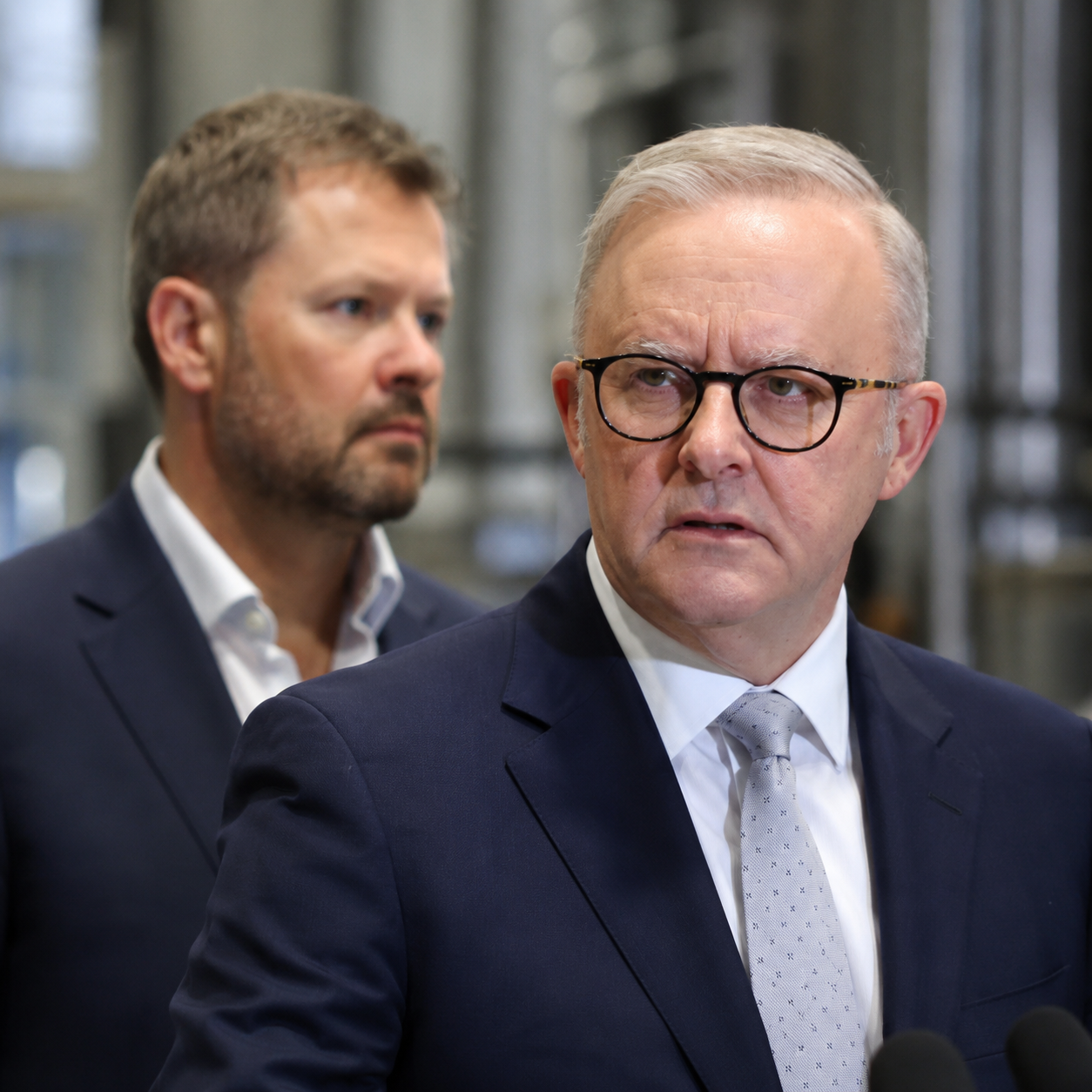
The episode has reignited discussion about how Australia’s governing party manages internal disagreement on one of the most sensitive international issues confronting federal politics.
Although delegates gathered at Labor’s National Conference debated a wide range of policy matters, a proposed motion put forward by Mr Husic concerning Israel’s actions in Gaza never reached a formal vote after the delegate scheduled to second the motion withdrew following internal negotiations.
Without a seconder, the proposal could not proceed under conference procedures, effectively ending any possibility of delegates debating or voting on the motion during the gathering.
The development prompted criticism from Mr Husic, who argued the party should be willing to accommodate respectful disagreement on difficult issues rather than discouraging internal debate.
Speaking to reporters following the conference, the Chifley MP made clear he would continue raising the humanitarian situation in Gaza despite the setback.
“They can put me in a freezer, I don’t give a sh*t,” Mr Husic said, signalling he had no intention of stepping back from the issue.
Mr Husic, who lost his ministerial position following Labor’s election victory last year, has remained one of the government’s most prominent voices calling for stronger discussion about Australia’s response to the conflict in the Middle East.
His proposed motion stated that Israeli authorities and security forces had “deliberately targeted Palestinian children, resulting in genocide and atrocity crimes in the Gaza Strip and war crimes in the West Bank.”
The wording reflected one of the strongest positions advanced by any Labor figure during the conference and would likely have generated significant debate among delegates had it proceeded.
However, following behind-the-scenes negotiations between party officials and conference organisers, the motion was ultimately not presented for consideration.
The circumstances quickly prompted speculation that Labor’s leadership had intervened to avoid a divisive public debate over whether the party should adopt stronger language regarding Israel’s military campaign in Gaza.
Appearing on ABC’s Insiders, Mr Albanese rejected suggestions that discussion had been suppressed.
The Prime Minister noted that conference delegates had already expressed a range of views on the conflict during broader discussions and insisted there had been no restriction on members contributing to the debate.
“There have been contributions on the floor of the conference, including from Josh Burns and Basem Abdo, two people who are considered in their approach,” Mr Albanese said.
He reiterated the government’s longstanding position supporting a negotiated two-state solution in which Israelis and Palestinians can live alongside one another in peace and security.
“We want to see a two-state solution. We want to see Israelis and Palestinians living side by side. We want to see that issue advance,” the Prime Minister said.
Asked whether Mr Husic’s intervention was helping or creating difficulties for Labor, Mr Albanese dismissed suggestions that differing views posed a problem for the party.
He said delegates remained free to advocate for their preferred positions throughout the conference process.
“Like every other delegate, he has a right to come along and pursue whatever they say is or see as their objective. And that’s fine by me,” Mr Albanese said.
“I have no problem with any delegates of the conference having their say and making their contributions.”
The Prime Minister was also challenged over criticism that key negotiations surrounding conference motions had taken place outside public view.
Mr Albanese defended Labor’s conference processes, arguing they remained more open than those of Australia’s other major political parties.
“This is the most transparent political conference in Australia by far,” he said.
He contrasted Labor’s conference with what he described as closed-door meetings conducted by the Liberal Party and the Nationals, while also referring to the Greens’ recent internal leadership challenge.
“We’re a transparent party,” Mr Albanese said, noting that the National Conference proceedings were broadcast live.
Despite those assurances, the circumstances surrounding Mr Husic’s motion have renewed broader discussion about the balance between party unity and internal democracy within Labor.
Political parties routinely negotiate conference agendas, amend motions and seek consensus before formal debates take place. Such negotiations are a longstanding feature of Australian party conferences and are designed to minimise procedural disputes while identifying areas of agreement before votes occur.
However, critics argue that extensive behind-the-scenes negotiations can sometimes limit delegates’ ability to publicly test competing ideas, particularly on politically sensitive issues.
Mr Husic suggested Labor had become increasingly reluctant to embrace open disagreement because of painful lessons learned during previous periods of internal instability.
He argued that divisions experienced during the Kevin Rudd and Julia Gillard years had left many within the party wary of any public disagreement, even where policy debate could be conducted respectfully.
“I think there’s been a broader issue … that the experiences of the Rudd-Gillard years were so divisive that people are almost traumatised into a position that anything that looks like debate (or) a divide means that the government might topple over,” Mr Husic said.
He argued that healthy political parties should be capable of accommodating differing opinions without viewing internal discussion as a threat to leadership stability or electoral success.
“You’ve got to be able to find a way to disagree respectfully and try and work with people and have that discussion,” he said.
The comments reflect a broader challenge confronting Labor as it balances maintaining cabinet unity with allowing party members to express strongly held views on international issues that have generated significant public debate.
The conflict in Gaza has become one of the most contentious foreign policy topics in Australian politics, prompting demonstrations, parliamentary debate and differing views both within political parties and across the wider community.
Labor’s official position has continued to support Israel’s right to security while also expressing concern over the humanitarian situation in Gaza and advocating for increased humanitarian assistance, the protection of civilians and progress towards a negotiated two-state solution.
The Albanese Government has repeatedly called for the release of hostages held by Hamas, greater humanitarian access into Gaza and renewed diplomatic efforts aimed at achieving a lasting peace.
At the same time, some Labor members have argued the government should adopt stronger language in response to civilian casualties and allegations regarding Israel’s military conduct.
Others within the party have cautioned against language that could complicate Australia’s diplomatic relationships or pre-empt legal determinations being considered through international institutions.
The differing perspectives illustrate the complexity of balancing humanitarian concerns, international law, diplomatic relationships and domestic political expectations.
National conferences have historically provided Labor members with an opportunity to debate policy directions, amend the party platform and publicly express differing opinions before positions are formally adopted.
Although conference decisions influence Labor’s policy platform, they do not automatically determine government policy, particularly in areas such as foreign affairs where cabinet retains responsibility for executive decision-making.
Even so, debates held during National Conference often carry significant political weight because they can signal evolving views within the broader Labor movement.
For that reason, proposals concerning international conflicts, defence policy and human rights frequently attract close attention from both supporters and critics of the government.
The decision not to proceed with Mr Husic’s motion therefore became one of the most closely watched procedural developments of the conference, despite no formal vote ultimately taking place.
Political observers note that negotiations over conference motions are common across Australia’s major political parties, where organisers often seek compromise before contentious issues reach the conference floor.
Supporters of this approach argue it helps preserve party unity and enables conferences to focus on agreed policy outcomes rather than prolonged procedural disputes.
Critics, however, contend that extensive behind-the-scenes negotiations can reduce transparency and leave delegates with fewer opportunities to publicly test competing ideas before the wider party membership.
Mr Albanese maintains that Labor’s conference remains more open than comparable gatherings held by other political parties, pointing to the public broadcast of proceedings and the opportunity for delegates to contribute during debates.
The Prime Minister has also emphasised that differing opinions expressed by individual MPs do not prevent the government from maintaining a consistent foreign policy position.
For Mr Husic, however, the episode has reinforced his belief that robust internal discussion should be viewed as a strength rather than a weakness.
He argues political parties are better equipped to respond to complex national and international issues when members are able to debate competing viewpoints openly while maintaining mutual respect.
As Labor continues governing with a renewed parliamentary mandate, the handling of internal policy disagreements is likely to remain an important test of the party’s ability to balance discipline, transparency and democratic participation.
While the Gaza motion never reached delegates for a vote, the events surrounding its withdrawal have ensured that questions about internal decision-making, party processes and the limits of public debate will continue to feature in discussion following Labor’s National Conference.






