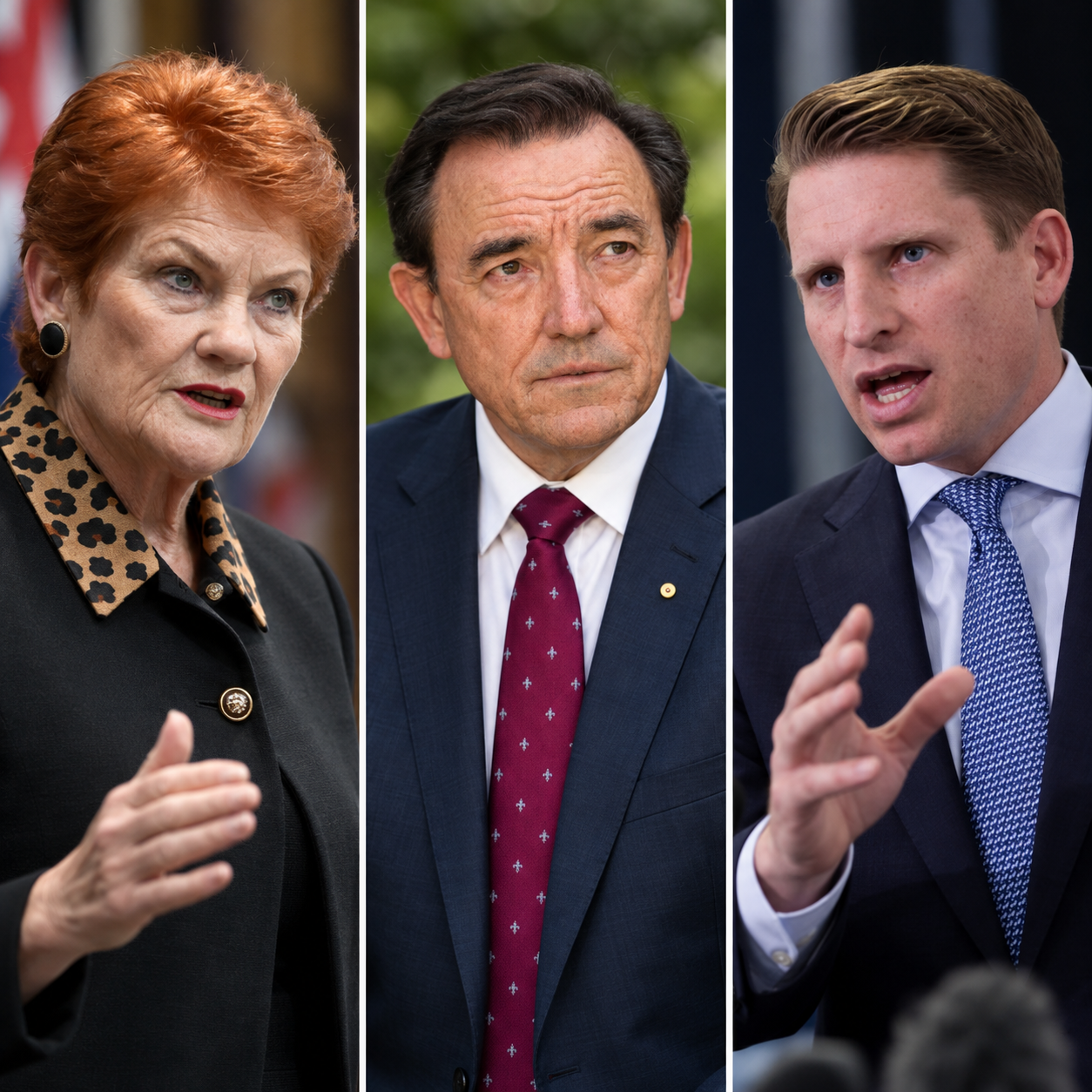
A television interview between British politician Rupert Lowe and Australian journalist Liam Bartlett has sparked an intense online debate after the Restore Britain leader rejected suggestions that referring to “Anglo-Saxon countries” could be interpreted as an expression of white supremacy.
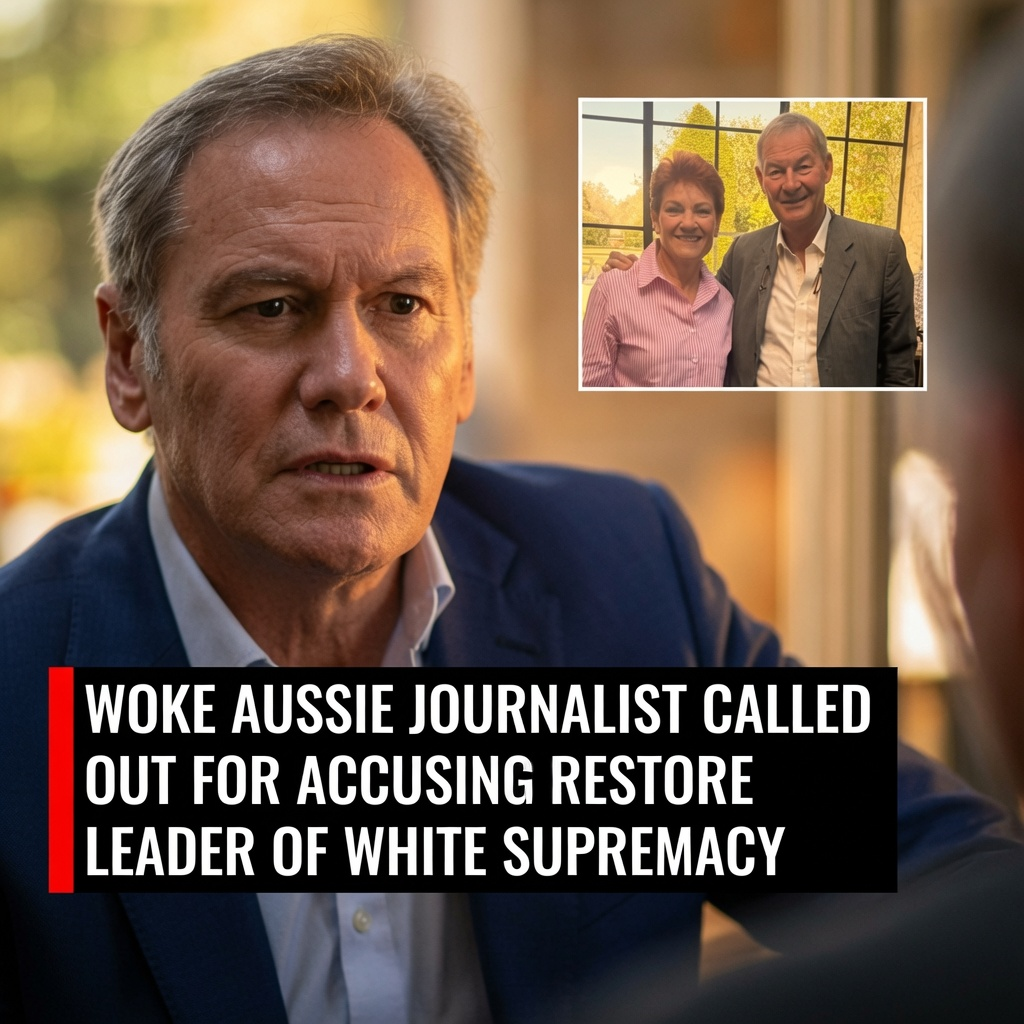
The exchange occurred during a Spotlight interview filmed while One Nation leader Pauline Hanson was visiting the United Kingdom earlier this month.
Mr Lowe was asked why he believed Ms Hanson had enjoyed growing political momentum over the past year.
Responding to the question, the British MP said he believed that, like many “Anglo-Saxon countries”, Australia was seeing increasing public support for politicians offering what he described as common-sense solutions to issues including immigration, national identity and public policy.
Before Mr Lowe could elaborate, interviewer Liam Bartlett questioned his repeated use of the expression “Anglo-Saxon”.
Bartlett suggested that some people might interpret the phrase as carrying implications associated with white supremacy, given contemporary debates surrounding race and identity.
Mr Lowe immediately rejected that characterisation.
He began responding that he did not believe the phrase implied racial superiority before Bartlett continued questioning whether political figures should exercise greater care with language because words carry different meanings for different audiences.
Lowe replied that he believed too much attention was now being devoted to policing language rather than debating substantive public policy, adding that people would inevitably interpret words differently regardless of intention.
The brief exchange rapidly spread across social media after video clips were shared by supporters of Restore Britain and other political commentators.
Writing on social media, Mr Lowe described the suggestion that “Anglo-Saxon” implied white supremacy as another example of what he considered excessive political correctness.
He argued that the phrase has long been used as a historical, cultural and linguistic description rather than a racial statement.
The discussion quickly expanded beyond the original television interview.
Former UK Independence Party leader Henry Bolton questioned why terms describing other ethnic or cultural groups were generally accepted while references to Anglo-Saxon heritage were sometimes treated differently.
Restore Britain campaign director Charlie Downes similarly defended the expression, arguing it referred to a historical civilisation that had played a significant role in developing democratic institutions, parliamentary government and the English language.
Political commentator Carl Benjamin also argued there was nothing inherently controversial about referring to English-speaking countries with shared historical origins as Anglo-Saxon societies.
Supporters of Mr Lowe generally maintained that the phrase describes a cultural and historical tradition rather than any claim of racial superiority.
Critics, however, argue that the expression can carry different connotations depending on context.
Some historians note that the term “Anglo-Saxon” originally referred to Germanic peoples who settled parts of Britain during the early medieval period following the end of Roman rule. Over many centuries it also became associated with the English language, legal traditions and political institutions that later spread to countries including Australia, Canada, New Zealand and the United States through British colonisation.
Because of that historical evolution, the phrase today may be used in several different ways depending on the speaker.
Academic writing often employs “Anglo-Saxon” when discussing early English history, medieval archaeology, legal traditions or the development of common law. In political commentary, it is sometimes used more broadly to describe English-speaking democracies sharing similar constitutional traditions.
At the same time, some scholars argue that modern political movements have occasionally adopted references to Anglo-Saxon identity in ways that overlap with debates surrounding ethnicity, nationalism and cultural identity.
For that reason, journalists and political commentators sometimes question how the phrase is likely to be interpreted by contemporary audiences.
Whether the expression should be regarded as historically descriptive or politically loaded therefore remains contested.
The Spotlight interview captured that broader disagreement in only a few seconds of televised conversation.
The controversy also unfolded against the backdrop of Pauline Hanson’s visit to Britain, during which she met politicians and commentators who have advocated stronger border controls, reduced immigration and reforms to multicultural policy.
Restore Britain has positioned itself as a movement seeking stricter immigration policies, institutional reform and greater emphasis on British national identity.
Those themes closely overlap with positions that One Nation has advanced in Australia for many years, helping explain why the interview focused on similarities between political developments in the two countries.
The televised exchange therefore became more than a discussion about one phrase.
It evolved into another chapter in the wider debate over language, identity, history and the boundaries of acceptable political discourse in modern democratic societies.
The online reaction demonstrated how debates over language increasingly intersect with wider political disagreements about immigration, national identity and freedom of expression.
Supporters of Mr Lowe argued that the interview reflected a broader trend in which historically recognised terms are being reinterpreted through a modern political lens. In their view, expressions that have long been used to describe legal traditions, cultural heritage or historical development are now too readily associated with extremism or racial ideology.
Others defended Bartlett’s questioning, arguing that journalists have a responsibility to challenge political figures when words or phrases may be interpreted differently by contemporary audiences.
From that perspective, asking a politician to clarify the intended meaning of a potentially contentious expression is part of legitimate public-interest journalism rather than an accusation in itself.
The disagreement illustrates the increasingly complex relationship between language and politics in democratic societies.
Terms that once carried largely historical or academic meanings can acquire new political significance as public debate evolves. Equally, words that remain commonplace within one community may be viewed quite differently by another.
Political communication specialists frequently note that successful public messaging depends not only on what speakers intend but also on how audiences interpret particular language.
For that reason, interviews involving politically sensitive subjects often focus as much on terminology as on policy itself.
Mr Lowe’s supporters argued that this approach distracts from substantive discussions about immigration, economic policy and national security.
Critics responded that language shapes political discourse and that questioning terminology is therefore an important part of democratic accountability.
The exchange also reignited debate surrounding media impartiality.
One Nation claimed the Spotlight documentary had been presented to the party as an investigation into immigration before ultimately focusing heavily on Pauline Hanson and her political movement.
The party later released correspondence which it said demonstrated the original scope of the program differed from the final broadcast.
Seven Network has not accepted the characterisation that the documentary was designed as a political “stitch-up”, maintaining editorial independence over the final content of its current affairs reporting.
The dispute has become another example of the increasingly strained relationship between sections of the Australian media and populist political parties, many of which argue they receive disproportionate scrutiny compared with the major parties.
Media organisations, meanwhile, maintain that all political leaders should face rigorous questioning regardless of ideology or popularity.
Beyond the immediate controversy, the discussion reflects broader trends visible across many Western democracies.
Questions surrounding national identity, historical heritage, immigration and cultural integration have become central political issues in Australia, the United Kingdom, Europe and North America.
As those debates have intensified, disagreements over language have become increasingly common.
Expressions including “Western civilisation”, “British values”, “national identity” and “Anglo-Saxon” are now often interpreted through competing historical and political frameworks, with supporters viewing them as cultural descriptors and critics warning they may be understood differently in particular contexts.
Historians generally emphasise that the term “Anglo-Saxon” has an established place within the study of early medieval England and the development of English institutions. However, they also acknowledge that public understanding of the phrase has evolved alongside contemporary political debates, contributing to differing interpretations.
The Spotlight interview therefore became significant not because it resolved those disagreements, but because it highlighted how a single historical expression can trigger fundamentally different reactions depending on the audience.
For Rupert Lowe, the phrase represented a cultural and historical reference shared by several English-speaking democracies.
For Liam Bartlett, it was a term that warranted clarification because of the way some viewers might perceive it in today’s political climate.
Neither position ended the debate.
Instead, the exchange fuelled another wave of online discussion over political correctness, journalistic responsibility and the changing boundaries of acceptable public language.
As debates over immigration, national identity and cultural heritage continue across Australia and the United Kingdom, disputes over terminology are likely to remain a recurring feature of political interviews, reflecting broader disagreements about history, democracy and how public figures communicate with increasingly diverse audiences.