A former Queensland police officer who has spent years supporting victim-survivors of domestic violence has warned that recent comments by One Nation leader Pauline Hanson risk placing more women in danger, saying they oversimplify one of Australia’s most complex and deadly social issues.
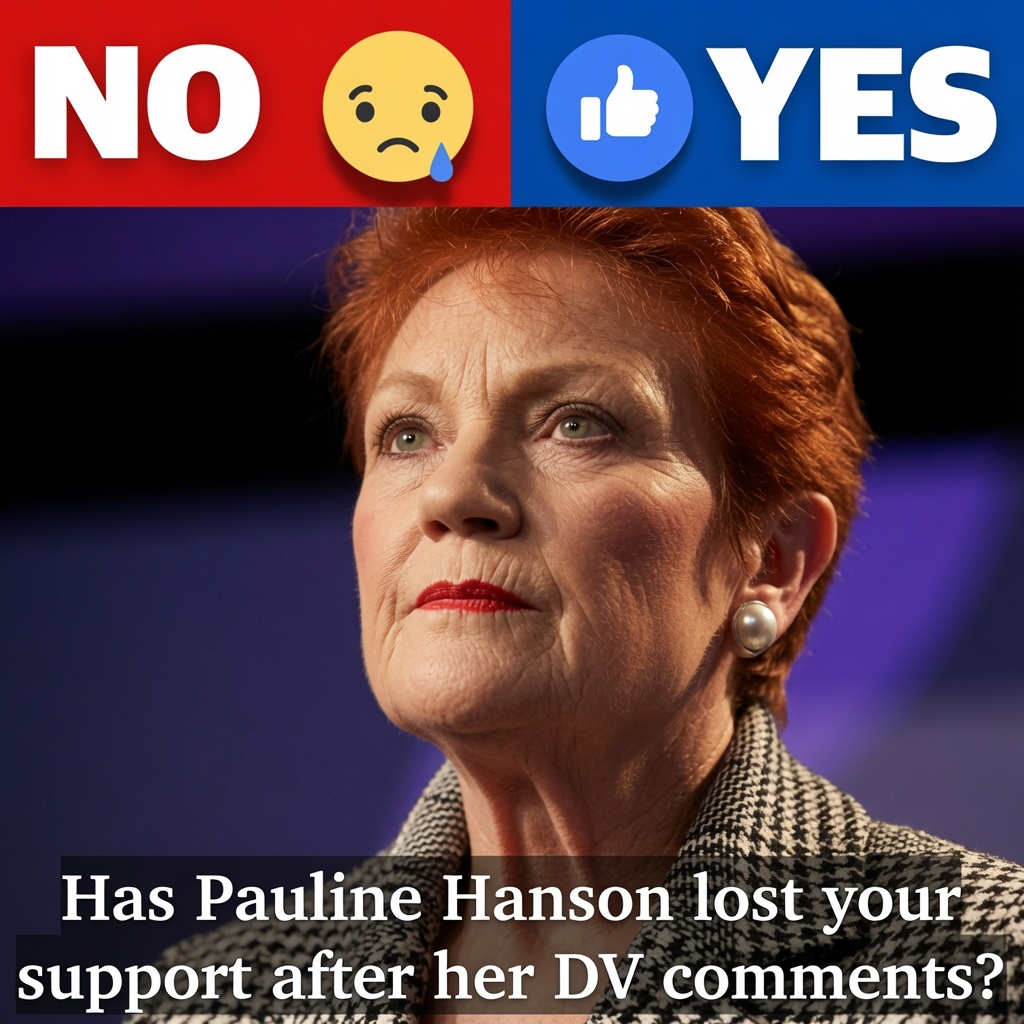
The criticism follows Senator Hanson’s remarks during a Brisbane radio interview in which she described domestic violence as “a two-way street” and suggested women experiencing abuse should not “put up with it” if they did not feel safe.
Those comments prompted an immediate response from domestic violence organisations, legal advocates and government representatives, who argued that leaving an abusive relationship is often far more complicated—and significantly more dangerous—than the comments suggested.
Among the strongest critics was Elise Feltham, chief executive of Better Futures Education and Consultancy in Townsville and a former Queensland police officer with extensive experience working alongside domestic violence victim-survivors.
Feltham described the comments as “ignorant”, “dangerous” and “irresponsible”, warning that they could reinforce misconceptions about domestic violence at a time when Australia continues to grapple with high rates of family and intimate partner violence.
According to Feltham, telling women to simply leave abusive relationships ignores the reality that separation is widely recognised by police, researchers and frontline services as one of the periods of highest risk for serious assault or homicide.
She said many victim-survivors remain with abusive partners because they fear retaliation, financial hardship, homelessness, losing contact with their children or escalating violence after attempting to leave.
“Leaving is not the simple solution many people assume it is,” Feltham argued, pointing to numerous Australian cases in which women were killed after separating from violent partners.
Her comments reflect long-standing advice from domestic violence specialists, who consistently warn that the period immediately before and after separation can present the greatest danger for victim-survivors.
Michelle Povah, chief executive of the Sydney-based refuge Women and Children First, similarly said many women cannot “just walk away” because abusive partners often exercise coercive control through surveillance, financial abuse, threats, intimidation and isolation from family or friends.
Women’s Legal Services Australia executive director Adrianne Walters also criticised the remarks, saying many women remain trapped because they lack the financial resources, housing options or support networks needed to leave safely.
Nicole Yade, chief executive of the Women’s and Girls’ Emergency Centre, said telling women to simply leave ignored the cycle of abuse that frequently involves manipulation, remorse and promises to change before violence recurs.
During the original radio interview, Senator Hanson acknowledged that domestic violence was “a scourge” and referred to her own personal experience before saying that people should communicate more effectively and that cost-of-living pressures were increasing stress within relationships.
She also stated that while violence was wrong, it was “also a two-way street”, adding that “women can lose their cool as well”.
The comments quickly generated political criticism.
Social Services Minister Tanya Plibersek, Finance Minister Katy Gallagher, domestic violence advocates and former Liberal staffer Brittany Higgins were among those who argued the remarks risked shifting responsibility away from perpetrators and onto victim-survivors.
Australia’s Sex Discrimination Commissioner Dr Anna Cody and National Children’s Commissioner Deb Tsorbaris also publicly rejected the framing, saying domestic violence is never the responsibility of the person experiencing abuse.
They emphasised that women and children often face complex barriers including fear, financial insecurity, housing shortages and threats from perpetrators that make leaving extraordinarily difficult.
Research consistently shows that intimate partner homicide is most likely to occur during periods of attempted separation or shortly after a victim leaves an abusive relationship.
For that reason, specialist services generally encourage victims to develop personalised safety plans with police or domestic violence support organisations rather than leaving abruptly without assistance.
Queensland continues to experience significant levels of domestic and family violence.
Police receive thousands of domestic violence call-outs each month, while breaches of domestic violence protection orders remain among the state’s most common offences. Recent high-profile killings have intensified calls for further reforms and additional support services for victim-survivors.
In defending herself, Senator Hanson rejected accusations that she had downplayed domestic violence or blamed victims.
She said sections of the media had taken her comments out of context and later released the full audio of the interview on social media, arguing she had clearly stated that domestic violence was wrong and should never be accepted.
Hanson has also said she drew upon her own lived experience as someone who has experienced domestic violence and intended to encourage people not to remain in unsafe relationships.
Nevertheless, many frontline organisations maintain that public figures have a responsibility to communicate carefully when discussing domestic violence because simplified messages may discourage victims from seeking specialist support or create unrealistic expectations about their ability to leave safely.
Advocates stress that while both men and women can experience family violence, Australian criminal justice and health data consistently show that women make up the overwhelming majority of victims of serious intimate partner violence and homicide.
Experts also distinguish between isolated relationship conflict and patterns of coercive control, in which one partner systematically uses intimidation, threats, emotional abuse, financial control and violence to dominate the other.
That distinction has become increasingly important following the criminalisation of coercive control in several Australian jurisdictions, reflecting growing recognition that domestic violence often extends well beyond physical assault.
The latest debate highlights the continuing sensitivity surrounding public discussion of domestic violence, particularly as Australia confronts ongoing concerns about violence against women and increasing calls for stronger prevention, early intervention and survivor support.
While political disagreements over policy responses are likely to continue, domestic violence specialists broadly agree on one point: victim-survivors should be encouraged to seek professional assistance and develop safe exit strategies rather than being led to believe leaving an abusive relationship is simple or without significant risk.






