Prime Minister Anthony Albanese is facing renewed political scrutiny after attending an exclusive private dinner hosted by Felix Lee, the son of billionaire property developer Phillip Dong Fang Lee, as fresh reporting has drawn attention to the family’s long-running tax dispute with the Australian Taxation Office (ATO) and questions surrounding political fundraising.
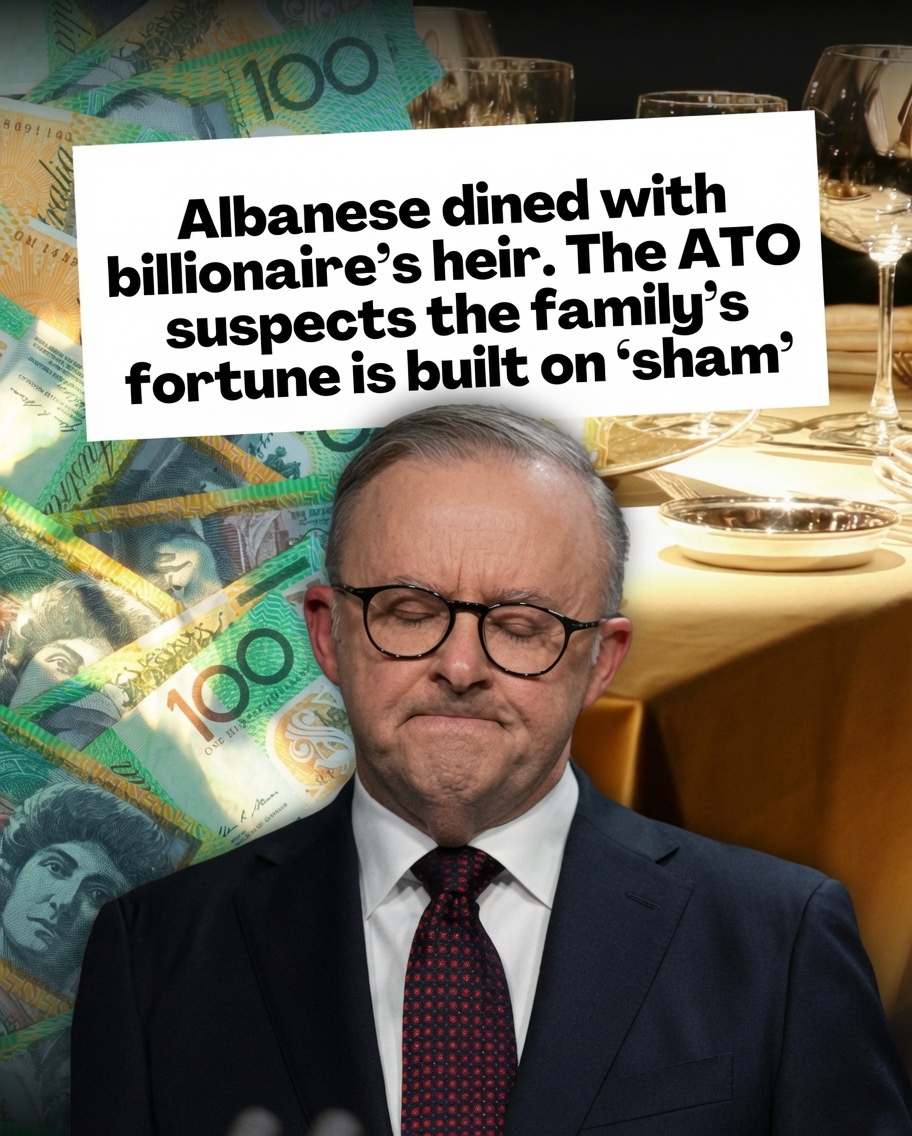
The dinner, held at the Lee family’s Point Piper mansion in Sydney, has become the subject of intense political discussion following reports that Felix Lee pledged a substantial financial contribution to the Australian Labor Party during the gathering.
According to reporting by The Australian Financial Review, the event was attended by a small group of prominent business and public figures, including Commonwealth Bank chief executive Matt Comyn, former Commonwealth Bank chief executive David Murray, former Victorian premier Daniel Andrews and former Australian Securities and Investments Commission chairman James Shipton.
Media reports initially suggested a donation of approximately $1 million had been pledged during the evening. However, Prime Minister Albanese has declined to confirm the amount, stating only that any political donation would be disclosed in accordance with Australia’s electoral funding laws. A senior government source has since reportedly disputed the $1 million figure, describing the actual amount as “drastically less”.
The controversy intensified after The Sydney Morning Herald reported details from a previously confidential 189-page affidavit prepared by the Australian Taxation Office during a long-running tax investigation into Phillip Dong Fang Lee.
According to that reporting, the affidavit alleged the businessman used a series of purported loan arrangements involving family members and associates to move substantial sums of money from China into Australia. The affidavit also raised questions about the source of funds used to acquire significant Australian property holdings and other investments.
Importantly, the allegations contained in the affidavit were never tested in court and did not result in criminal charges.
The tax dispute between the ATO and Phillip Lee was ultimately resolved through a settlement that reportedly involved repayment of part of the disputed tax liability. The settlement did not constitute a judicial finding that the allegations contained within the affidavit were proven.
There has likewise been no suggestion by the published reporting that Felix Lee was involved in any wrongdoing.
The affidavit reportedly focuses on Phillip Lee’s financial affairs, while references to family members relate to financial transactions examined during the ATO investigation rather than allegations of misconduct against them individually.
The Prime Minister’s Office has not publicly commented on whether it was aware of the historical ATO allegations before accepting the invitation to attend the dinner.
According to media reports, a senior government source indicated officials did not know of the contents of the affidavit before the event took place.
The issue has become politically sensitive because it combines two subjects that have attracted increasing public attention in Australia: political fundraising and transparency around large donations from wealthy individuals.
Under Australia’s electoral funding framework, political donations above legislated disclosure thresholds must be reported through the Australian Electoral Commission. Recent reforms have introduced more comprehensive disclosure requirements and lower reporting thresholds designed to improve transparency in political finance.
Although attending fundraising events is a routine part of political life for leaders from all major parties, such occasions frequently attract scrutiny when donors have been involved in significant regulatory disputes or other public controversies.
Political transparency advocates argue that even where no wrongdoing has occurred, governments should ensure robust due diligence processes are followed before senior ministers attend private fundraising functions involving high-profile benefactors.
Conversely, legal experts often caution against drawing conclusions based solely on allegations contained within affidavits or regulatory investigations that have not been determined by a court.
In Australia’s legal system, allegations made by regulators remain allegations unless established through judicial proceedings or admitted by the relevant parties.
The renewed attention surrounding the Lee family has also highlighted the distinction between civil tax disputes and criminal proceedings.
Tax authorities regularly prepare detailed affidavits and investigative material when pursuing disputed assessments or asset recovery actions. Such documents may contain serious allegations that form part of the Commissioner’s legal position but are not themselves findings of fact.
The attendance of Commonwealth Bank chief executive Matt Comyn has also prompted public discussion, although there has been no suggestion that his presence involved any improper conduct.
Senior executives from Australia’s largest corporations frequently attend events involving political leaders, business figures and philanthropic networks as part of their professional responsibilities.
The broader debate nevertheless reflects growing community interest in the relationship between political leaders, corporate Australia and major political donors.
Successive governments from both Labor and the Coalition have faced calls to strengthen donation transparency, reduce the influence of large private contributions and improve public confidence in Australia’s political funding system.
Recent electoral funding reforms are intended to increase transparency by requiring more timely disclosure of significant donations and tightening reporting obligations for both donors and political parties.
For the Albanese Government, the immediate issue is largely one of political perception rather than any allegation of unlawful conduct.
Opposition figures are expected to continue pressing the government on the circumstances surrounding the dinner, whether sufficient background checks were undertaken before the event and what level of political donation was ultimately made.
At present, no evidence has emerged suggesting the Prime Minister, Felix Lee or attendees at the dinner engaged in unlawful conduct in connection with the event itself.
However, the publication of the previously confidential ATO affidavit has ensured the dinner will remain part of the wider national conversation about political fundraising, transparency and public confidence in Australia’s democratic institutions.






