An Australian doctor who became one of the Islamic State group’s most recognisable foreign propagandists has been confirmed alive after years of being presumed dead, prompting renewed political debate over whether Australia can prevent him from returning home.
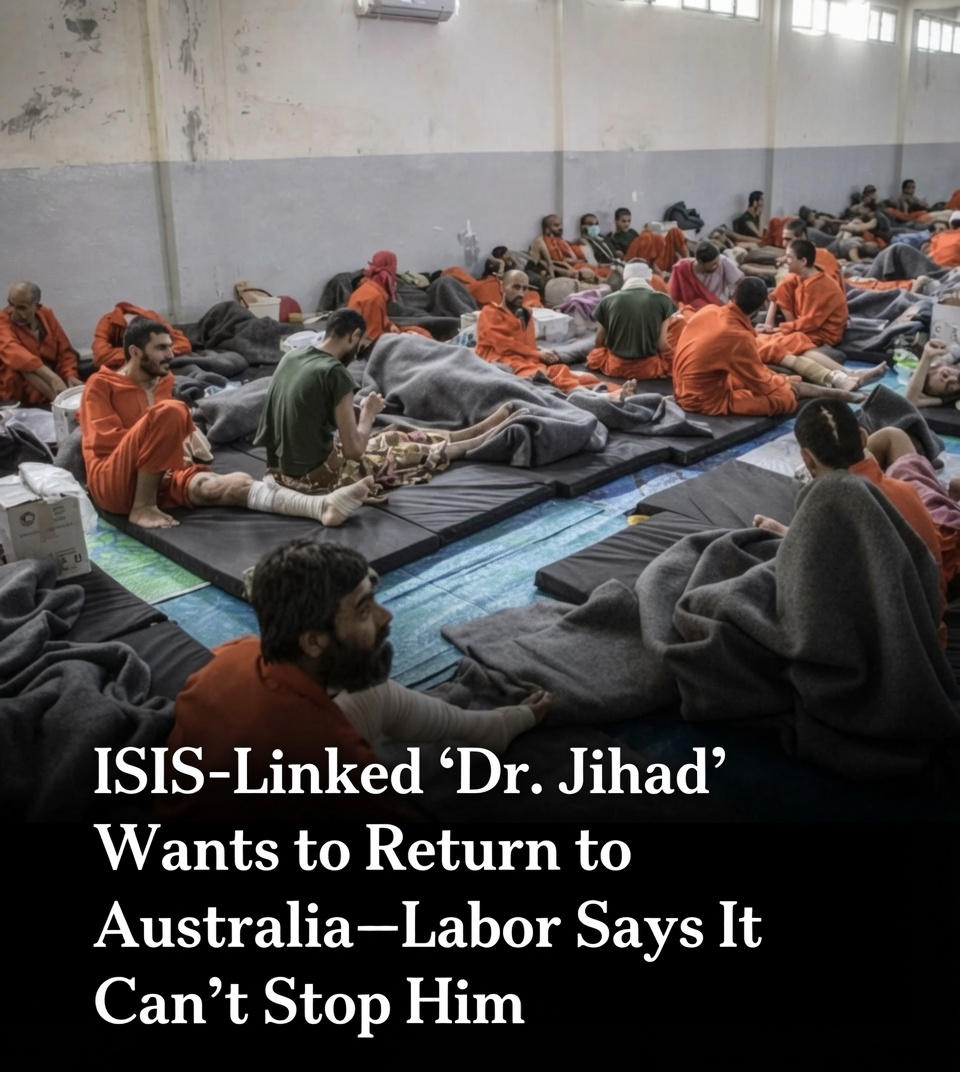
Tareq Kamleh, widely known by the nickname “Dr Jihad”, is currently being held in a high-security prison in Iraq after surviving the collapse of the Islamic State’s self-declared caliphate. Iraqi court documents indicate he is one of 13 Australian men detained in the country over alleged links to ISIS, with some reportedly hoping to return to Australia if released.
The revelation has reignited discussion about Australia’s legal obligations toward citizens accused of terrorism offences overseas and whether the federal government has the authority to prevent their return.
Government ministers have maintained that, under Australian law, they cannot simply refuse entry to an Australian citizen who is legally entitled to return. Instead, officials say any returning citizen suspected of terrorism offences would be dealt with through Australia’s criminal justice system.
Kamleh was born and raised in Perth before studying medicine and becoming a registered doctor in Australia in 2010. He later worked in Adelaide as a paediatrician before abruptly leaving the country in 2015.
Authorities say he travelled illegally into Syria, where he pledged allegiance to ISIS and adopted the name Abu Yousef al-Australie.
He soon became one of the terrorist group’s most recognisable Australian recruits, appearing in professionally produced propaganda videos encouraging other Australians and Westerners to join the organisation.
In several videos distributed globally by ISIS, Kamleh appeared wearing medical clothing while promoting life inside the so-called caliphate and urging healthcare professionals to travel to Syria. His prominent media role earned him the nickname “Dr Jihad” in Australian and international reporting.
Australian authorities subsequently charged Kamleh with multiple terrorism offences, including entering or remaining in an area declared by Australia as associated with terrorist activity, recruiting for a terrorist organisation and supporting ISIS.
The Australian Federal Police continue to hold an active arrest warrant for Kamleh.
If he returns to Australia, he is expected to be arrested immediately and brought before the courts to face the outstanding allegations.
For many years, Australian authorities and even members of Kamleh’s own family believed he had been killed during fighting around Raqqa in 2017 as Islamic State lost control of much of its territory.
However, documents released by Iraq’s Supreme Judicial Council indicate Kamleh survived the group’s military defeat, escaped through remaining ISIS-held territory and was eventually captured following the final collapse of the organisation in 2019.
He has since remained in Iraqi custody while undergoing investigation by the country’s counter-terrorism authorities.
The discovery that Kamleh is still alive has generated political controversy in Australia after reports suggested Australian officials had been aware of his survival for several years.
Media reports claim Australian government agencies were informed of his status as early as 2022, although ministers have declined to discuss operational intelligence or specify when they first received confirmation.
Treasurer Jim Chalmers said the government had “no sympathy whatsoever” for Australians who voluntarily joined terrorist organisations but stressed that any criminal prosecution would proceed independently through Australia’s legal system.
Similarly, Climate Change and Energy Minister Chris Bowen said Kamleh would receive “no special treatment” and would face “the full force of the law” if he returned to Australia. He also emphasised that the government was not facilitating the return of ISIS fighters.
The government’s position reflects a longstanding legal principle that Australian citizenship cannot generally be used as a basis to permanently exclude someone from entering the country.
Legal experts note that while Australia has powers such as Temporary Exclusion Orders in limited circumstances, those measures regulate the conditions and timing of a person’s return rather than permanently preventing an Australian citizen from re-entering the country. Once a lawful return occurs, authorities may immediately arrest, prosecute and monitor the individual where appropriate.
The issue has become increasingly prominent following the recent return of several Australian women and children formerly held in camps in north-eastern Syria after the collapse of ISIS.
In those cases, the Albanese Government repeatedly stated that while it did not actively facilitate the returns, Australian law enforcement and intelligence agencies had prepared operational plans to manage any arrivals, including criminal investigations where warranted.
Kamleh’s situation differs significantly from those cases.
Unlike many women and children who returned from Syrian camps, Kamleh is already subject to an active AFP arrest warrant and faces outstanding terrorism allegations in Australia.
Should Iraqi authorities release him or approve his transfer, Australian police would be expected to seek his arrest immediately upon arrival.
Any prosecution would ultimately be determined by the courts based on the evidence presented.
The case has also prompted broader debate over how Australia should deal with citizens who travelled overseas to join extremist organisations.
Some politicians argue the government should use every available legal mechanism to prevent former ISIS members from returning, citing ongoing national security risks.
Others contend that bringing suspects back to Australia to face prosecution and lengthy prison sentences provides greater accountability than leaving them indefinitely detained overseas without trial.
Counter-terrorism specialists have also argued that returning suspects under strict security arrangements can provide investigators with valuable intelligence about ISIS networks, recruitment pathways and foreign fighter activities that may assist future national security operations. At the same time, authorities acknowledge the significant security resources required to monitor individuals convicted of terrorism offences after their release.
Australia has enacted a range of counter-terrorism laws since the rise of ISIS, including offences covering membership of terrorist organisations, foreign incursions, recruitment, financing terrorism and advocating terrorism.
These laws allow Australians to be prosecuted for conduct that occurred overseas, provided prosecutors can establish the relevant elements of the offences before an Australian court.
Whether Kamleh ultimately returns remains uncertain.
He continues to be held by Iraqi authorities, and no decision has been announced regarding his possible release or repatriation.
However, confirmation that one of Australia’s most infamous ISIS propagandists is alive has reopened difficult questions about citizenship, national security and the limits of executive power.
For the Albanese Government, the legal position remains consistent: while ministers say they cannot simply bar an Australian citizen from returning, they insist anyone accused of joining one of the world’s most notorious terrorist organisations will face Australia’s criminal justice system if they come home.






