The Albanese Government has defended plans to reserve up to A$4.2 million worth of accommodation and meeting facilities at luxury Fiji resorts for an international climate conference, rejecting criticism that taxpayers are funding an extravagant overseas event.
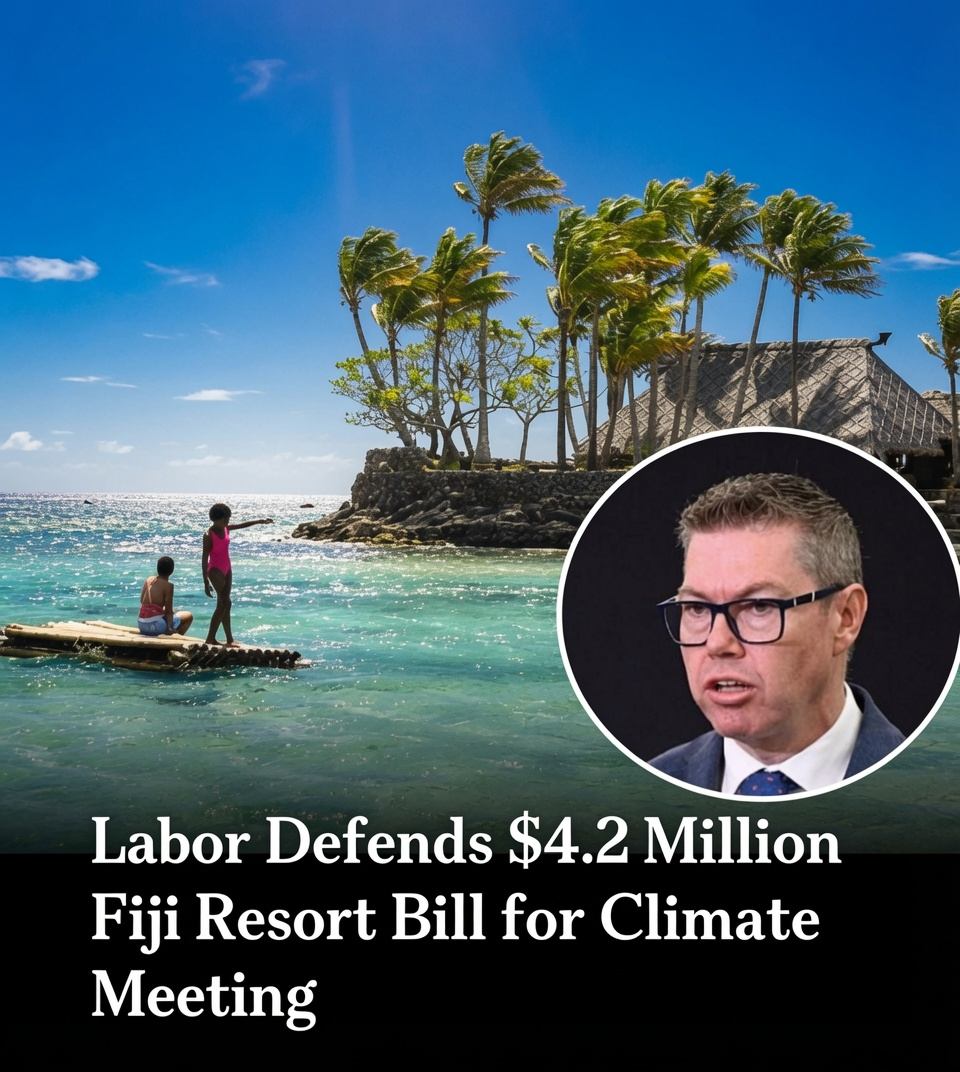
The expenditure relates to the pre-COP31 meeting scheduled to take place in Fiji from 5 to 8 October, an event designed to bring together climate negotiators and senior officials ahead of the United Nations Climate Change Conference (COP31), which will be held later this year in Türkiye.
Australia is co-president of COP31 alongside Türkiye, with Climate Change and Energy Minister Chris Bowen playing a leading role in preparations for the summit. Fiji was selected to host the pre-COP meeting as part of Australia’s commitment to strengthening engagement with Pacific nations on climate policy.
Documents published through the Australian Government’s procurement system show the Department of Climate Change, Energy, the Environment and Water has entered contracts with several five-star resorts in Fiji’s Denarau Island precinct, including the Sheraton Fiji Golf and Beach Resort, the Sofitel Fiji Resort and Spa and the Radisson Blu Resort Fiji.
The contracts have a combined maximum value of approximately A$4.217 million, covering accommodation, meeting facilities and associated venue requirements for international delegations attending the event.
The figures quickly attracted criticism after reports highlighted the luxury nature of the resorts, some of which advertise premium beachfront accommodation, multiple restaurants, spa facilities, golf courses and conference venues.
Opposition figures questioned whether such expenditure was appropriate while Australians continue to face cost-of-living pressures.
The government, however, says the headline figure does not represent the final cost to taxpayers.
A spokesperson for the Department of Climate Change, Energy, the Environment and Water said the contracts establish a maximum booking value to secure sufficient accommodation for international delegates rather than a guaranteed expenditure.
According to the department, many participating countries will reimburse Australia for their accommodation costs, while unused room allocations can be cancelled under flexible booking arrangements, reducing the Commonwealth’s eventual expenditure. Türkiye, as co-host of COP31, is expected to cover the costs of its own delegation.
The department also defended the choice of venues, saying the Denarau Island resorts are among the few locations in Fiji capable of hosting an event involving large international delegations while providing sufficient conference facilities and accommodation in a single precinct.
“The venues are the only suitable locations capable of accommodating an event of this scale, with the required accommodation capacity,” the department said.
Officials added that securing accommodation well in advance is standard practice for major international meetings and has been used previously for events including the G20 Leaders’ Summit and ASEAN-Australia summits.
Government ministers have also rejected suggestions that the arrangements amount to an unnecessary luxury trip.
Appearing on television following publication of the contracts, Minister for Defence Industry and Pacific Island Affairs Pat Conroy argued that much of the criticism overstated the actual cost to taxpayers.
“Most of the cost will be recovered from foreign leaders and their delegations coming to those hotels and paying for their rooms,” he said, describing media coverage as a “beat-up”.
The pre-COP meeting forms an important part of the United Nations climate negotiation process.
Held several weeks before the annual COP summit, pre-COP meetings bring together ministers, senior negotiators and representatives from negotiating blocs to identify areas of agreement, narrow policy differences and prepare draft negotiating positions before formal talks begin.
Although decisions are not formally adopted during pre-COP meetings, they often help shape negotiations that follow at the main conference.
Fiji’s role as host reflects its long-standing leadership within Pacific climate diplomacy.
The Pacific nation has been heavily involved in international climate negotiations for many years and previously held the presidency of COP23 in 2017. Fiji’s government has described the October meeting as an opportunity to place Pacific priorities—including climate resilience, sea-level rise and adaptation financing—at the centre of global discussions.
The event is expected to attract representatives from major negotiating groups, including the European Union, the Alliance of Small Island States and countries from Latin America, Africa and Asia.
Hosting hundreds of delegates presents significant logistical challenges in Fiji, where accommodation capable of supporting large diplomatic conferences is concentrated within a relatively small number of integrated resort complexes.
The government’s explanation has not silenced political criticism.
Opposition representatives argue that spending associated with Australia’s expanding COP31 role has continued to increase and should be more carefully scrutinised.
Recent reporting has suggested total Commonwealth spending connected to Australia’s co-presidency of COP31 has grown well beyond initial expectations, including travel, staffing and event preparation costs. Critics have described the program as an expensive diplomatic exercise during a period when governments are encouraging restraint in public spending.
The government maintains that Australia’s leadership role delivers strategic as well as environmental benefits.
Ministers argue that deeper engagement with Pacific countries strengthens regional partnerships, supports Australia’s broader foreign policy objectives and reinforces its position as a credible climate leader in the Indo-Pacific.
Officials also note that climate change remains one of the Pacific region’s highest strategic priorities, making close cooperation with island nations an important element of Australia’s regional diplomacy.
The debate also highlights the distinction between contract values and actual government expenditure.
In Commonwealth procurement, agencies frequently establish contracts with maximum spending limits to ensure sufficient capacity for major events. The final amount ultimately paid may be substantially lower if bookings are reduced, cancelled or reimbursed by participating organisations.
Whether that proves to be the case with the Fiji meeting will become clearer after the event concludes and final costs are reconciled.
The discussion nevertheless reflects the increasing political sensitivity surrounding government travel and international conferences.
While supporters argue Australia’s co-presidency of COP31 requires investment in diplomacy and regional engagement, opponents question whether premium accommodation is consistent with broader calls for fiscal discipline.
With preparations for the October meeting continuing, the Fiji event is expected to serve as a significant milestone ahead of COP31, bringing together climate negotiators from around the world before formal negotiations begin in Türkiye later this year.
At the same time, scrutiny over the costs associated with Australia’s leadership role is likely to continue, ensuring the government’s handling of the event remains under close political and public examination in the months ahead.






