The Victorian Government’s ambitious plan to phase out natural gas is facing renewed political pressure after fresh polling suggested a majority of voters oppose the policy and want households to retain the freedom to choose their preferred energy source.
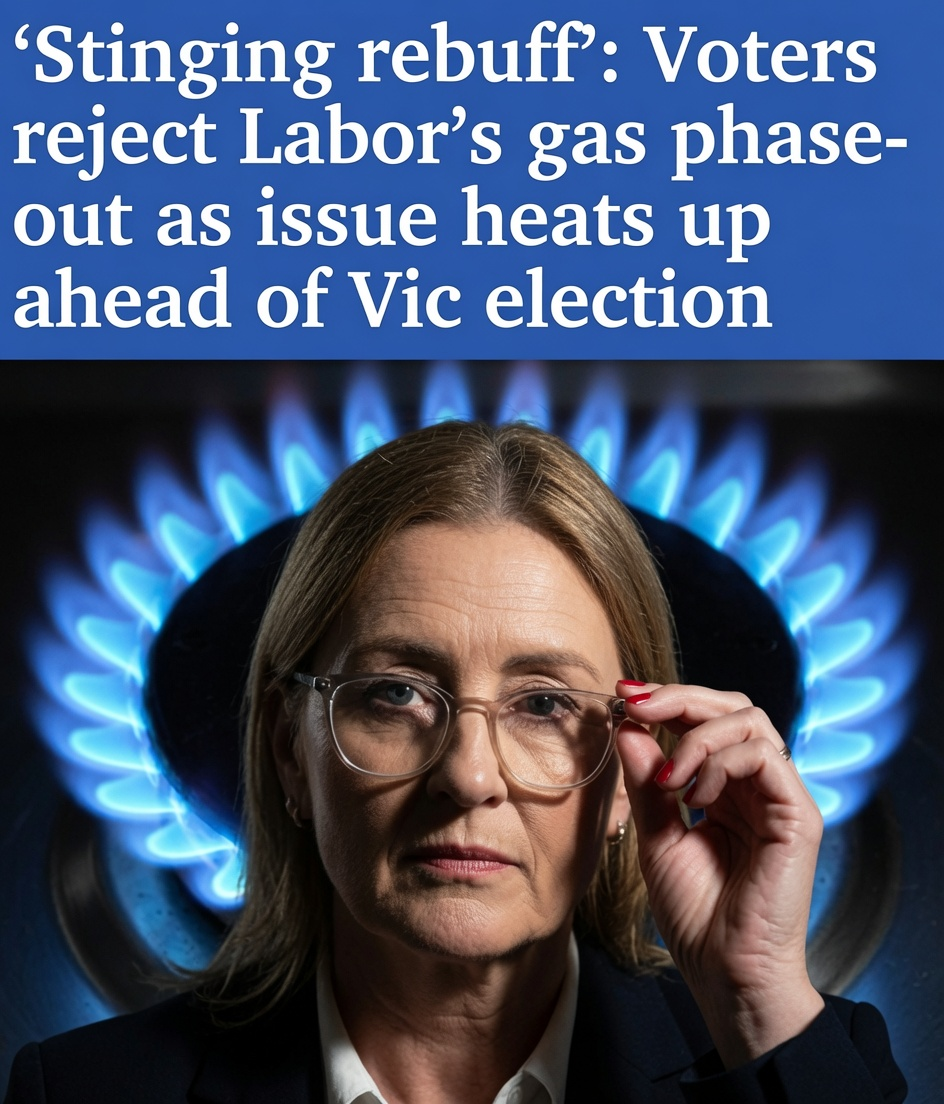
The survey, released ahead of Victoria’s 2026 state election campaign, indicates energy policy is becoming one of the defining issues confronting Premier Jacinta Allan’s Labor Government as cost-of-living concerns continue to dominate public debate.
According to the polling, most respondents oppose the government’s gas phase-out agenda and favour allowing homeowners and businesses to decide whether they use electricity, natural gas or a combination of both.
The findings reflect broader community concerns over energy affordability at a time when households continue to face pressure from rising living expenses, mortgage repayments, insurance premiums and utility bills.
Victoria has positioned itself as one of Australia’s most ambitious jurisdictions in pursuing the transition away from fossil fuels.
The Allan Government argues electrification of homes and businesses will play a critical role in reducing greenhouse gas emissions while supporting the state’s legislated target of reaching net zero emissions by 2045.
Under existing policies, new planning and building rules have progressively encouraged greater reliance on electric appliances, particularly in newly constructed homes. The government has also introduced incentives to encourage households to replace older gas appliances with electric alternatives, including heat pumps and induction cooktops.
Ministers have argued that all-electric homes will become cheaper to operate over time, particularly as renewable electricity generation expands and households increasingly install rooftop solar panels and battery storage.
Supporters of the transition also point to environmental benefits.
Natural gas combustion contributes to carbon emissions, while electrification allows homes to increasingly rely on renewable energy generated from wind, solar and hydroelectric sources. Public health researchers have additionally highlighted evidence linking indoor gas cooking with reduced indoor air quality, although the degree of health risk remains the subject of ongoing scientific discussion.
Despite those arguments, the government’s approach has attracted growing criticism from opposition parties, industry groups and sections of the community.
Critics argue the transition is occurring too quickly and risks imposing significant upfront costs on households already struggling with higher living expenses.
Replacing functioning gas heating systems, hot water units and kitchen appliances can require substantial investment, even where government rebates are available.
Businesses, particularly restaurants, cafés and food manufacturers that rely heavily on gas-powered equipment, have also expressed concerns about the practical and financial implications of accelerated electrification.
Many chefs continue to favour gas cooktops because of their immediate heat control, although improvements in induction technology have narrowed the performance gap in recent years.
The debate therefore extends beyond environmental policy into broader questions about consumer choice and affordability.
Opposition parties have argued Victorians should retain the right to determine which energy source best suits their household circumstances rather than having that decision effectively shaped through government regulation.
The issue has become increasingly politically significant as electricity prices remain a major concern for many families.
Although wholesale electricity markets have experienced periods of easing prices, consumers continue to face higher retail bills than they did several years ago. At the same time, uncertainty surrounding future energy infrastructure investment has contributed to ongoing public debate about reliability, affordability and long-term energy security.
Victoria’s broader energy transition forms part of Australia’s national effort to reduce emissions under international climate commitments.
The state has invested heavily in renewable energy development, including large-scale wind farms, solar generation, battery storage and transmission infrastructure designed to connect renewable projects to the electricity grid.
The Allan Government maintains that these investments will improve reliability while reducing long-term electricity costs as more renewable generation enters the market.
However, energy economists frequently note that transitions of this scale inevitably involve periods of significant infrastructure investment and adjustment.
Building new transmission lines, expanding storage capacity and modernising electricity networks require substantial capital expenditure before consumers experience the full economic benefits of increased renewable generation.
This has contributed to differing expectations regarding how quickly households may see lower energy bills.
The latest polling suggests many Victorians remain more immediately focused on affordability than on longer-term projections.
Political analysts say energy policy is increasingly intersecting with broader concerns surrounding inflation, housing affordability and economic confidence.
As a result, debates about electricity, gas and consumer choice are expected to feature prominently during the lead-up to the state election.
The Coalition has sought to frame the issue around household freedom and cost-of-living pressures, arguing families should not be compelled to abandon gas appliances before they are ready or financially able to do so.
The government, meanwhile, continues to argue that delaying electrification would ultimately increase costs by slowing the transition to cleaner and more efficient energy systems.
Environmental organisations broadly support reducing reliance on natural gas, describing electrification as an essential component of achieving Australia’s emissions reduction objectives.
Industry groups, however, have called for greater flexibility, warning that transition policies should account for differing household circumstances, regional infrastructure constraints and the practical realities facing businesses.
With Victoria expected to remain one of Australia’s fastest-growing states over coming decades, ensuring sufficient electricity generation and network capacity has become another major consideration.
Meeting future demand will require continued investment in renewable generation, storage technologies and transmission infrastructure as electrification expands across homes, transport and industry.
The challenge for policymakers lies in balancing environmental objectives with affordability and public confidence.
The latest polling indicates that many voters support emissions reduction but remain cautious about policies they believe could limit consumer choice or increase household costs in the short term.
As campaigning ahead of the 2026 Victorian election gathers momentum, energy policy appears set to become one of the campaign’s defining battlegrounds.
Whether the Allan Government can persuade voters that its long-term vision outweighs immediate cost concerns may prove one of the election’s most closely watched political tests.






