Independent federal MP Bob Katter has once again ignited debate over Australia’s gun laws after declaring there is “nothing more fundamentally Australian” than teaching children to hunt, fish and safely use firearms under adult supervision.
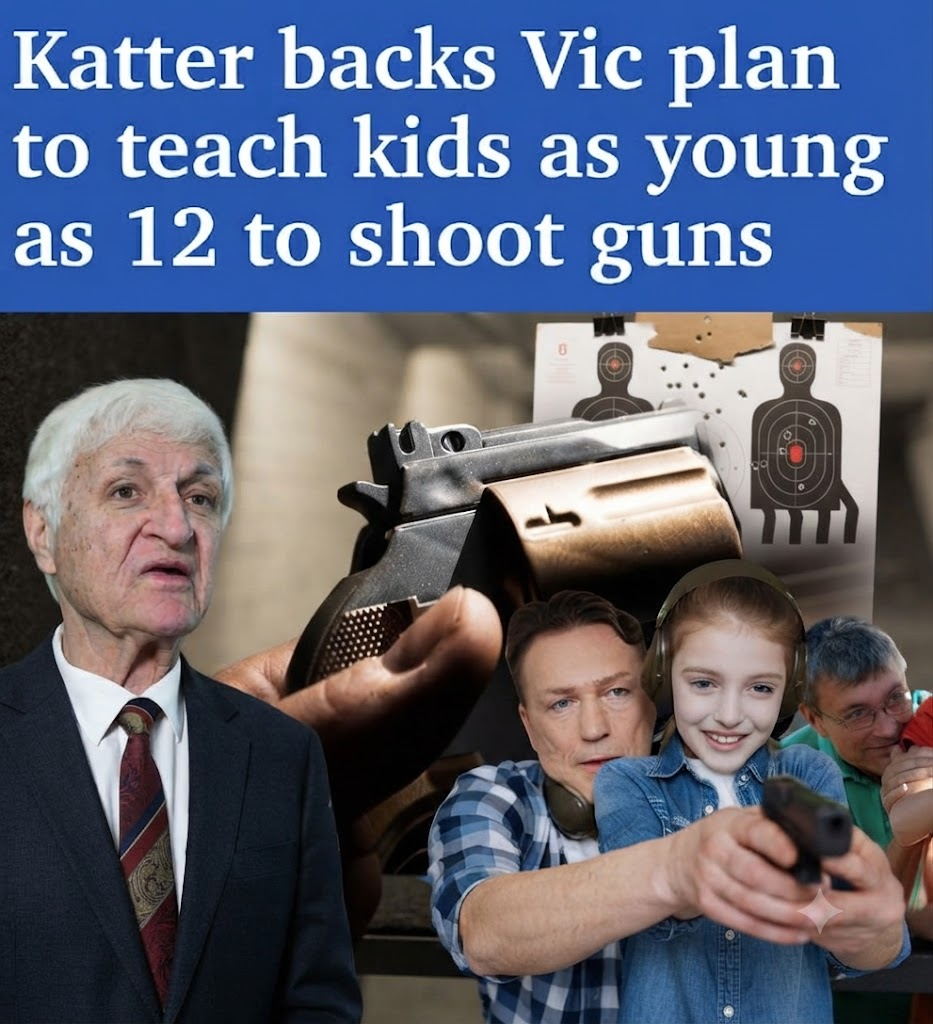
The outspoken Member for Kennedy made the comments while backing a proposal in Victoria that would encourage greater participation in outdoor recreation, including supervised firearms training for young people from the age of 12. His remarks have renewed a long-running national conversation about Australia’s firearm regulations, rural traditions and the balance between cultural practices and public safety.
Katter argued that camping, fishing and hunting have long formed part of Australia’s heritage, particularly in regional and remote communities where firearm ownership is often associated with farming, pest control and outdoor recreation rather than personal protection.
“Indeed, I can think of nothing more fundamentally Australian than teaching your kids or grandkids to go camping, fishing and hunting,” Katter said while criticising what he described as excessive interference from “big city bureaucrats” in the lives of regional Australians.
The latest comments are consistent with Katter’s long-held views. Throughout his parliamentary career he has repeatedly argued for broader acceptance of recreational shooting and hunting, often presenting them as practical rural skills rather than political issues.
His support comes as the Victorian Government considers creating a new organisation known as Outdoor Recreation Victoria by combining the Victorian Fisheries Authority and the Game Management Authority. According to the proposal, the agency would promote activities such as camping, fishing, hunting and supervised firearms education for eligible young participants.
While welcoming the proposal, Katter questioned whether the Victorian Labor Government was genuinely embracing outdoor recreation or simply attempting to generate political attention.
He argued that announcing new initiatives would mean little unless governments also reduced regulations that, in his view, have gradually limited Australians’ ability to enjoy public land and traditional outdoor activities.
The comments have again highlighted the significant cultural divide between metropolitan Australia and many regional communities.
For many families living in agricultural areas, children commonly learn firearm safety under close adult supervision as part of farm life. Firearms are regularly used for controlling invasive species, protecting livestock and managing pests, alongside recreational hunting.
By contrast, Australians living in major cities generally have far less exposure to firearms, with gun ownership often viewed primarily through the lens of crime prevention and public safety.
Australia’s firearms laws are among the strictest in the developed world following the sweeping reforms introduced after the 1996 Port Arthur massacre in Tasmania. Those reforms established nationally consistent licensing requirements, mandatory registration, genuine reason tests and tighter controls on semi-automatic firearms.
Although Australia’s regulatory framework remains highly restrictive, it does not prohibit all minors from handling firearms.
Several Australian jurisdictions already allow supervised firearm use by young people under tightly regulated permit systems.
In New South Wales, Victoria and Tasmania, minors aged 12 and above may obtain permits allowing supervised use of firearms for approved sporting or target shooting activities. Queensland allows supervised licences from age 11 under certain conditions, while the Northern Territory permits junior firearm licences from age 10 for approved sporting and hunting purposes. South Australia also provides supervised pathways for young shooters participating in recognised activities or agricultural work.
These arrangements generally require direct adult supervision, compliance with licensing rules and restrictions on the types of firearms that may be used.
Katter has previously advocated even broader firearm education for young Australians.
In earlier public statements he suggested that school-aged students should receive rifle training as part of strengthening Australia’s national resilience, although those proposals never gained political support.
His past comments have also generated controversy beyond domestic policy.
In 2022, Katter incorrectly claimed that countries including Israel, Finland, Sweden and Switzerland issued rifles to schoolchildren. Independent fact-checks later found those claims to be false, with authorities from each country confirming schools do not provide firearms to students.
Supporters of Katter’s latest comments argue that supervised firearm education is fundamentally different from expanding gun ownership.
Many rural shooting organisations have long promoted structured training that focuses on safety, responsibility, legal compliance and respect for firearms rather than encouraging widespread access.
They argue that teaching young people under qualified supervision can reduce unsafe behaviour by ensuring participants understand storage requirements, handling procedures and legal obligations before ever obtaining a licence as adults.
Critics, however, argue that normalising firearm use among children sends the wrong message, particularly in a country whose gun reforms are frequently credited with reducing firearm deaths and mass shootings over the past three decades.
Public health advocates have consistently maintained that limiting firearm access remains an important component of Australia’s broader community safety strategy.
The renewed debate also comes during broader discussions about firearms policy across Australia.
Following the Bondi Junction tragedy, governments considered expanding a national firearms buyback program. However, progress has varied between jurisdictions, with several states declining to participate in a coordinated national approach, leaving implementation fragmented.
For Katter, the issue extends beyond firearms themselves.
Throughout his political career, the North Queensland MP has consistently portrayed hunting, fishing and outdoor recreation as central elements of regional Australian identity. He frequently argues that policymakers based in major cities lack firsthand understanding of life in remote communities, where firearms are often regarded as practical tools rather than symbols of violence.
His outspoken style has made him one of Australia’s most recognisable crossbench politicians.
Representing the vast Queensland electorate of Kennedy since 1993, Katter has built a reputation for championing agricultural industries, regional development and policies that frequently diverge from both major parties.
Whether his latest remarks gain broader political support remains uncertain.
Firearms policy has historically attracted bipartisan caution at the federal level, with neither Labor nor the Coalition showing any appetite for significantly loosening Australia’s core gun laws.
Nevertheless, Katter’s intervention has once again ensured that questions surrounding rural culture, supervised youth participation in shooting sports and Australia’s evolving relationship with firearms remain firmly in the national spotlight.






