One Nation leader Pauline Hanson has defended her long-standing relationship with mining billionaire Gina Rinehart, insisting every financial contribution received from Australia’s richest person has been fully disclosed in accordance with Australia’s electoral laws.
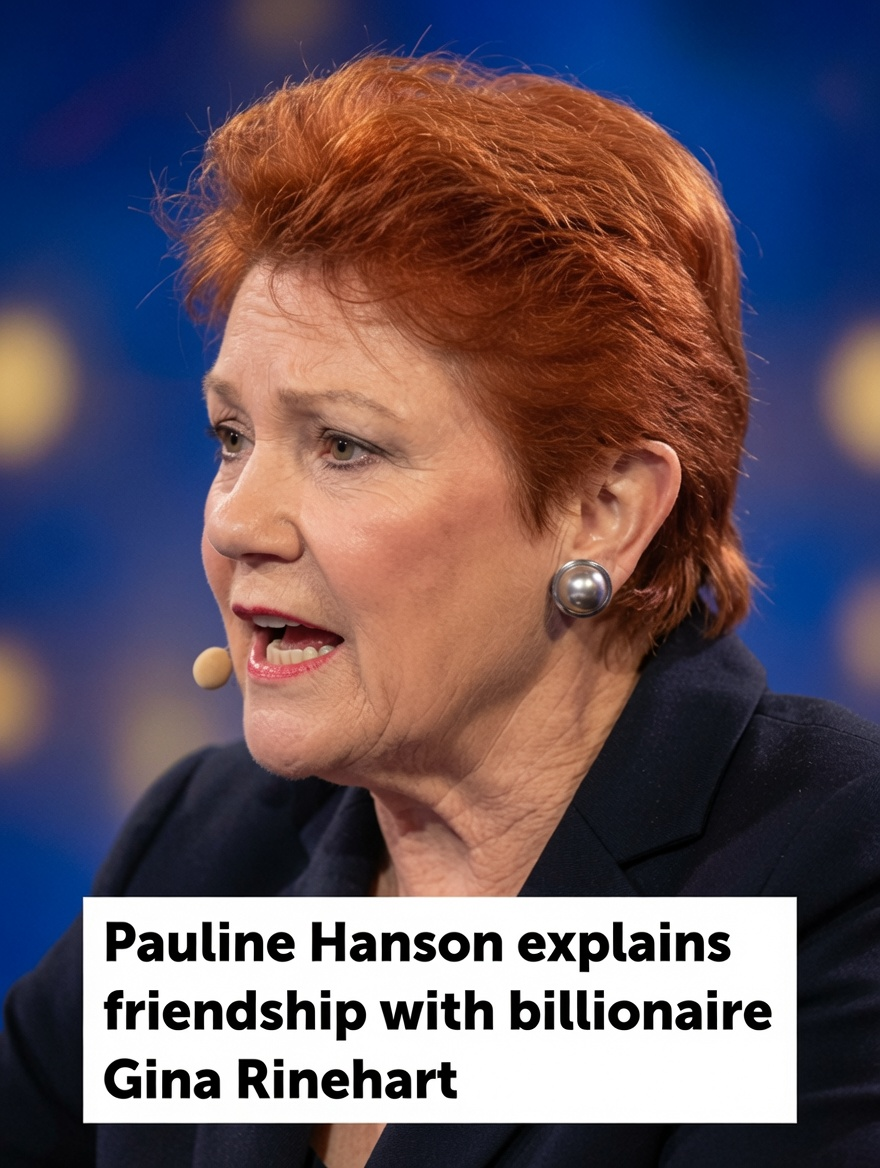
The issue resurfaced after Senator Hanson was questioned about the support she has received from Rinehart over recent years, including access to an aircraft reportedly valued at around $2 million that was made available during political campaigning.
Responding to criticism, Hanson rejected suggestions there had been any lack of transparency.
She said every donation and every form of assistance provided by Rinehart or associated interests had been declared through the appropriate legal processes required under Australia’s electoral funding framework.
“Everything has been declared,” Hanson said, maintaining that neither she nor One Nation had attempted to conceal financial support received during election campaigns.
The comments come amid renewed national debate over political donations, transparency requirements and the influence of wealthy individuals on Australian politics.
Gina Rinehart, executive chair of Hancock Prospecting, is Australia’s wealthiest individual and one of the country’s most influential business figures.
Through her mining interests, she has become a prominent voice on issues including taxation, energy policy, economic regulation, defence, agricultural development and Australia’s international competitiveness.
Although Rinehart has historically supported a range of conservative causes and organisations, her political donations have frequently attracted public attention because of their size and her high public profile.
One Nation has been among the political parties to receive support from individuals and organisations associated with Rinehart, particularly during election campaigns focused on regional Australia, mining communities and energy policy.
Hanson has repeatedly argued that donations do not determine her political positions.
She says One Nation’s policies are developed independently and reflect issues the party has advocated for many years, including lower immigration, stronger border protection, reduced government regulation, support for regional industries and expanded domestic energy production.
Critics, however, argue that substantial political donations—regardless of which party receives them—can create perceptions of influence even where no improper conduct occurs.
Transparency advocates have long called for stricter disclosure rules, lower reporting thresholds and faster publication of political donations so voters can better understand who is funding election campaigns.
Australia’s political finance system requires parties and candidates to disclose donations above legislated thresholds to the Australian Electoral Commission (AEC).
The AEC publishes annual disclosure returns that include reportable donations, loans and certain forms of financial support provided to political parties, associated entities and candidates.
In addition to direct monetary donations, electoral laws can also require the disclosure of non-cash contributions, often referred to as “gifts in kind”.
These may include services, facilities or assets provided for campaign purposes where they meet reporting requirements under Commonwealth electoral legislation.
Hanson’s defence centred on that point.
She maintained that support involving the aircraft, along with every other reportable benefit received, had been properly declared and was therefore available for public scrutiny through Australia’s disclosure regime.
The debate over campaign finance has intensified in recent years as successive governments have considered reforms designed to increase transparency while limiting the influence of large donors.
Proposals have included lowering donation disclosure thresholds, introducing caps on campaign expenditure, restricting foreign donations and requiring more timely reporting of significant contributions.
Supporters of reform argue Australia’s disclosure system should provide voters with near real-time information before elections rather than many months after campaigns conclude.
Others caution that excessive regulation could disadvantage smaller political parties that rely heavily on private donations because they receive substantially less public funding and organisational support than the major parties.
One Nation has consistently argued that any donation reforms should apply equally across all political parties rather than targeting particular individuals or political movements.
The party also points out that Australia’s major parties have historically received financial support from businesses, trade unions and wealthy individuals across a wide range of industries.
Political funding remains one of the most contested issues in Australian democracy.
Both Labor and the Coalition have faced scrutiny over donations from corporations, industry groups, unions and prominent business figures, while crossbench parties have increasingly relied on fundraising from community donors and advocacy organisations.
Successive reviews by parliamentary committees and electoral experts have examined whether the existing framework adequately balances transparency, privacy and freedom of political participation.
The discussion surrounding Hanson and Rinehart therefore reflects broader questions extending well beyond one political party.
At its centre is the ongoing challenge of ensuring public confidence that political decisions are made in the national interest while preserving the legal right of individuals and organisations to participate in Australia’s democratic process through lawful political donations.
Rinehart herself has regularly argued that successful businesses should be free to participate in public policy debates and support political causes they believe will strengthen Australia’s economy.
Meanwhile, Hanson continues to reject suggestions that financial support has influenced her policy agenda.
She says her positions on immigration, regional development, mining, energy and cost-of-living pressures have remained consistent throughout her decades in public life regardless of who supports her campaigns.
As debate over electoral reform continues, the relationship between major political donors and elected representatives is likely to remain under close public scrutiny.
Whether future reforms alter Australia’s political funding rules or simply increase disclosure requirements, transparency is expected to remain a central issue in maintaining confidence in the country’s democratic institutions.






