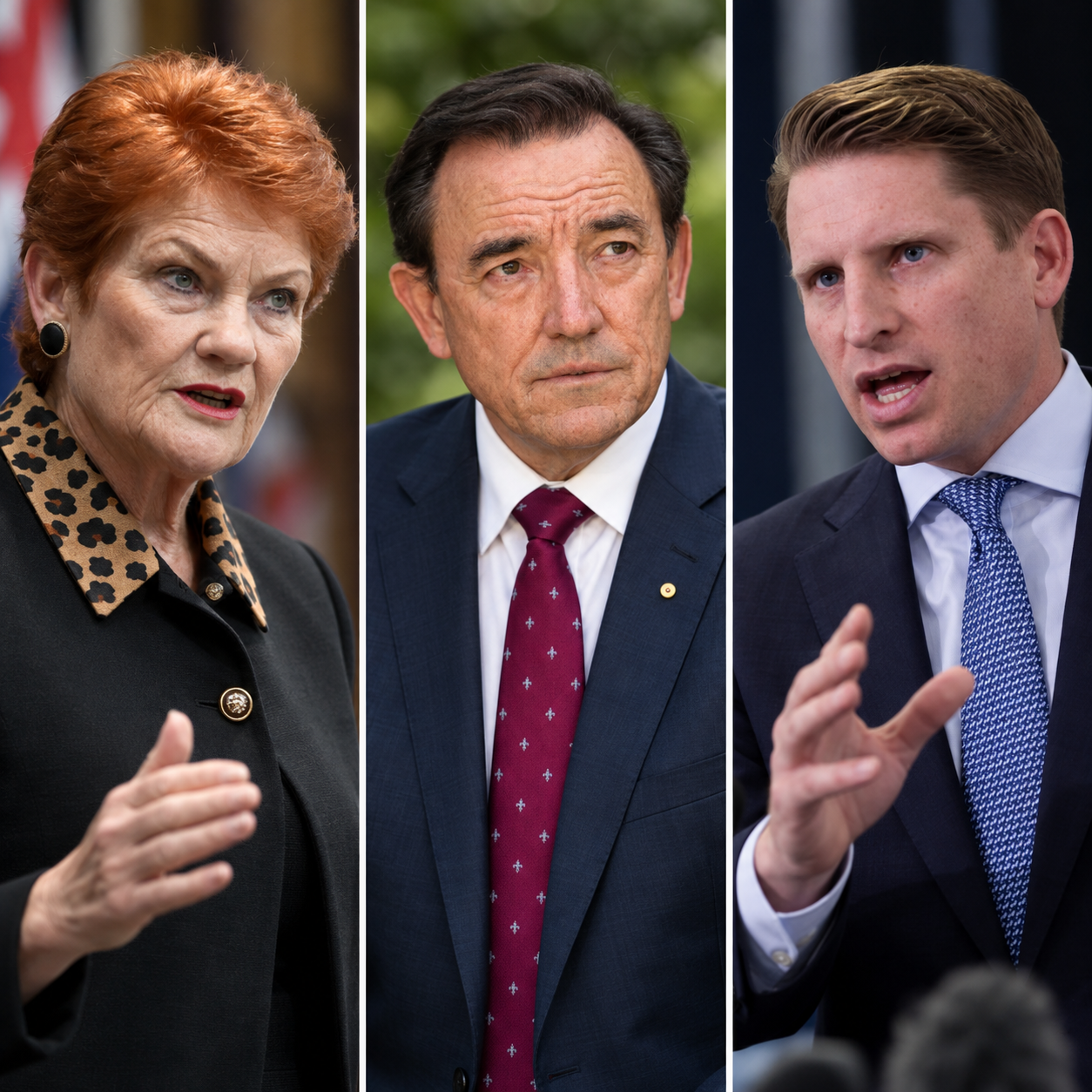
Prime Minister Anthony Albanese has come under renewed political criticism after claims that the federal government has encouraged local councils to increase the number of Australian citizenship ceremonies, with One Nation arguing the move is politically motivated while Labor insists it is about ensuring eligible migrants can become Australian citizens in a timely manner.

The issue has become another flashpoint in Australia’s increasingly heated debate over immigration, citizenship and national identity, with political parties offering sharply different views on how the citizenship process should operate.
One Nation has accused the Albanese government of placing pressure on local councils to conduct additional citizenship ceremonies, particularly around significant national occasions such as Australia Day. The party argues that councils should retain greater discretion over how and when ceremonies are conducted, while questioning whether the federal government’s approach is influenced by broader political considerations.
The Albanese government rejects suggestions that citizenship ceremonies are being used for partisan purposes. Ministers have consistently argued that becoming an Australian citizen is one of the country’s most significant civic milestones and that eligible applicants should not face unnecessary delays once they have completed all legal requirements.
Under Australian law, citizenship ceremonies represent the final step in the naturalisation process. Successful applicants do not officially become Australian citizens until they make the Australian Citizenship Pledge at an authorised ceremony conducted by a local council or another approved organisation.
Most ceremonies are organised by councils on behalf of the Commonwealth, although the federal government retains responsibility for administering Australia’s citizenship laws through the Department of Home Affairs.
In recent years, the federal government has encouraged councils to reduce waiting times for approved applicants, particularly following pandemic-related disruptions that created substantial processing backlogs across parts of the country.
Labor has argued that efficient citizenship ceremonies help strengthen social cohesion by allowing new Australians to participate fully in civic life, including voting, obtaining an Australian passport and accessing rights that accompany citizenship.
The government has also maintained that timely ceremonies recognise the commitment many migrants have already demonstrated through years of lawful residence, employment, taxation and community participation before becoming eligible to apply.
One Nation, however, has continued to question Australia’s broader migration settings.
The party has long advocated for significantly lower levels of permanent and temporary migration, arguing that rapid population growth places additional pressure on housing affordability, infrastructure, healthcare and public services.
Within that broader policy framework, One Nation has also argued that Australian citizenship should reflect what it describes as a deeper commitment to national values and integration rather than simply the completion of legal requirements.
The latest criticism forms part of a wider political campaign in which the party has repeatedly challenged Labor’s approach to migration and multicultural policy.
While some Coalition politicians have also criticised aspects of Labor’s immigration policies, the Coalition has generally supported Australia’s citizenship system and has not proposed fundamentally changing the role played by local councils in conducting ceremonies.
Citizenship ceremonies have occasionally become politically contentious, particularly around Australia Day.
Several councils in previous years chose not to hold ceremonies on 26 January because of concerns raised by Aboriginal and Torres Strait Islander communities, who regard the date as marking the beginning of colonisation and refer to it as Invasion Day or Survival Day.
Successive federal governments have taken differing approaches to that issue. The former Coalition government required councils wishing to retain authority to conduct citizenship ceremonies to comply with national expectations regarding Australia Day ceremonies. The Albanese government later reversed some of those administrative settings while continuing to encourage councils to ensure eligible applicants are not subjected to unnecessary waiting periods.
The broader political discussion reflects competing views about the meaning of Australian citizenship itself.
Supporters of faster citizenship pathways argue that becoming a citizen strengthens integration by encouraging migrants to participate more fully in Australian democracy, community organisations and public life.
They note that citizenship provides important legal rights, including the ability to vote in federal and state elections, seek election to Parliament if otherwise eligible, apply for an Australian passport and receive full consular assistance overseas.
Critics of high migration levels argue that citizenship policy cannot be separated from Australia’s overall immigration program.
They contend that population growth should be moderated before expanding opportunities for additional citizenship ceremonies, particularly during a period of housing shortages and continued cost-of-living pressures.
Housing affordability has emerged as one of Australia’s most significant political issues, with both major parties acknowledging that supply has struggled to keep pace with demand in many parts of the country.
Migration has consequently become an increasingly prominent topic in federal political debate, even though economists generally point to multiple factors—including planning constraints, construction costs, interest rates and labour shortages—as contributors to housing challenges.
The Albanese government has repeatedly defended Australia’s migration program, arguing that skilled migrants remain essential to addressing workforce shortages across sectors such as healthcare, aged care, engineering, construction and information technology.
Ministers have also argued that citizenship should remain a positive milestone celebrating successful settlement rather than becoming a partisan political issue.
Political analysts note that debates surrounding citizenship often extend beyond administrative questions.
For some Australians, citizenship represents the successful completion of a long journey towards belonging within Australian society. For others, it raises broader questions about national identity, border policy and the pace of population growth.
Those differing perspectives help explain why citizenship ceremonies periodically become subjects of political controversy despite generally attracting limited public attention outside election campaigns.
The latest exchange also illustrates the contrasting political strategies adopted by Labor and One Nation.
Labor continues to emphasise multiculturalism, migration and inclusion as central components of modern Australia, while One Nation argues that tighter immigration controls and stronger emphasis on national identity better reflect community concerns about economic pressures and social cohesion.
Although both sides acknowledge the importance of Australian citizenship, they disagree over how the citizenship process fits within Australia’s broader immigration framework.
With migration expected to remain one of the defining domestic policy issues in the years ahead, debates over citizenship ceremonies, settlement policy and national identity are likely to continue attracting political attention well beyond this latest dispute.