Melbourne’s housing market is enduring what property experts believe could become its deepest correction in more than a decade, with almost every suburb recording falling house values as higher borrowing costs, investor uncertainty and recent federal tax reforms weigh heavily on buyer confidence.
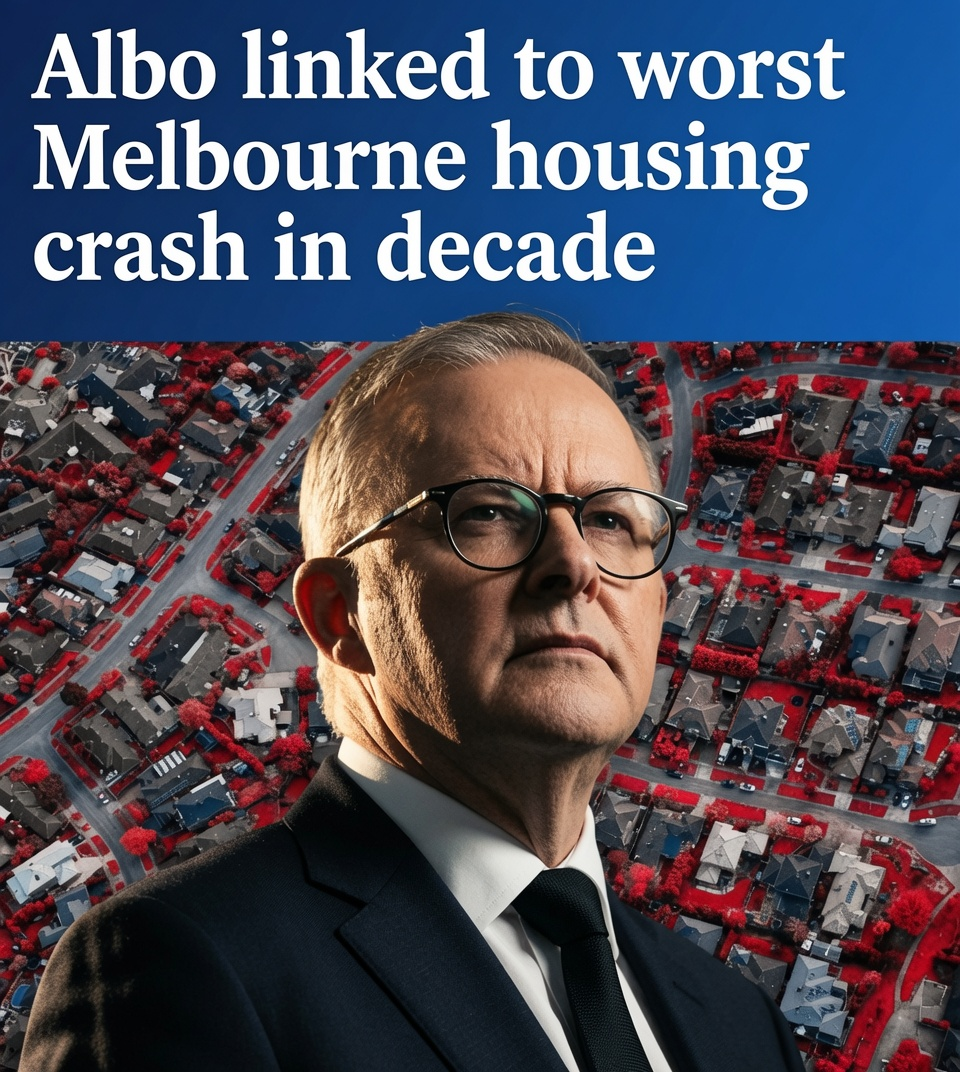
According to PropTrack’s latest Quarterly Home Values report, house values declined across 380 of Melbourne’s 409 measured suburbs during the June quarter. That represents about 93 per cent of all suburbs analysed — the weakest quarterly performance recorded in the report’s history and a sharper downturn than previous corrections during the rapid interest rate increases of 2022 or the mortgage refinancing pressures experienced in 2024.
The figures suggest Melbourne has become Australia’s weakest-performing capital city housing market after several years of relatively subdued price growth compared with Brisbane, Perth and Adelaide.
Only 29 suburbs managed to record any increase in median house values during the three-month period, and just 18 of those achieved gains exceeding 0.5 per cent.
Regional fringe communities Romsey and Lancefield stood out as the strongest performers, each posting an 8 per cent rise in median house prices to approximately $870,000 and $787,000 respectively.
Most of the remaining growth suburbs shared one common characteristic — affordability. Twenty-six of the 29 suburbs where prices continued to rise had median house values below $950,000, making them accessible to first-home buyers benefiting from the federal government’s 5 per cent deposit assistance scheme.
Apartment values performed slightly better than detached houses, although weakness remained widespread. Unit prices increased in only 79 suburbs while declining across 204 suburbs, meaning almost three-quarters of Melbourne’s apartment markets also lost value during the quarter.
PropTrack senior economist Anne Flaherty said the latest figures suggest Melbourne’s downturn could ultimately prove more severe than initially forecast.
She pointed to continuing uncertainty surrounding interest rates, together with changes announced in the Federal Budget affecting negative gearing and capital gains tax arrangements for future investors.
“There’s some pretty strong signals that prices are likely to fall further than we did expect pre-budget,” Ms Flaherty said.
She argued the tax reforms had added further pressure to an already weakening market, saying there was little doubt the policy changes had exacerbated price declines across Melbourne.
Nevertheless, she does not expect an uncontrolled collapse.
Melbourne continues to experience strong population growth while remaining considerably more affordable than Sydney, providing ongoing demand from owner-occupiers even as investors become more cautious.
“People still need somewhere to live,” she noted, suggesting underlying housing demand should place a floor beneath prices even if the downturn deepens further.
The latest weakness follows several years of changing conditions for Victorian property owners.
Following the rapid Reserve Bank interest rate increases that began in 2022, borrowing capacity fell sharply across Australia. Melbourne subsequently underperformed most other capital cities as affordability pressures combined with relatively high land taxes on investors and slower investor demand.
The 2026 Federal Budget introduced additional structural changes by limiting negative gearing concessions on newly purchased established investment properties from July 2027 while replacing the long-standing 50 per cent capital gains tax discount with an inflation-based calculation for future gains. Existing investments are largely grandfathered under the previous rules, but economists believe the policy shift has significantly altered investor sentiment.
Property analysts say the reforms are unlikely to trigger an immediate flood of forced sales, but they are expected to reduce investor appetite for established homes and contribute to softer pricing during the transition period.
National Australia Bank has also revised its housing outlook, forecasting Melbourne among the weakest-performing capital city markets this year as higher interest rates combine with the new tax settings to slow demand.
Despite the gloomy headlines, several property professionals believe today’s market presents significant opportunities for owner-occupiers rather than investors.
Buyer’s agent Nicole Jacobs described recent months as some of the strongest buying conditions seen for years.
She said homeowners looking to upgrade could benefit because both the property they are selling and the property they are buying have become cheaper, often resulting in a smaller gap between the two transactions.
Rather than waiting for future interest rate cuts that could reignite competition, buyers upgrading today may secure a larger financial advantage if prices remain subdued.
Jellis Craig chief executive Andrew McCann also highlighted strong demand below the $750,000 to $1 million price range, where affordability and government assistance continue attracting first-home buyers.
Premium suburbs, however, are telling a different story.
Mr McCann said many buyers at the upper end of Melbourne’s market remain cautious, leading to subdued transaction volumes even as well-located prestige properties continue attracting competition because of limited supply.
Meanwhile, regional Victorian communities and lifestyle destinations are experiencing renewed interest.
Changing work patterns continue encouraging many Australians to prioritise larger homes and open space over proximity to central business districts.
Ray White agent Joshua Reeves believes Romsey and Lancefield have become attractive alternatives because they offer country lifestyles within commuting distance of Melbourne while remaining significantly cheaper than much of the Macedon Ranges.
Infrastructure improvements have also increased their appeal, including the opening of a Coles supermarket in Romsey, helping convince buyers the towns offer both lifestyle and convenience.
Mr Reeves expects demand for these communities to remain resilient as flexible working arrangements allow more Australians to live further from traditional employment centres.
The Melbourne downturn also reflects broader changes occurring across Australia’s housing market.
While several capital cities have recently begun slowing after years of rapid growth, regional markets in many states continue demonstrating greater resilience because of comparatively affordable housing and strong interstate migration.
Housing economists caution that city-wide statistics often conceal significant differences between individual suburbs.
Affordable family homes, established suburbs with good transport links and regional lifestyle locations continue attracting buyers, whereas expensive investment-oriented markets face much weaker conditions.
For investors, the environment has become considerably more complex than during the low interest rate years following the pandemic.
Financing costs remain elevated, tax incentives have become less generous for future purchases and rental yields in many established suburbs remain relatively modest.
However, analysts note that grandfathering provisions mean many existing investors retain access to previous tax arrangements, reducing the likelihood of widespread distressed selling.
For first-home buyers, by contrast, today’s market may represent one of the strongest opportunities seen in several years.
Reduced competition from investors, slower price growth and government purchasing assistance are combining to improve affordability despite elevated mortgage rates.
Whether Melbourne’s downturn ultimately becomes the deepest correction of the past decade will depend largely on the direction of inflation, future Reserve Bank decisions and how investors respond to the new federal tax framework over the coming year.
For now, however, the latest PropTrack figures leave little doubt that Melbourne remains Australia’s softest major housing market, with price declines now extending across almost every corner of the city even as selected affordable and regional communities continue defying the broader trend.