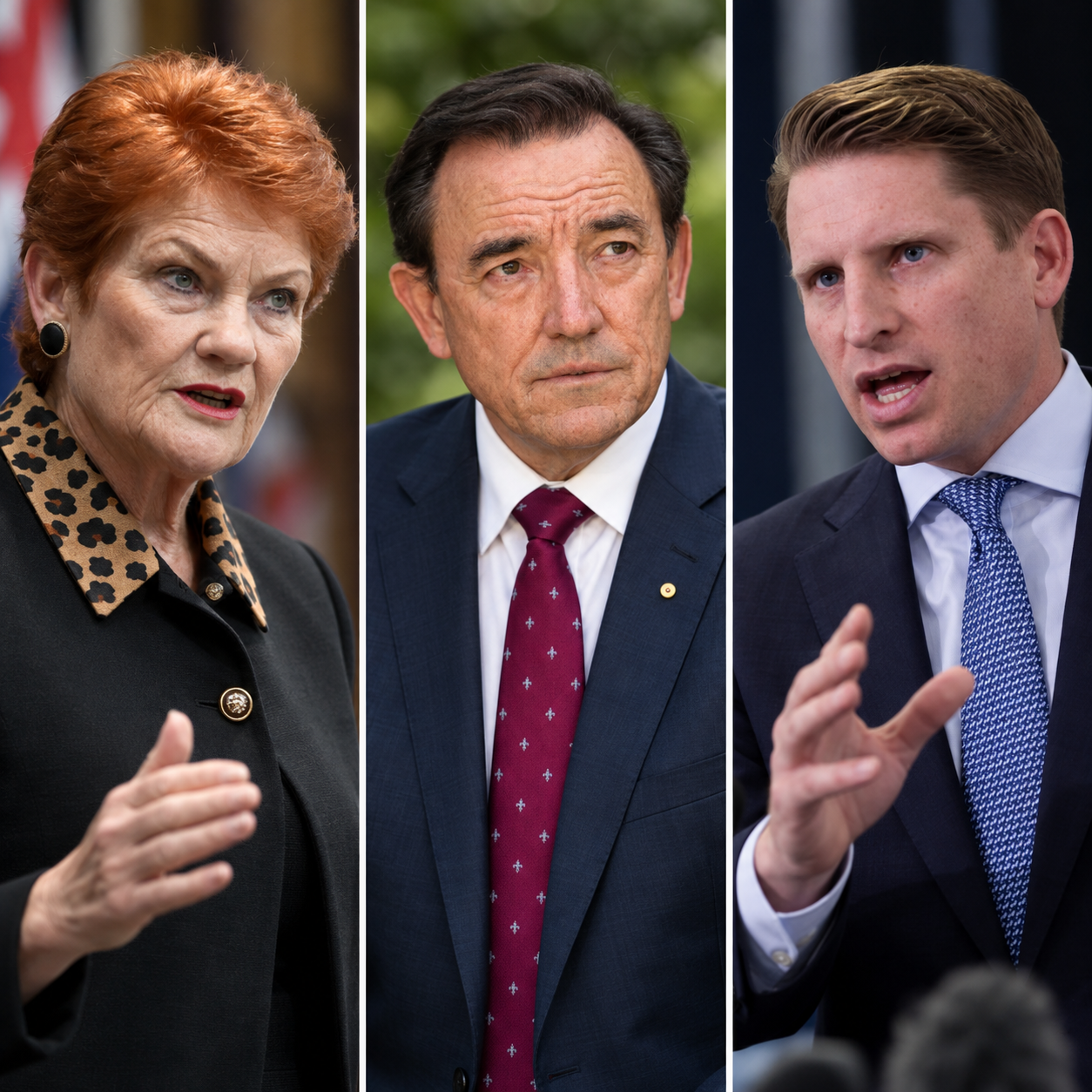
Australia’s debate over immigration, multiculturalism and national identity has erupted once again after One Nation leader Pauline Hanson came under fire for comments linking modern migration problems to the end of the White Australia policy.
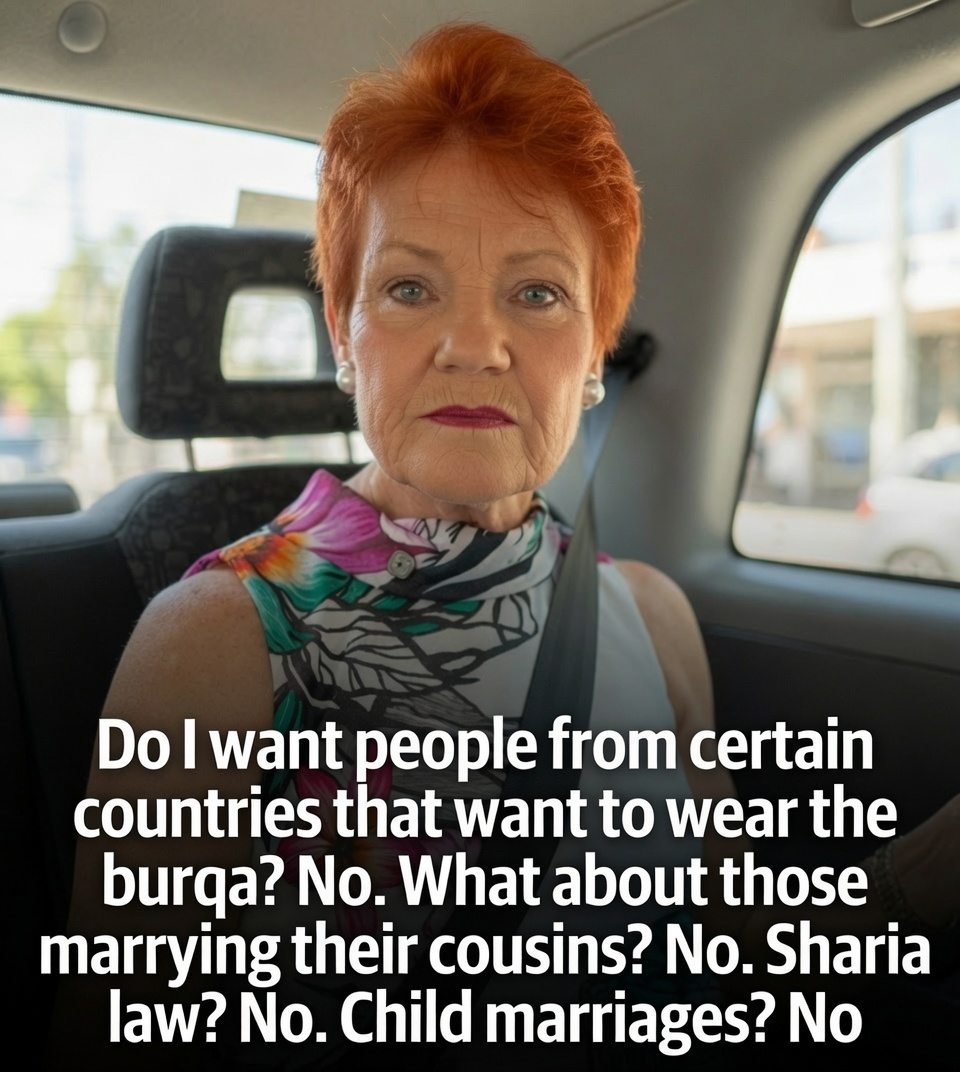
The controversy intensified after Home Affairs Minister Tony Burke accused Senator Hanson of promoting what he described as a “perverted concept” of Australia during a government press conference announcing its response to the Special Envoy’s report into Islamophobia.
The political clash has become one of the most significant flashpoints in Australia’s ongoing discussion about immigration policy, social cohesion and multiculturalism, drawing responses from Prime Minister Anthony Albanese, Muslim community representatives and political opponents across the spectrum.
The dispute stems from an interview Senator Hanson conducted in Britain with far-right activist Tommy Robinson, whose real name is Stephen Yaxley-Lennon. During the lengthy podcast discussion, Robinson questioned Hanson about Australia’s migration policies and claimed he had seen “crazy videos” involving migrants in Australia.
Responding to questions about how Australia’s demographic makeup had changed, Hanson said immigration issues began after governments abandoned the White Australia policy and introduced broader migration programs.
“They opened up and got rid of the White Australia policy then they started bringing in the different migrants,” Hanson said during the interview.
She contrasted post-Second World War European migration with more recent migration patterns, arguing that earlier migrants from countries including Italy, Germany and Poland integrated successfully because they learned English, entered the workforce and assimilated into Australian society.
Hanson also alleged that some newer migrants were entering Australia primarily to access welfare benefits and made further controversial comments about Muslim Australians, claiming without presenting evidence that some families relied on taxpayers while citing religious beliefs about divine provision.
Those remarks immediately attracted criticism from political opponents and community leaders, particularly because they were made alongside Robinson, who has long been associated with anti-Islam activism in Britain and has an extensive criminal record.
Speaking in Sydney while unveiling the government’s response to the Islamophobia report, Tony Burke delivered one of the strongest condemnations yet of Hanson’s comments.
“I never thought when I entered parliament that in my political lifetime anyone who had been elected would be calling for White Australia,” Burke said.
He argued Australia had become stronger by moving beyond racially based immigration policies and rejected any suggestion that the country should revisit ideas associated with that era.
“Part of saying you love Australia is to love Australia for who we are, not some perverted concept of a country where we would turn on each other, where Australians would basically lose capacity for kindness towards each other,” he said.
Burke also used an orchestral analogy to defend Australia’s multicultural society, saying diversity rather than uniformity had strengthened modern Australia.
Prime Minister Anthony Albanese echoed those sentiments during the same press conference.
He said Islamophobia had no place in Australia and argued that attacks directed at any community ultimately harmed the nation as a whole.
“Diversity is one of Australia’s great strengths and we won’t as a nation let hate divide us,” Albanese said.
The Prime Minister also stressed that modern Australia had been built by successive generations of migrants from around the world while acknowledging the unique place of First Nations peoples.
He noted that dismantling the White Australia policy had been a bipartisan process beginning during the 1960s before being completed under the Whitlam Government in 1973, describing that transition as a positive chapter in Australia’s national development.
The government announcements formed part of its official response to recommendations prepared by Special Envoy to Combat Islamophobia Aftab Malik.
The report examined growing concerns among Muslim Australians regarding discrimination, harassment and social exclusion, recommending a range of initiatives designed to strengthen social cohesion, improve reporting of anti-Muslim incidents and expand support services for affected communities.
Malik welcomed the government’s response while saying further work remained necessary to address the underlying causes of Islamophobia.
He described the announcement as only the beginning of a longer process aimed at improving safety, dignity and inclusion for Muslim Australians.
The White Australia policy itself occupies a significant place in Australian political history.
Rather than being a single law, it referred to a series of immigration restrictions introduced following Federation in 1901 that were designed to preserve Australia as a predominantly European society by limiting non-European immigration.
Over subsequent decades those restrictions were gradually dismantled by governments from both major political parties before being formally abandoned during the early 1970s.
The removal of the policy paved the way for Australia’s contemporary multicultural immigration system, under which migrants now arrive from every region of the world.
Today’s migration program combines skilled migration, family reunification, humanitarian entrants and temporary visa categories while continuing to require security, health and character assessments for applicants.
Immigration policy nevertheless remains one of Australia’s most politically contested issues.
Supporters of lower migration frequently argue that rapid population growth places pressure on housing affordability, infrastructure, healthcare and wages.
Others argue migration provides critical economic benefits by addressing workforce shortages, supporting long-term economic growth and contributing to Australia’s cultural diversity.
These competing perspectives have become increasingly prominent amid the country’s ongoing housing shortage and broader cost-of-living pressures.
One Nation has consistently campaigned for substantially lower migration levels, tighter border controls and stronger expectations around integration and English language proficiency.
Critics, however, argue some of the party’s rhetoric unfairly targets particular ethnic or religious communities and risks inflaming social divisions.
The latest controversy has therefore extended beyond immigration policy itself to broader questions about political language and public responsibility.
Hanson’s appearance alongside Tommy Robinson attracted particular attention because of Robinson’s international profile within far-right political movements and his history of inflammatory commentary regarding Islam and migration.
Opponents argued the association risked legitimising extremist narratives, while Hanson has maintained she was participating in a discussion about immigration and national sovereignty rather than endorsing all of Robinson’s views.
Following widespread criticism, Hanson subsequently insisted she had never advocated for restoring the White Australia policy and did not support it, arguing instead that Australia should simply ensure migration occurred “in a measured way” with migrants who integrated successfully into Australian society.
That clarification has done little to calm political tensions.
Labor ministers continue to argue that references linking Australia’s modern immigration challenges to the end of the White Australia policy undermine social cohesion, while Hanson maintains she is raising legitimate concerns about migration levels, welfare dependency and integration.
The disagreement illustrates how questions surrounding migration remain among the most politically sensitive issues in contemporary Australia.
With immigration continuing to influence debates over housing, economic growth, infrastructure capacity and national identity, the latest exchange between Hanson and senior Labor ministers is unlikely to be the final confrontation over the country’s multicultural future.