A promising new cancer treatment developed in Melbourne is moving from the laboratory to human clinical trials after receiving a $17.7 million funding boost from the Australian Government, offering fresh hope that one of modern medicine’s most powerful immunotherapies could eventually be used against many of the world’s deadliest cancers.
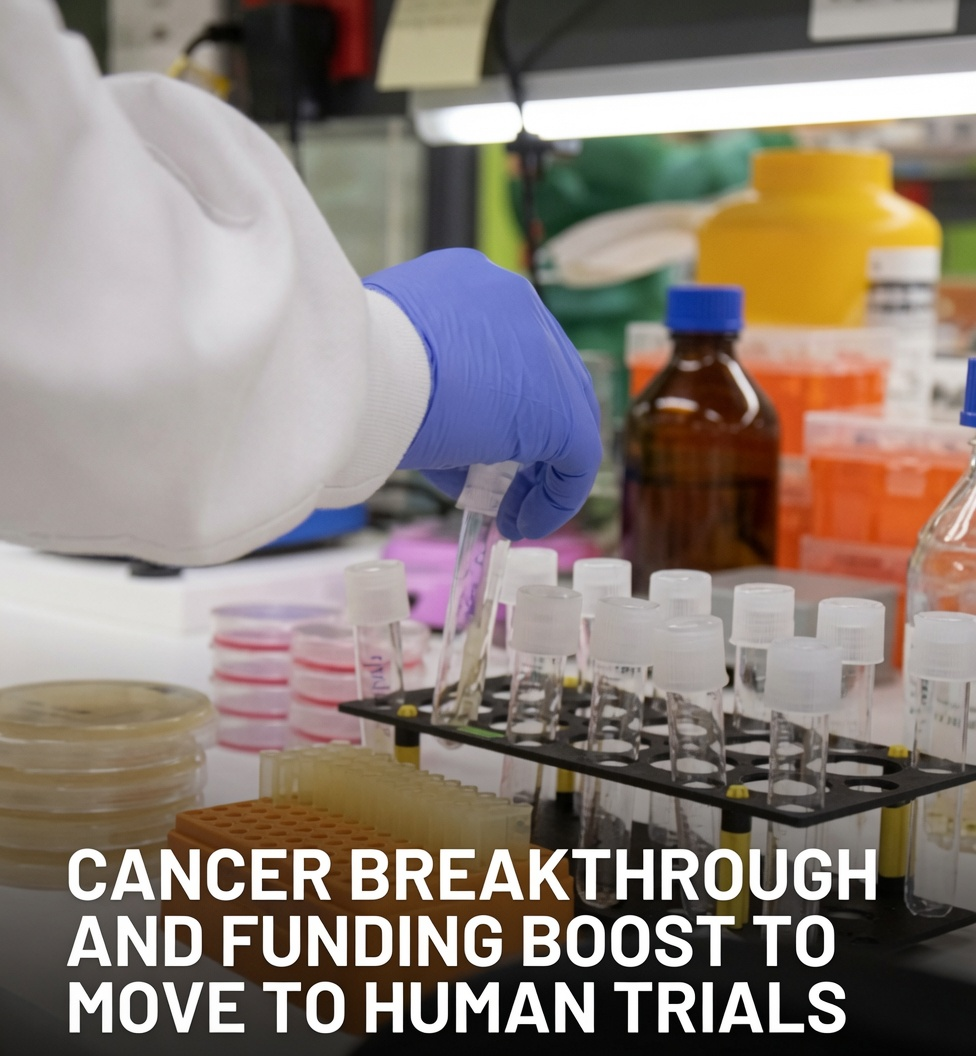
The funding, awarded through the Medical Research Future Fund (MRFF) Frontier Health and Medical Research program, will support the first-in-human clinical development of a next-generation CAR T-cell therapy designed by researchers at Melbourne’s Peter MacCallum Cancer Centre.
The project is being led by Professors Paul Beavis and Jane Oliaro, whose team has spent years developing what they describe as a “precision-guided” version of CAR T-cell therapy capable of overcoming one of cancer medicine’s greatest challenges: treating solid tumours.
Unlike conventional CAR T-cell treatments, which have transformed outcomes for several blood cancers but struggled against solid tumours, the new approach is designed not only to attack cancer cells directly but also to activate surrounding immune cells, creating a broader anti-cancer response.
In preclinical studies, researchers reported that the therapy eliminated almost 100 per cent of solid tumours in mouse models while causing minimal side effects, results that have generated significant excitement among cancer researchers. Although animal studies do not guarantee success in humans, they provide an important scientific foundation for advancing to clinical trials.
The first clinical trial will focus on patients with multiple myeloma, an incurable blood cancer affecting plasma cells. Researchers view this as a critical validation step before expanding the technology into some of Australia’s most common solid cancers, including breast and lung cancer.
CAR T-cell therapy—short for Chimeric Antigen Receptor T-cell therapy—is one of the most advanced forms of personalised cancer treatment currently available.
The treatment begins by collecting a patient’s own T cells, which are specialised immune cells responsible for recognising threats within the body. Scientists then genetically modify those cells in the laboratory so they can identify specific proteins found on cancer cells before infusing them back into the patient, where they act as highly targeted cancer fighters.
The technology has already revolutionised treatment for several blood cancers worldwide.
Patients with certain forms of leukaemia, lymphoma and multiple myeloma who previously had very limited options have achieved long-lasting remissions through existing CAR T-cell therapies.
However, extending those successes to solid tumours has proven far more difficult.
Solid cancers create complex tumour environments that suppress immune responses, while individual tumour cells often display different biological markers, making them harder for engineered T cells to identify consistently. Many experimental CAR T therapies have therefore struggled to remain effective once inside solid tumours.
The Melbourne team’s innovation aims to overcome those barriers.
Rather than relying solely on engineered T cells killing cancer cells directly, the new platform is designed to activate the body’s wider immune system within the tumour itself, potentially producing a stronger and more durable anti-cancer response.
Researchers say this “precision-guided” approach could significantly expand the range of cancers that may eventually benefit from CAR T-cell treatment.
The $17.7 million grant represents one of the largest recent federal investments into Australian cancer immunotherapy research.
The funding will support manufacturing, regulatory preparation, laboratory development and the launch of the first clinical studies involving patients.
Peter Mac’s Centre of Excellence in Cellular Immunotherapy will work alongside Cell Therapies Pty Ltd to manufacture the personalised treatments in Melbourne, while Professor Simon Harrison will lead the clinical trial program.
The project also highlights Australia’s growing capability in advanced cell and gene therapy manufacturing.
Over recent years, Melbourne has become one of only a small number of international centres capable of producing CAR T-cell therapies domestically rather than sending patient cells overseas for processing. Local manufacturing can reduce delays, improve quality control and strengthen Australia’s long-term medical research capacity.
The Medical Research Future Fund, established by the Australian Government, has become one of the country’s largest long-term investments in health and medical research, supporting projects intended to translate laboratory discoveries into treatments that reach patients.
For researchers, one of the biggest challenges is ensuring the encouraging laboratory results can be reproduced safely in people.
Clinical trials are designed to answer several critical questions, including whether the treatment can be manufactured consistently, whether it remains safe in patients, what dose provides the greatest benefit and whether early signs of effectiveness justify larger trials.
The initial study involving multiple myeloma patients will primarily evaluate safety while also collecting early evidence of how well the therapy performs.
If successful, subsequent trials may investigate its use against breast cancer, lung cancer and potentially other difficult-to-treat solid tumours.
Researchers caution that while the results so far are highly encouraging, widespread clinical use remains several years away.
Developing personalised cell therapies involves complex manufacturing processes, strict regulatory review and multiple phases of human testing before treatments can become routinely available.
Even under optimistic timelines, further refinement, expanded clinical trials and regulatory approvals will all be required before the therapy could become part of standard cancer care.
Nevertheless, cancer specialists view the announcement as an important milestone.
Solid tumours account for the overwhelming majority of cancer diagnoses worldwide, including breast, lung, bowel, prostate and pancreatic cancers. Successfully adapting CAR T-cell therapy to treat these cancers has become one of the most significant goals in modern immunotherapy research.
If Melbourne’s technology ultimately proves effective in patients, it could help extend the remarkable success already achieved in blood cancers to a much larger population of people living with cancer.
For Australia, the project also reinforces the country’s reputation as a leader in cellular immunotherapy research, combining internationally recognised scientific expertise with growing domestic manufacturing capability.
While much work still lies ahead before patients routinely receive this new treatment, the transition from laboratory discovery to first-in-human trials marks one of the most significant milestones in the development of the technology.
For patients facing cancers that currently have limited treatment options, the upcoming clinical trials represent more than another research project—they offer the possibility that one of medicine’s most promising therapies may eventually become effective against diseases that have long resisted even the most advanced treatments.






