One Nation leader Pauline Hanson has ignited another political firestorm after using a podcast interview with British far-right activist Tommy Robinson to criticise Australia’s immigration policies, question the National Disability Insurance Scheme (NDIS), revisit her opposition to COVID-19 vaccines and reflect on the country’s multicultural direction.
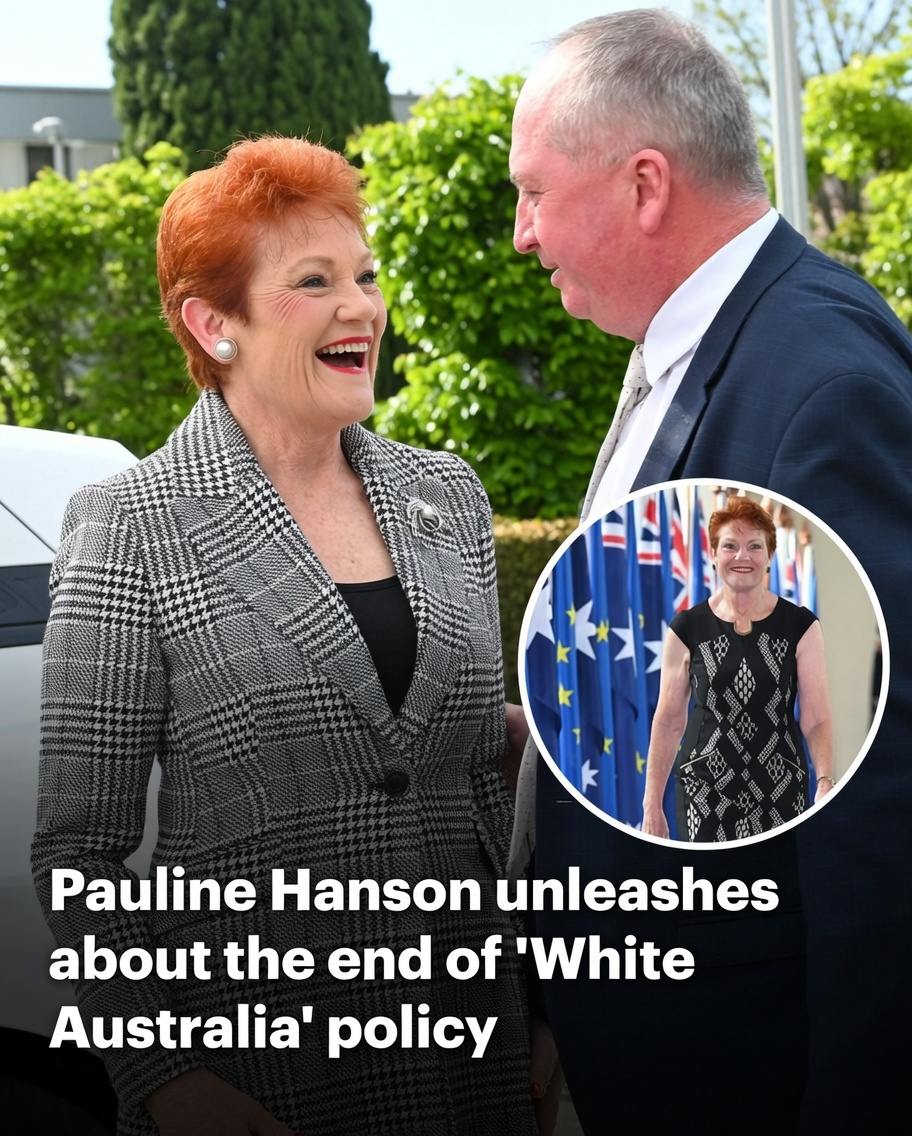
The interview, recorded during Hanson’s recent trip to Britain and published on Friday, covered a wide range of topics, but several comments quickly attracted criticism from political opponents and prompted renewed debate over immigration, race and welfare policy in Australia.
Among the most controversial remarks were Hanson’s suggestion that Australia’s migration challenges began after the dismantling of the White Australia Policy in the early 1970s and her claim, made without presenting evidence, that many people from “Muslim areas” were exploiting the NDIS.
The comments immediately drew responses from federal ministers and crossbench politicians, while adding to scrutiny surrounding Hanson’s decision to appear alongside Robinson, one of Britain’s most controversial far-right figures.
Podcast revisits long-held immigration views
Throughout the conversation, Robinson repeatedly questioned Australia’s multicultural policies and asked Hanson how the country had changed over recent decades.
Responding to questions about immigration, Hanson argued that the end of the White Australia Policy marked a turning point in Australia’s migration history. She contrasted earlier waves of post-war migration with more recent arrivals, arguing that previous migrants generally integrated by learning English and adopting Australian customs.
The White Australia Policy refers to a series of laws and administrative practices introduced after Federation in 1901 that heavily restricted non-European immigration. The policy was progressively dismantled during the late 1960s and early 1970s before Australia formally embraced multiculturalism as official government policy.
Historians generally describe the abolition of the White Australia Policy as one of the most significant shifts in modern Australian immigration history, replacing race-based immigration rules with a non-discriminatory system focused on skills, humanitarian obligations and family reunion.
NDIS claims challenged by government
One of the podcast’s most disputed moments came when Hanson alleged that many people living in what she described as “Muslim areas” were taking advantage of the National Disability Insurance Scheme.
While acknowledging that Australians from many backgrounds also received NDIS support, she claimed that “a lot” of participants from Muslim communities were exploiting the system.
However, Hanson did not provide any data or evidence supporting those assertions.
Health and NDIS Minister Mark Butler rejected the claim shortly after the podcast was released, saying he had never seen any official data breaking down NDIS participants according to religion or nationality.
Butler said he did not believe such figures existed and questioned where Hanson had obtained the information. He also criticised her decision to travel through Europe while many Australians continued facing cost-of-living pressures.
The National Disability Insurance Scheme provides funding for Australians living with permanent and significant disability. Eligibility is based on disability-related needs rather than ethnicity, religion or migration background.
Like many large public programs, the NDIS has experienced instances of fraud and compliance investigations, but government agencies have not publicly reported evidence indicating widespread abuse by any particular religious or ethnic community.
COVID-19 vaccine comments revived
The interview also revisited Hanson’s long-standing opposition to COVID-19 vaccination policies.
She criticised pandemic-era vaccine mandates and repeated her personal decision not to receive a COVID-19 vaccine, saying governments should not direct people how to manage their own health.
Hanson further argued that vaccines should undergo testing for many years before being released for public use.
Her comments stand in contrast to the position held by Australia’s public health authorities, which maintain that COVID-19 vaccines underwent extensive clinical trials and continued safety monitoring before and after rollout.
Australian and international health agencies have consistently concluded that the vaccines significantly reduced severe illness, hospitalisation and deaths during the pandemic, while acknowledging that rare adverse reactions occurred in a small number of patients.
Future leadership of One Nation
The discussion also touched on the future of One Nation.
Hanson said her daughter, Lee Hanson, possessed the potential to lead the party one day but insisted any future leadership would need to be earned.
Lee Hanson unsuccessfully contested the 2025 federal election as a One Nation candidate and currently works within the party organisation.
Pauline Hanson rejected suggestions of nepotism, saying her daughter would need to demonstrate her abilities to both party members and Australian voters before any leadership role could be considered.
Why Tommy Robinson remains controversial
The identity of Hanson’s interviewer has become almost as significant as the interview itself.
Tommy Robinson, whose real name is Stephen Yaxley-Lennon, is a British anti-Islam activist best known for founding the now-defunct English Defence League.
Over many years Robinson has become one of Britain’s most polarising political figures, attracting support from some anti-immigration activists while also facing repeated legal troubles, including convictions relating to assault, fraud and contempt of court.
His association with Hanson has generated criticism from across Australia’s political spectrum, particularly given previous controversies surrounding Australian media figures who interviewed him.
Earlier this year, Robinson also attracted attention after appearing on a podcast hosted by former television presenter Karl Stefanovic, an interview that generated widespread public debate.
Political reaction intensifies
Greens senator Sarah Hanson-Young strongly condemned Hanson’s appearance with Robinson, describing the interview as unacceptable and calling on the One Nation leader to apologise.
Labor politicians likewise criticised both the content of Hanson’s remarks and her decision to associate with Robinson during her overseas visit.
The criticism arrives during a politically sensitive period for One Nation as the party attempts to maintain momentum following recent polling fluctuations and increased competition from the Coalition for conservative voters.
Part of a broader European tour
The Robinson interview formed only one part of Hanson’s broader visit to Europe.
During the trip she attended conservative political events in Britain, met several right-wing commentators and was photographed holidaying in Sicily alongside mining billionaire Gina Rinehart.
She has defended meeting Robinson, arguing that visiting areas he highlighted helped demonstrate what she believes Australia should avoid through stricter immigration controls.
The visit has nevertheless generated substantial media attention, with critics arguing the overseas appearances risk distracting from domestic political issues affecting Australian households.
An issue likely to remain politically divisive
Immigration has remained one of the defining issues throughout Pauline Hanson’s political career since entering federal politics in the 1990s.
Her latest comments reinforce themes that have consistently shaped One Nation’s platform, including tighter migration controls, stronger border security and criticism of multicultural policies.
Supporters argue Hanson continues raising issues that many mainstream politicians avoid discussing openly. Critics, however, contend that some of her claims unfairly target minority communities and are unsupported by publicly available evidence.
The dispute over the podcast is therefore unlikely to end with the interview itself. Instead, it adds another chapter to Australia’s long-running debate over immigration, national identity, multiculturalism and the role of evidence in political discourse.
As political leaders continue responding to the interview, attention is expected to remain focused not only on Hanson’s remarks but also on the broader questions they raise about Australia’s increasingly diverse society and the standards expected of elected representatives participating in highly polarising international media platforms.






