A man who helped traffic a 17-year-old Indonesian girl into Australia told her to hide her real age before exercising “full financial control” over the teenager as she endured gruelling shifts of up to 12 hours in brothels.
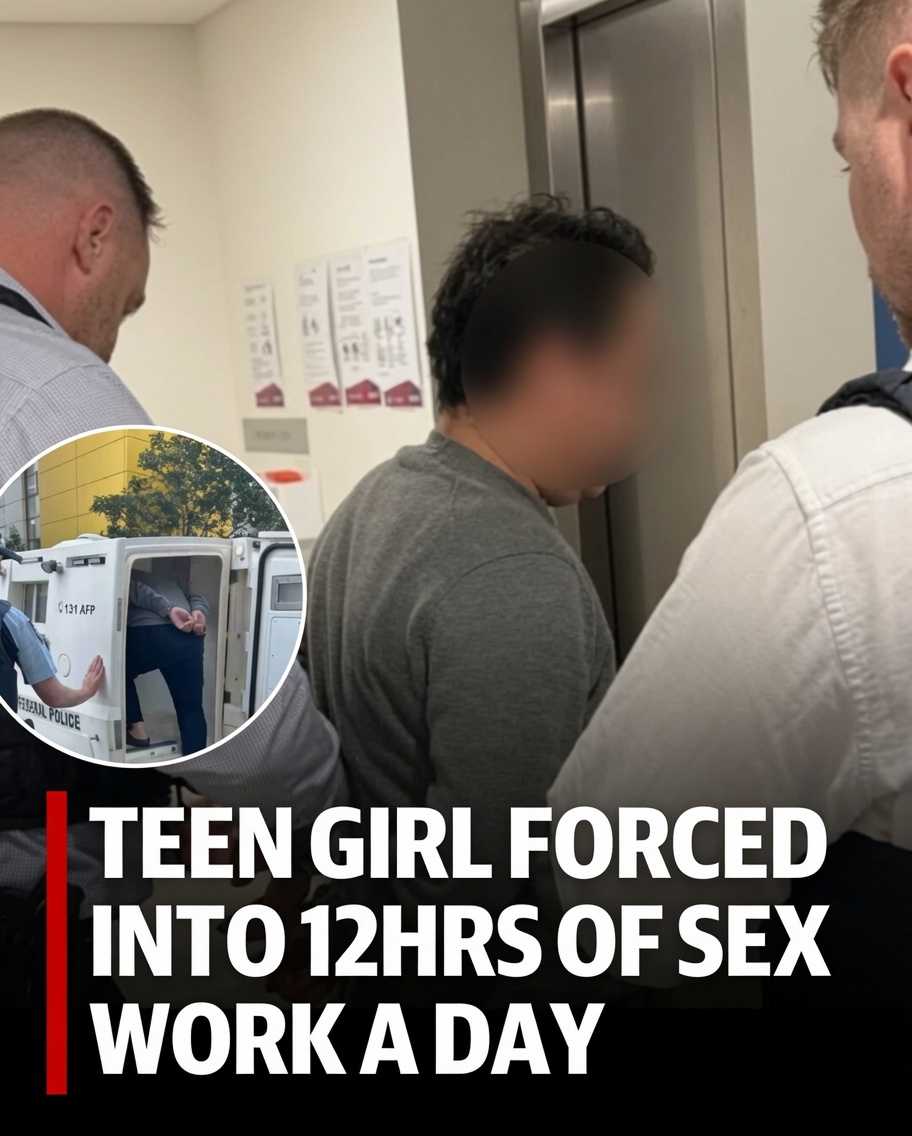
Surya Subekti, 45, has been sentenced to six years and five months in prison over his central role in bringing the underage girl to Australia and placing her into conditions the NSW District Court found amounted to forced labour.
He will serve a non-parole period of four years and five months and will not be eligible for release until November 2030.
The case exposed how the teenager’s age was deliberately concealed, her income controlled and her movements restricted after she arrived in a country where she was vulnerable and dependent on those who had organised her travel and work.
Subekti knew the girl was only 17.
About a week after she arrived in Australia, he gave her a disturbing instruction designed to prevent her underage status from being detected.
“Kiddo, if someone asks you, don’t say you are 17, you should say, ‘I am 18’,” Subekti told her, according to the judgment.
“In Australia you cannot work underage, you have to be 18.”
Judge Nicole Noman found Subekti was “instrumental” in the trafficking of the teenager.
He had travelled to Jakarta as arrangements were made to bring her to Australia and played a role in organising her contract, visa, transport and attendance at nominated brothels.
Once in Australia, the girl was required to provide sexual services for between 10 and 12 hours a day.
She generally worked four or five days each week and saw an average of five to 10 clients during a shift.
The conditions continued for just under two months.
The teenager later described the physical demands of the work as a “shock to my body”.
She suffered severe pain, had difficulty walking and experienced blood loss before being diagnosed with a sexually transmitted infection.
But her victim impact statement showed the damage went far beyond her immediate physical injuries.
Before coming to Australia, she said she had been cheerful and free from trauma.
She described herself as being “like any other kid”.
After the exploitation she endured in Australia, she said she could no longer experience happiness in the same way.
“It is now difficult for me to trust other people, as I am fearful my experiences will be repeated,” she wrote.
“I can no longer feel what it is like to be happy.”
The teenager said she now suffered anxiety and panic attacks.
“I feel that all the hopes that I once held have been destroyed.”
The girl cannot be identified for legal reasons.
Her evidence, however, provided the court with a detailed account of how control was exercised over her after she entered Australia.
She said she could not go anywhere alone and felt she was being “monitored and controlled all the time”.
Her first month of earnings was withheld.
According to the judgment, Subekti had “full financial control” over the teenager.
The girl’s first month’s salary was withheld until she demonstrated an acceptable level of compliance with the working conditions imposed under her contract.
“All I could do was accept the conditions of my employment,” the teenager wrote.
“I didn’t know any better.”
Subekti had instructed the girl to refer to him by the unusual alias “Batman”.
The court found he was either the decision-maker or an active participant in developing the contract that required the teenager to carry out sex work.
His involvement was not limited to a single act of transport or an introduction.
Judge Noman found he played an important role in the arrangements that allowed the teenager to enter Australia and then be directed to brothels.
The court heard that Subekti knew the girl’s true age and understood that she was too young to legally provide sexual services in Australia.
His instruction that she claim to be 18 was therefore a particularly significant part of the sentencing facts.
Subekti pleaded guilty to organising the entry into Australia of a person under 18 with the intention that the person provide sexual services.
He also pleaded guilty to causing a person under 18 to enter or remain in forced labour.
The offences carry serious maximum penalties under Commonwealth law.
The first charge carries a maximum sentence of 25 years’ imprisonment, while the forced labour offence carries a maximum term of 12 years.
During sentencing, Subekti’s lawyers sought to rely on the teenager’s circumstances before she travelled to Australia.
They argued she had previously provided sexual services in Indonesia, had voluntarily entered the contract and experienced circumstances in Australia that were more favourable than those she had faced in her home country.
Judge Noman rejected the suggestion that the girl’s previous experience reduced the seriousness of Subekti’s offending.
“There is no evidence that the conditions were in any sense more favourable,” the judge said.
The facts, she said, may have suggested otherwise when the teenager’s hourly rate and the degree of control over the services she provided in Indonesia were considered.
“I do not determine the previous employment in sex work ameliorates the offending.”
The judge also addressed the fundamental issue of consent.
The victim was a child under Australian law.
Whatever contractual documents existed, Judge Noman found the teenager’s ability to enter an obligation requiring her to provide sexual services could not be regarded as informed consent.
That conclusion is central to the case because trafficking and forced labour do not always resemble the stereotypical image of a person being physically kidnapped or locked behind a door.
A victim may initially agree to travel.
A person may believe they are moving for employment.
There may even be documents described as contracts.
Those circumstances do not automatically prevent a court from finding exploitation where a vulnerable person’s age is concealed and their finances, movements or ability to make meaningful choices are controlled.
In the teenager’s case, the sentencing facts established a combination of vulnerabilities.
She was 17.
She was in a foreign country.
She did not have the freedom to go out alone.
Her movements between workplaces were organised by others.
Her first month’s salary was withheld as part of a system tied to compliance with her working conditions.
She was expected to endure shifts of up to 12 hours while providing sexual services to multiple clients.
And the man with financial control over her knew she was underage and specifically told her to lie about it.
The court also sentenced Elton Valentino, 32, over his involvement in the case.
The victim knew Valentino as “Elton John”.
He worked as a driver and transported the teenager between brothels.
Unlike Subekti, Valentino was not involved in the arrangements to bring the girl into Australia.
He pleaded guilty to transporting a person under the age of 18 with the intention that the person provide sexual services.
Valentino was sentenced to two years and eight months in prison.
The court found significant differences between the two men’s attitudes towards their offending and their prospects of rehabilitation.
A psychological report referred to during sentencing said Valentino regarded Subekti as a father figure and had been influenced by him.
Valentino later told a psychologist that underage sex work was “bad”, “just not right” and “really f**ked up”.
Judge Noman found Valentino had expressed remorse.
She also assessed his prospects of rehabilitation as good.
Subekti’s prospects were described as “uncertain”.
The judge did not accept that Subekti had demonstrated genuine remorse for his conduct.
Instead, she found his concern appeared to focus on the consequences the case had caused for himself and his family.
That distinction was reflected in the court’s assessment of the two offenders.
Valentino could become eligible for release next month.
Subekti, by contrast, will remain in prison until at least November 2030.
The case also provides a confronting example of the complexity of human trafficking investigations in Australia.
Public understanding of trafficking is often shaped by stories of abduction and physical confinement.
Modern slavery offences can involve less visible forms of control.
Financial dependence, withheld wages, deceptive travel arrangements, restricted movement and a victim’s vulnerability can all become mechanisms of exploitation.
In this case, Subekti’s control over the teenager’s finances was particularly important.
The court heard that he determined when money was made available to her and that thousands of dollars in earnings were withheld.
AAP reported that the girl was instead provided with necessities including food and personal hygiene products while her salary remained under the control of others.
The teenager’s forced labour eventually came to an end after authorities intervened.
The case was investigated as part of a human trafficking operation involving Australian Federal Police and links between Australia and Indonesia.
For the victim, however, the conclusion of the exploitation did not mean the end of its consequences.
Her statement to the court described a young woman struggling to trust people and living with anxiety after arriving in Australia with hopes for her future.
The physical pain she described was severe.
But the most lasting part of her account was the change in how she viewed her own life.
Before travelling to Australia, she said she had been happy and had not experienced trauma.
Afterwards, she felt those hopes had disappeared.
The sentencing also makes clear why Judge Noman refused to treat the girl’s previous work in Indonesia as a justification or meaningful mitigation for what happened in Australia.
A child’s prior exploitation does not give another person permission to exploit them again.
Nor did the court accept that a purported agreement to work removed Subekti’s responsibility for knowingly placing a 17-year-old into conditions of forced labour.
The teenager’s age was not an incidental detail that Subekti discovered after the arrangements had been made.
He knew.
His own words demonstrated that knowledge.
“Don’t say you are 17,” he told her.
The instruction was simple: say you are 18 because, in Australia, you cannot work underage.
It was an acknowledgement of the very protection the teenager should have received — and an instruction designed to help conceal the fact that she was entitled to it.
Subekti is now serving a sentence of six years and five months.
Valentino is serving two years and eight months for his role in transporting the girl.
The victim remains legally anonymous.
But her words have ensured the human impact of the offending is part of the public record.
“I can no longer feel what it is like to be happy,” she wrote.
For a teenager who said she once had hope for her future, that may be the most devastating consequence described in the entire case.






