One Nation leader Pauline Hanson has again appeared alongside controversial British activist Tommy Robinson during a visit to the United Kingdom, joining him for a walking tour through his hometown of Luton before recording a podcast that has already generated political attention in both Britain and Australia.
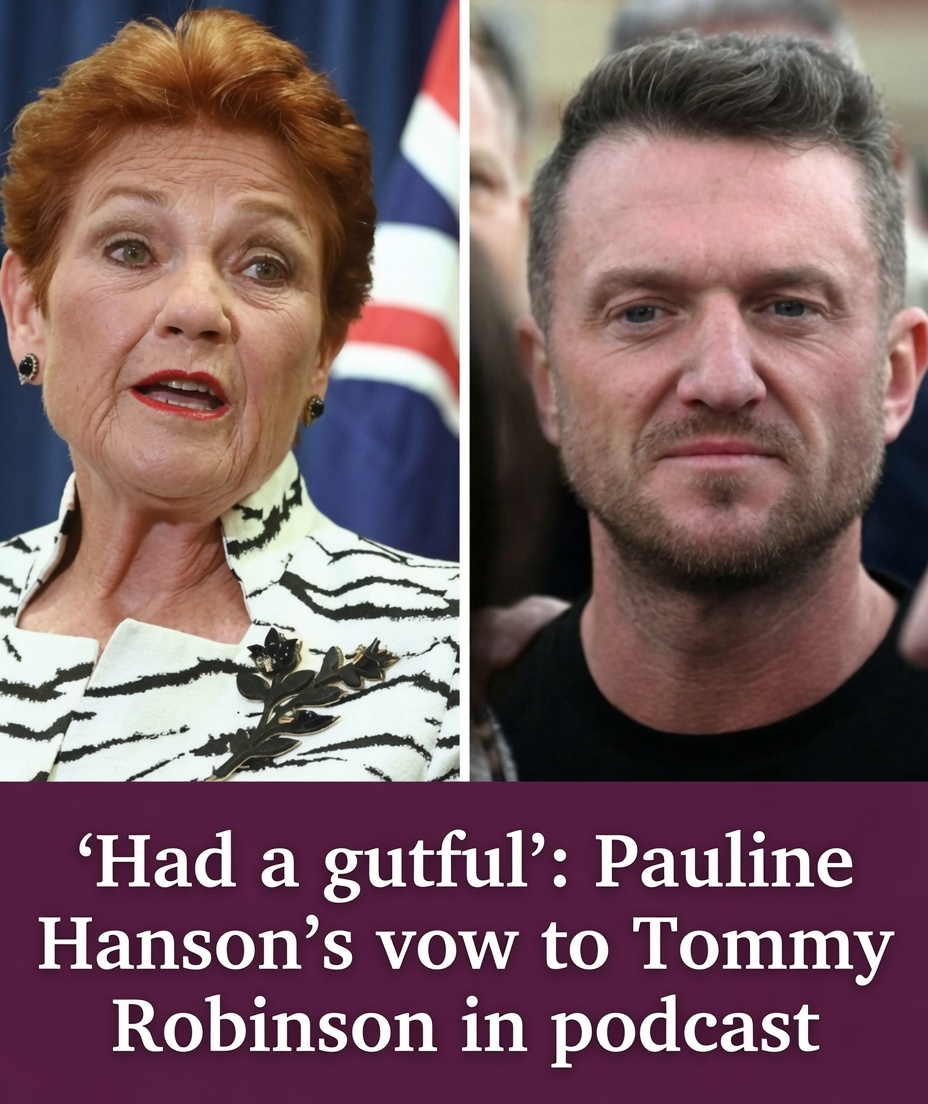
The latest meeting comes only weeks after Robinson’s widely discussed interview with broadcaster Karl Stefanovic triggered intense public debate in Australia and ultimately contributed to Stefanovic’s departure from Nine’s television network.
During her latest visit, Hanson accompanied Robinson on a tour of Luton, a town north of London that has long featured prominently in Robinson’s commentary about immigration and community change.
Robinson, whose real name is Stephen Yaxley-Lennon, has frequently argued that Luton demonstrates the long-term effects of Britain’s immigration policies. Throughout the tour he pointed to neighbourhoods and businesses that he claimed reflected significant demographic change over recent decades.
According to video clips released online, Hanson repeatedly expressed surprise at what she observed, saying she was “gobsmacked” by parts of the town and suggesting Australia should learn lessons from Britain’s experience.
“I don’t even feel like I’m in England,” Hanson remarked during one section of the walk, while Robinson argued Australia should avoid repeating what he described as Britain’s policy mistakes.
The pair also attempted to visit an Islamic community centre during the tour but were not permitted to film inside. Robinson criticised the refusal, while staff declined to allow recording on the premises.
The walking tour followed a podcast interview between Hanson and Robinson that is expected to be released through Hanson’s online media channels.
Before recording the interview, Robinson praised Hanson on social media, describing her as one of the “bravest” politicians he had met and saying he hoped she would one day become Australia’s national leader. Hanson thanked Robinson for the conversation and indicated Australians should pay attention to the issues he believes Britain is facing.
The meeting represents the latest stage of Hanson’s broader visit to Britain, where she has been meeting conservative commentators, campaigners and political figures during Parliament’s winter break. She has also been photographed with former actor Holly Valance and has indicated she intends to meet representatives associated with Reform UK.
Robinson remains one of Britain’s most divisive political activists. He co-founded the English Defence League in 2009, an anti-Islam street movement that later dissolved. Over the years he has accumulated multiple criminal convictions, including offences unrelated to political speech, and has previously been refused entry to Australia. He has consistently rejected descriptions of himself as racist, arguing instead that his activism focuses on Islamist extremism and immigration policy. Critics, however, characterise him as a far-right figure whose rhetoric fuels hostility towards Muslim communities.
His renewed prominence in Australia followed an interview conducted by Karl Stefanovic for an independent podcast. The discussion covered immigration, censorship and free speech before being removed from online platforms amid widespread criticism. Hanson later republished the interview through her own media channels, arguing Australians should hear Robinson’s views for themselves.
Hanson has long advocated substantially lower immigration levels, tighter border controls and stronger national security policies. Those positions have remained central to One Nation’s platform since the party’s formation in the late 1990s.
Her meetings with Robinson have attracted criticism from political opponents, who argue they risk legitimising an individual widely associated with Britain’s far right. Analysts have also suggested the appearances form part of a broader strategy by Hanson to strengthen connections with overseas conservative and populist figures while generating attention through social media rather than relying on traditional news coverage.
Supporters of Hanson, meanwhile, argue she is entitled to meet controversial figures as part of understanding international debates over immigration and social cohesion, saying disagreement with Robinson’s views should not prevent public discussion of those issues.
The footage released from Luton illustrates the polarising nature of Robinson’s public profile. During the walk, some members of the public greeted the pair warmly, while others confronted Robinson directly, accusing him of promoting racism and division. The contrasting reactions have become a familiar feature of Robinson’s public appearances across Britain.
For Hanson, the UK visit is likely to continue attracting attention once the podcast is released in full. The recording is expected to revisit themes including immigration, national identity, free speech and Australia’s future population policies—issues that have consistently featured in Hanson’s political messaging.
Whether the appearance ultimately broadens Hanson’s support or intensifies criticism remains uncertain. However, the images of Australia’s longest-serving minor-party leader walking through Luton alongside one of Britain’s most controversial political activists have ensured the visit will remain part of the wider debate over immigration, political alliances and the increasingly international nature of populist politics.






