One Nation leader Pauline Hanson has met controversial British activist Tommy Robinson during a visit to London, confirming the pair have recorded a podcast together in a move that has already sparked renewed political controversy in Australia.
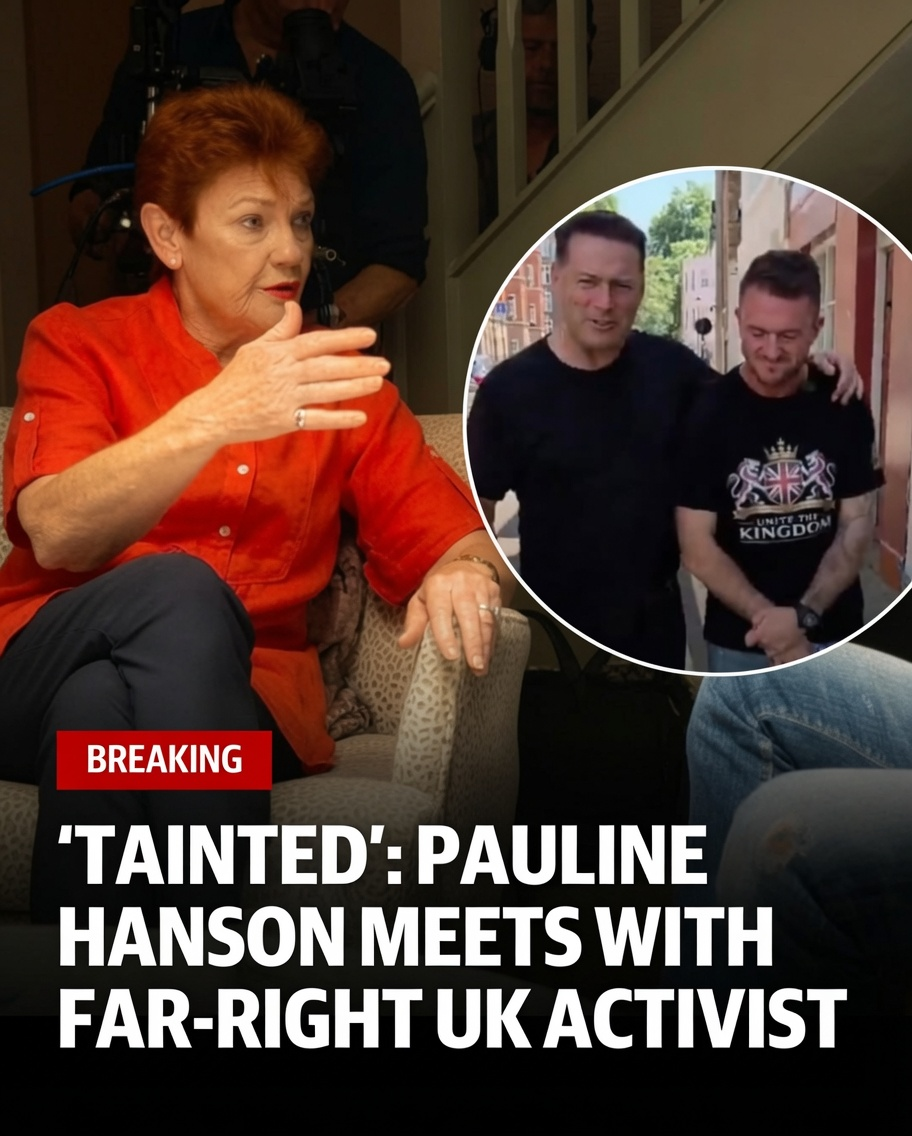
The meeting comes only weeks after Robinson appeared on a now-removed interview hosted by Karl Stefanovic, an episode that generated widespread media attention before disappearing from multiple online platforms.
Robinson, whose real name is Stephen Yaxley-Lennon, announced the recording on social media, describing Hanson as one of the “bravest ladies on the planet” and praising her long-running political campaign.
“Had a fascinating time chatting to one of the bravest ladies on the planet,” Robinson wrote.
He added that Hanson had been “fearless, relentless, consistent” in what he described as fighting for Australian interests and suggested she could one day become the nation’s leader.
Hanson has not publicly distanced herself from Robinson and has indicated the podcast episode will be released following the recording.
The meeting also coincides with her visit to the United Kingdom, where she is expected to meet Reform UK leader Nigel Farage as part of discussions with conservative political figures.
The Karl Stefanovic controversy
The latest development follows significant attention surrounding Robinson’s recent interview with television personality Karl Stefanovic.
The interview was originally released through Stefanovic’s podcast before being removed from YouTube, Spotify, Apple Podcasts and associated social media channels within hours.
The removal prompted considerable speculation online, although neither Channel Nine nor the podcast producers publicly provided a detailed explanation for why the episode disappeared.
After the interview was taken offline, Hanson uploaded a copy to her own YouTube channel under the title Cancelled: The Full Karl Stefanovic and Tommy Robinson Interview.
In accompanying comments, Hanson criticised Channel Nine management and argued Australians should hear Robinson’s views on immigration and radicalisation in Britain regardless of whether they agreed with him.
She also alleged that Stefanovic faced internal pressure because of the interview, although those claims have not been independently verified.
Who is Tommy Robinson?
Tommy Robinson is among Britain’s most recognisable and polarising far-right activists.
Over more than a decade, he has built a profile campaigning against what he describes as Islamist extremism and immigration policy, while attracting repeated criticism from human rights organisations, anti-racism groups and mainstream politicians.
Supporters argue Robinson raises issues they believe have been ignored by political leaders, particularly concerning organised child sexual exploitation cases and integration policies.
Critics, however, accuse him of promoting anti-Muslim narratives, inflaming community tensions and spreading misleading or inflammatory claims about British Muslims.
Robinson has accumulated an extensive criminal record over many years.
His convictions have included assault, fraud, contempt of court and immigration-related offences. Several contempt convictions arose after publishing material that risked prejudicing ongoing criminal trials, prompting British courts to impose prison sentences.
He was also briefly a member of the British National Party between 2004 and 2005 before later distancing himself from the organisation.
Events organised by Robinson have at times been associated with extremist supporters, including isolated incidents involving Nazi salutes, although he has denied being a Nazi himself.
International attention
Robinson’s profile has expanded beyond Britain in recent years through social media and backing from several high-profile international commentators.
His legal battles and campaigns have frequently attracted support from conservative activists overseas, while opponents argue his online influence has helped spread anti-Muslim rhetoric internationally.
The activist has also received attention from prominent figures including Elon Musk, whose public comments previously amplified debate surrounding Robinson’s legal cases and free speech arguments.
That international profile has made appearances alongside overseas politicians particularly contentious, with critics warning they can lend legitimacy to a figure many regard as representing the far-right.
Hanson’s political positioning
Pauline Hanson has long been one of Australia’s most recognisable and divisive political figures.
Since founding One Nation in the late 1990s, she has built much of her political platform around immigration, multiculturalism, national identity and border security.
Many of those issues overlap with themes frequently discussed by Robinson, although Hanson has consistently argued her policies focus on Australia’s national interests rather than racial or religious discrimination.
Throughout her political career, Hanson has repeatedly criticised what she describes as excessive immigration levels and has advocated stricter border controls, tougher national security laws and measures targeting extremist violence.
Her critics, however, have accused One Nation of contributing to division within Australia’s multicultural society through its rhetoric on immigration and Islam.
The latest podcast is therefore likely to reinforce existing political divisions rather than change established views about either figure.
Meeting Nigel Farage
As part of her UK visit, Hanson is also expected to meet Reform UK leader Nigel Farage.
Farage remains one of Britain’s most influential conservative politicians after leading the UK Independence Party during the Brexit campaign before establishing Reform UK as a significant force in British politics.
Unlike Robinson, Farage operates within mainstream electoral politics despite remaining a controversial figure on immigration and national identity debates.
The planned meeting suggests Hanson is seeking to strengthen relationships with political figures whose views align with aspects of One Nation’s policy platform, particularly around migration and sovereignty.
Political reaction likely to continue
Although no major parliamentary response had emerged immediately following news of the podcast recording, the meeting is expected to generate renewed debate over the role of controversial international figures in Australian political discourse.
Supporters of Hanson are likely to argue that politicians should be free to engage with a broad range of viewpoints and that controversial opinions should be challenged through debate rather than censorship.
Opponents, meanwhile, contend that providing Robinson with another platform risks legitimising a figure whose criminal convictions and history of inflammatory activism have repeatedly drawn condemnation across Britain.
The episode also highlights the increasingly international nature of political media, with podcasts and social media allowing politicians and activists from different countries to reach audiences well beyond their domestic borders.
Whether the Hanson-Robinson conversation changes public opinion remains uncertain, but its release is likely to attract significant attention given the prominence of both figures and the controversies that have surrounded each throughout their public careers.






