A primary school in Western Australia has come under scrutiny after an email to parents revealed that Year 4 boys would attend a football clinic while girls were encouraged to bring board games to school during the same period.
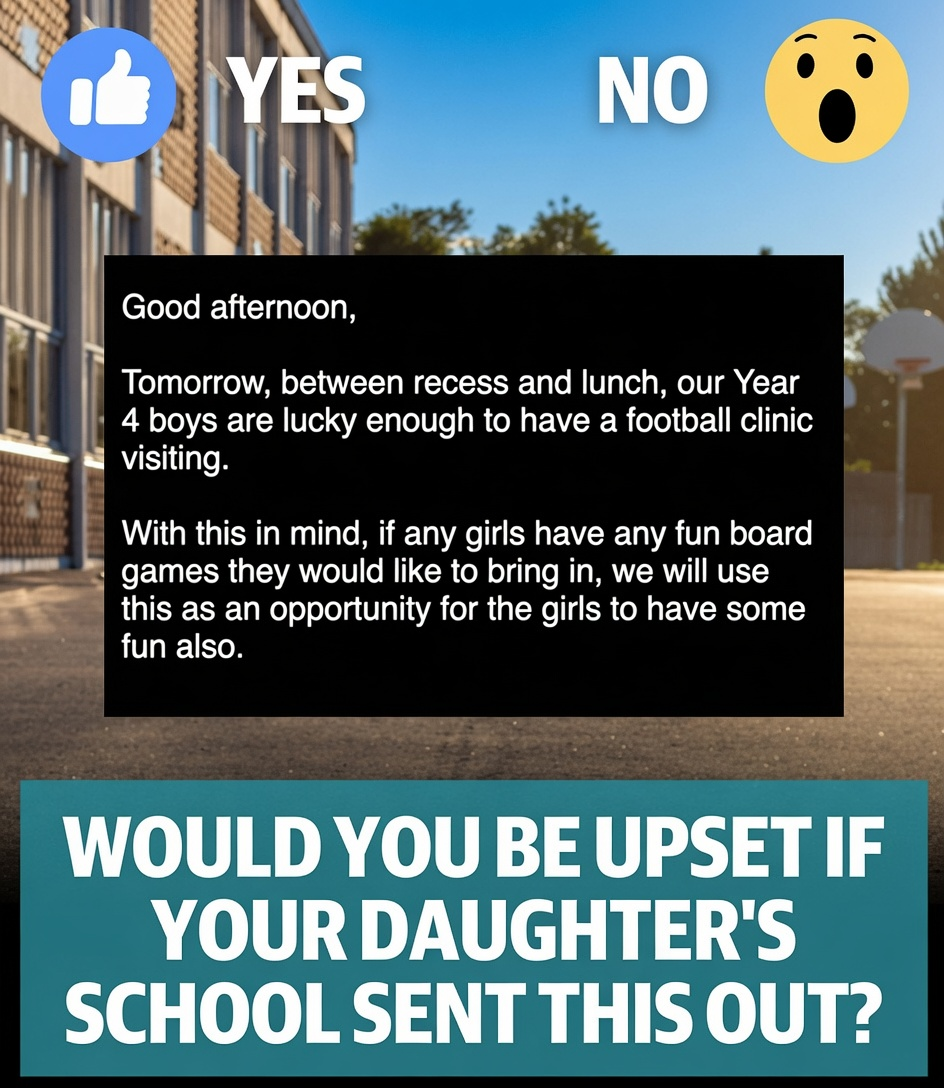
The message, sent to families at Eaton Primary School in the state’s South West region, quickly spread on social media after a screenshot was shared online, prompting widespread discussion about gender stereotypes and equal access to school activities.
The email informed parents that the Year 4 boys would participate in a football clinic between recess and lunch.
“With this in mind, if any girls have any fun board games they would like to bring in, we will use this as an opportunity for the girls to have some fun also,” the message said.
While the school did not suggest that girls were prohibited from playing football more broadly, the wording of the email prompted criticism because the sporting activity appeared to be reserved exclusively for boys, while girls were directed towards a separate classroom activity.
Many parents, educators and commentators argued that the arrangement reinforced outdated assumptions about children’s interests.
Several social media users questioned why students were not simply allowed to choose which activity they wished to participate in, regardless of gender.
One parent wrote that her eight-year-old daughter would have preferred to join the football clinic rather than play board games.
Others pointed out that some boys may equally have preferred quieter activities, suggesting the division was based on stereotypes rather than individual preferences.
“Why wouldn’t they let the children choose what they’d like to do?” one commenter wrote.
“Some girls like football, some boys don’t. Gender stereotypes need to get in the bin.”
An Australian teacher who discussed the email on TikTok described it as sexist, while other users expressed surprise that gender-specific activities of this kind were still occurring in schools.
The debate reflects broader conversations taking place across Australian education about ensuring extracurricular opportunities are inclusive and based on student choice rather than traditional expectations of boys and girls.
Responding to questions about the incident, a spokesperson for the Western Australian Department of Education said Eaton Primary School provides students with a wide range of activities throughout the year designed to build confidence, encourage participation and support student wellbeing.
The department also confirmed that the school has already scheduled a girls’ sports clinic for the second half of the year.
“Throughout the year, Eaton Primary School students are provided with a range of opportunities to build positive self-esteem, develop confidence, and encourage strong engagement in education,” the spokesperson said.
The football clinic itself formed part of the school’s activities recognising NAIDOC Week, Australia’s annual celebration of the history, culture and achievements of Aboriginal and Torres Strait Islander peoples.
Following the event, Eaton Primary School published a Facebook post describing the clinic as a successful experience.
“Our students had a fantastic time developing their football skills, building teamwork and enjoying an active morning,” the school wrote.
The post added that the school regularly works with community organisations to deliver sporting clinics, incursions and educational activities that expose students to new experiences and help them develop a broad range of skills.
However, critics argued that the positive objectives of the football clinic did not address concerns about who was given access to participate.
Education experts have increasingly encouraged schools to design activities that maximise inclusion rather than dividing students according to gender unless there is a specific educational or sporting reason for doing so.
In many Australian schools today, girls participate in Australian rules football, rugby league, rugby union and soccer at both school and community level. Female participation in Australian football has grown rapidly over the past decade, driven in part by the establishment and expansion of the AFL Women’s competition.
Likewise, educators have increasingly recognised that interests such as chess, coding, music, art and board games appeal to students across all genders.
As a result, many schools now offer activities based on student interest rather than gender, reflecting broader efforts to promote inclusion and equal opportunity.
The Eaton Primary School email has therefore become part of a wider discussion about whether schools should avoid making assumptions about children’s preferences.
The incident is also not the first recent example of Australian schools facing debate over gender-related policies.
Late last year, Sydney’s Mosman High School attracted attention after introducing updated dress code expectations that restricted items such as bike shorts, leggings and tops that did not adequately cover the neckline.
Some students argued the policy was enforced more strictly against girls than boys, raising concerns about inconsistent application of school rules.
At the time, the New South Wales Department of Education noted that decisions regarding school uniforms are largely the responsibility of individual schools, while requiring dress codes to remain equitable for all students.
Parents with concerns were encouraged to raise them directly with school principals through established departmental processes.
The Eaton Primary School discussion illustrates how seemingly routine communications can attract significant public attention when they touch on broader social issues such as gender equality and inclusion.
Although the school has indicated that girls will have access to their own sporting clinic later in the year, many parents who responded online argued that offering separate opportunities does not necessarily resolve concerns if participation is determined by gender rather than personal interest.
For supporters of a more flexible approach, the simplest solution would have been to allow every Year 4 student to choose between attending the football clinic or remaining in the classroom for board games, ensuring that each child could participate in the activity that best matched their interests.
At the time of publication, Eaton Primary School had not publicly commented on the criticism surrounding the email.