The Albanese Government has ruled out providing assistance to any Australian men detained in Iraq over alleged links to the Islamic State group if they seek to return home, reinforcing Canberra’s long-standing position that national security remains the overriding priority.
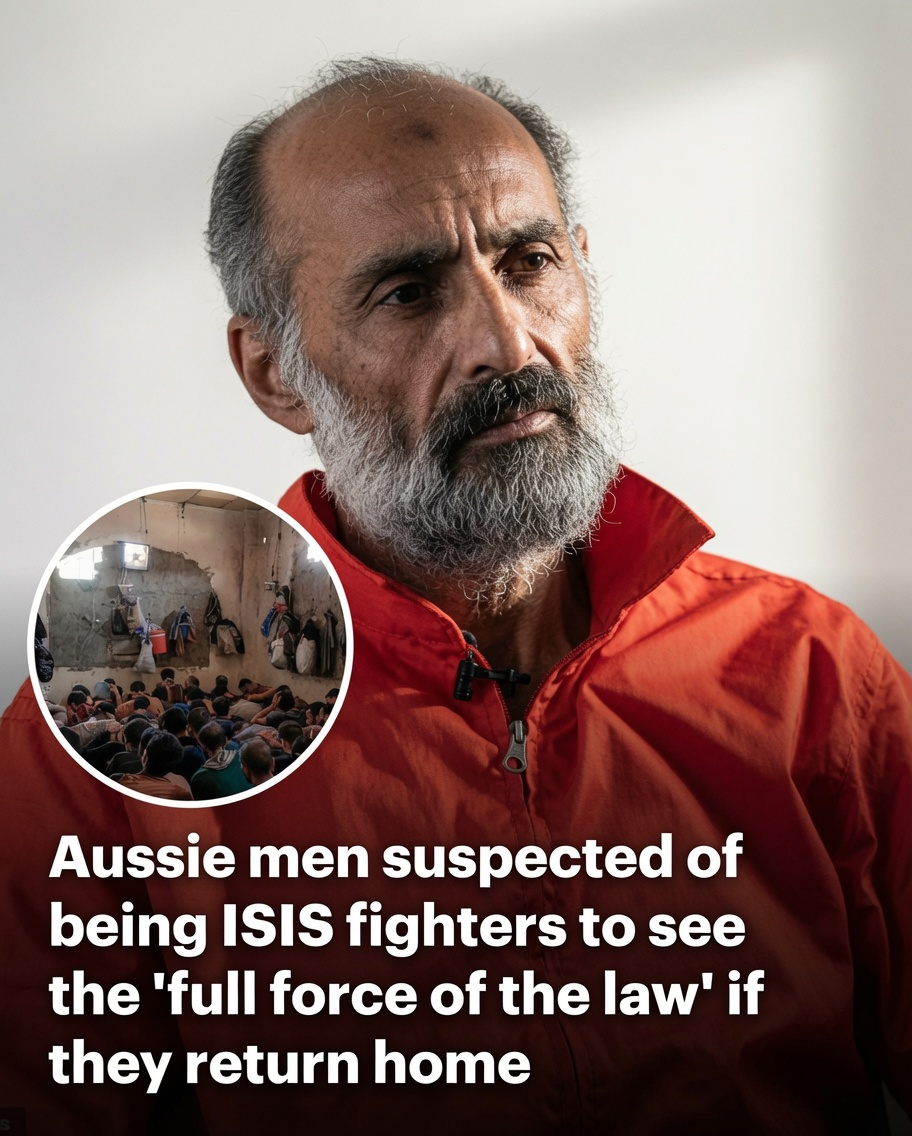
The government’s position comes after reports that a group of approximately 13 Australian nationals being held in Baghdad will undergo questioning by Iraqi authorities and United States officials as part of an ongoing review into their alleged involvement with ISIS following the collapse of the group’s self-declared caliphate.
The interviews could determine whether sufficient evidence exists to continue holding some of the detainees or whether they should eventually be released. Any decision to free individuals would inevitably raise questions about their future destination, including whether they might attempt to return to Australia.
Health Minister Mark Butler made clear that the federal government would not facilitate such a return.
“These men certainly will not be getting any assistance from the government to try to come back home,” Butler said during a television interview.
He added that any Australian who did return would face the country’s criminal justice system, including investigation by law enforcement agencies and the possibility of prosecution where evidence supported criminal charges.
The comments reflect Australia’s approach to citizens suspected of involvement with terrorist organisations overseas. Successive governments, regardless of political party, have maintained that any returnees must be thoroughly assessed by security agencies before being permitted to re-enter the community.
Australian authorities have spent years dealing with the complex legal and humanitarian consequences of citizens who travelled to Syria and Iraq after ISIS declared its so-called caliphate in 2014.
Hundreds of foreign nationals from dozens of countries travelled to territory controlled by the extremist organisation during its peak, with many joining as fighters while others travelled with spouses or family members.
Following the military defeat of ISIS in Iraq in 2017 and Syria in 2019, thousands of foreign nationals were captured by Kurdish forces or Iraqi authorities. Many have since remained in detention camps or prisons while governments debated whether to repatriate their citizens.
Australia has adopted a cautious, case-by-case approach.
While the federal government has previously repatriated several groups of Australian women and children from camps in north-eastern Syria on humanitarian grounds, officials have consistently distinguished those cases from adult men suspected of directly participating in terrorist activities.
Women and children returned to Australia have undergone extensive security assessments upon arrival. In several cases, adults have subsequently faced criminal investigations and terrorism-related charges under Australian law.
Authorities have repeatedly emphasised that repatriation does not provide immunity from prosecution.
The current group of Australian men is understood to have been detained in Iraq since the territorial collapse of ISIS. Conditions inside Iraqi detention facilities housing terrorism suspects have frequently been described by international human rights organisations as overcrowded, difficult and dangerous.
Despite those concerns, Australian governments have argued that security considerations outweigh diplomatic intervention on behalf of adults accused of supporting extremist organisations.
The latest review involving US and Iraqi investigators is expected to focus on each detainee’s individual conduct rather than treating the group collectively. Investigators will seek to establish whether sufficient admissible evidence exists linking individuals to ISIS operations, combat roles or other criminal activity.
If evidence is insufficient to sustain continued detention under Iraqi law, authorities could decide to release some detainees.
Such an outcome would not automatically permit travel to Australia.
Any Australian citizen seeking to return would still need valid travel documentation and would be subject to Australia’s border security framework. Federal agencies, including the Australian Federal Police and the Australian Security Intelligence Organisation, would play central roles in assessing any returnee.
Australia possesses some of the world’s strongest counter-terrorism legislation, much of it introduced following the September 11 attacks and expanded after Australians travelled to fight in conflicts across the Middle East.
Federal law criminalises membership of listed terrorist organisations, supporting terrorist groups, entering declared conflict areas without legitimate reason and engaging in hostile activities overseas.
Authorities also retain powers to investigate returning foreign fighters, cancel passports, impose control orders in appropriate circumstances and prosecute offences carrying lengthy prison sentences where sufficient evidence exists.
The legal process, however, remains dependent upon evidence capable of meeting Australia’s criminal standard of proof.
That has presented challenges internationally, as much of the alleged conduct occurred in active conflict zones where gathering reliable forensic evidence and witness testimony can be extremely difficult.
Security experts have long noted that governments face competing priorities when dealing with citizens detained overseas on terrorism allegations.
On one hand are legitimate national security concerns and public expectations that individuals associated with extremist organisations should face justice.
On the other are questions surrounding international law, citizenship obligations, due process and the humanitarian conditions within overseas detention facilities.
Australia has generally sought to balance those competing interests through individual assessments rather than adopting a blanket policy applicable to every detainee.
The Albanese Government has maintained the broader framework established by previous administrations, supporting carefully managed repatriations of vulnerable women and children while remaining reluctant to assist adult men alleged to have joined ISIS.
Officials have consistently argued that each case must be evaluated according to available intelligence, legal considerations, diplomatic circumstances and public safety.
The defeat of ISIS as a territorial entity did not eliminate the legal consequences facing those accused of supporting the organisation.
Across Europe, North America and Australia, governments continue grappling with unresolved questions involving foreign fighters, criminal accountability and long-term national security risks.
Some countries have actively repatriated citizens for domestic prosecution, while others have preferred local trials in Iraq where possible. International legal experts remain divided over which approach best serves justice while protecting public safety.
For Australia, the government’s latest comments indicate little appetite for changing its current policy.
Should any of the detained Australians ultimately be released by Iraqi authorities, Canberra has made clear that it will not facilitate their journey home. If they nevertheless arrive in Australia, they can expect comprehensive security screening, investigation by federal authorities and, where evidence warrants, prosecution under Australia’s counter-terrorism laws.
The outcome of the Iraqi and US review is therefore likely to determine not only the immediate future of the detainees, but also the next chapter in Australia’s continuing effort to address the legacy of citizens who travelled to join one of the world’s most notorious extremist organisations.






