As Victoria moves closer to the 2026 state election, the condition of regional roads has emerged as one of the issues attracting increasing political attention.
An opinion piece published by The Age argues that frustration over deteriorating roads, recurring potholes and the financial burden placed on motorists could become a defining election issue, particularly across regional communities where many residents rely on road transport every day.
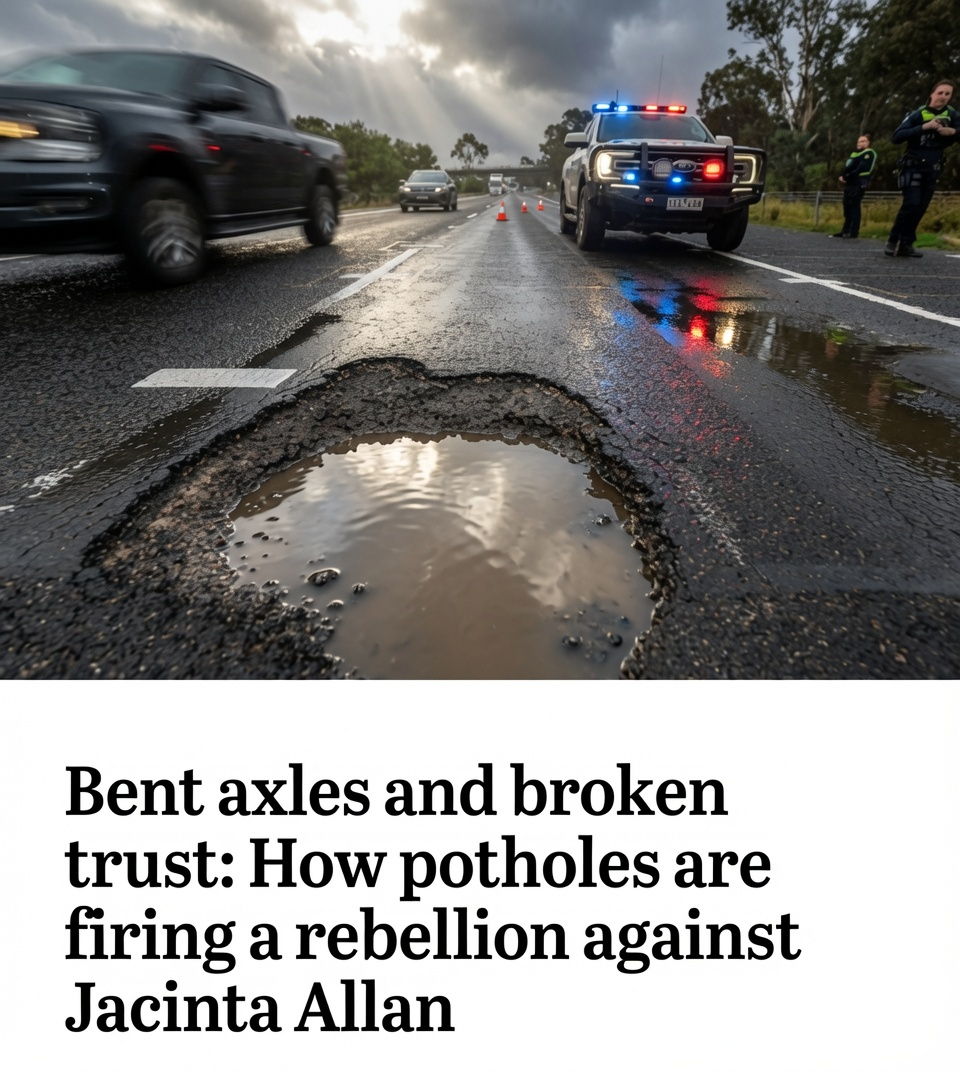
Unlike a traditional news report, the article presents the author’s interpretation of the political landscape rather than reporting a specific government announcement or election outcome. It suggests that dissatisfaction over road maintenance could influence voting behaviour if regional communities continue to feel their concerns are not being adequately addressed.
The debate comes after months of growing public discussion about the state of Victoria’s road network. Local councils, motorists, freight operators and regional advocacy groups have repeatedly highlighted concerns about potholes, damaged road surfaces and the costs associated with vehicle repairs.
Heavy rainfall over recent years has contributed to widespread road deterioration, while increased freight movements and ageing infrastructure have added further pressure to maintenance programs. Regional communities have argued that roads are essential infrastructure supporting local economies, agriculture, tourism and access to health and education services.
The Victorian Government has acknowledged the scale of the challenge. In the 2026–27 State Budget it announced what it described as the state’s largest-ever road maintenance program, committing $1.04 billion toward repairing, rebuilding and resurfacing roads. The government says approximately 70 per cent of that funding will be directed to regional Victoria, alongside bridge maintenance, emergency works and other infrastructure upgrades.
Government figures indicate crews have already repaired hundreds of thousands of potholes as part of ongoing maintenance programs, with ministers arguing the investment reflects the importance of improving safety and reliability across the state’s transport network.
Despite those commitments, some regional organisations argue considerably more funding will ultimately be required. Regional Cities Victoria has described current allocations as an important step but maintains they fall short of what is needed to address years of deterioration across regional road networks. The organisation says many communities continue to experience declining road conditions despite increased maintenance spending.
Similar concerns have been raised by some local councils and regional representatives, who argue that temporary repairs often need to be repeated rather than replaced by more substantial reconstruction projects where road foundations have deteriorated.
Recent reporting has also highlighted increasing numbers of pothole reports across Victoria during 2026, with winter weather contributing to further damage in several regions including Gippsland, Ballarat and the Hume corridor. Critics argue these figures illustrate the scale of the maintenance backlog, while the government says extensive weather events have created unusually high repair demands.
The issue has also become politically contested. Opposition figures have accused the Allan Government of failing to keep pace with long-term maintenance needs, while Labor argues it is delivering record investment and that many roads continue to recover from years of flood-related damage.
Infrastructure has historically played an important role in Victorian elections. Large transport projects, road upgrades and public transport investment have frequently featured in campaign debates, particularly in rapidly growing outer suburbs and regional communities.
Whether road maintenance ultimately becomes one of the defining issues of the 2026 election remains uncertain. Elections are typically influenced by multiple factors including cost of living, housing, health services, education, economic conditions and public confidence in government.
However, road conditions remain one of the most visible public services experienced by residents on a daily basis. For motorists who regularly encounter damaged road surfaces, vehicle repair costs and travel disruptions, infrastructure maintenance has become a practical issue rather than simply a political talking point.
As campaigning intensifies in the months ahead, regional road funding is expected to remain a prominent area of debate, with both major parties likely to present competing plans aimed at addressing community concerns about safety, maintenance and long-term infrastructure investment.






