One Nation leader Pauline Hanson has called on Victorian Opposition Leader Jess Wilson to view her party as a potential ally rather than an opponent, arguing that both parties share an interest in challenging the Allan Labor Government at the upcoming Victorian election.
Speaking during an interview on Melbourne radio station 3AW, Senator Hanson delivered a direct message to Ms Wilson, saying, “You are not my enemy. Labor is.” The comments came amid growing political discussion about preference arrangements and the changing balance of support among parties in Victoria.
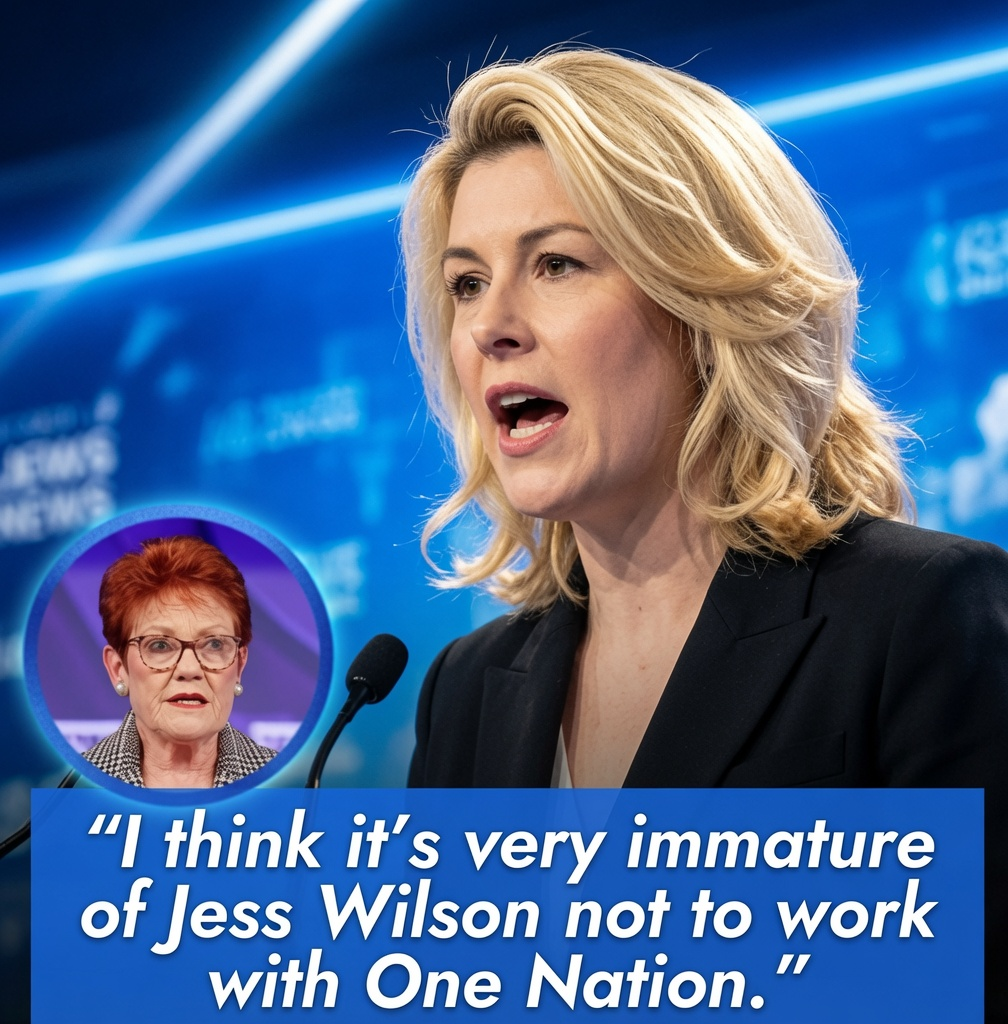
Senator Hanson said One Nation’s objective was to see a change of government and that she was willing to work with parties that shared that goal. She encouraged the Victorian Liberal Party to consider One Nation’s policies and recognise that many voters were looking for alternatives to the major parties.
“Labor is the problem,” Hanson said during the interview, arguing that cooperation between conservative parties could strengthen efforts to unseat the government. She suggested that treating One Nation as a political rival rather than a potential partner could divide voters seeking change.
The remarks follow recent polling that suggested One Nation has increased its support in Victoria. One survey referenced during the interview indicated the party had overtaken both Labor and the Coalition on first-preference voting intentions, although polling results can vary depending on methodology and should not be regarded as a prediction of election outcomes.
Questions about cooperation between the Liberal Party and One Nation have attracted increasing attention in recent weeks. Earlier, Ms Wilson said discussions about preference arrangements would occur closer to the election and noted that no approach had been made by Senator Hanson at that stage.
Australia’s preferential voting system allows parties to recommend how supporters allocate preferences if their preferred candidate is excluded during vote counting. While these recommendations can influence election contests, voters remain free to determine how they complete their ballot papers.
Preference negotiations are common before Australian elections, particularly where multiple parties are competing for similar voter bases. Agreements can differ between electorates and are typically finalised only after candidates have been confirmed and parties have settled their campaign strategies.
For One Nation, Victoria has become an increasingly important electoral focus. Senator Hanson has argued that concerns over cost of living, housing affordability, crime, energy prices and immigration are encouraging more voters to consider minor parties. The party has sought to position itself as an alternative to both Labor and the Coalition on a range of policy issues.
The Liberal Party, meanwhile, continues to campaign as the principal alternative government in Victoria. While the party has not announced any formal electoral arrangement with One Nation, it has indicated that decisions on preferences will be made later in the campaign through its usual internal processes.
Political analysts note that preference strategies can play an important role in tightly contested seats, particularly where support is divided among several parties. However, the impact varies significantly between electorates and depends on local voting patterns as well as the distribution of primary votes.
The exchange also highlights the broader challenge facing opposition parties seeking to maximise support without alienating moderate or conservative voters. Any future cooperation would need to balance electoral strategy with each party’s policy positions and political priorities.
At this stage, no formal agreement has been announced between One Nation and the Victorian Liberal Party. Senator Hanson’s comments represent a public invitation for closer cooperation, while Ms Wilson has maintained that discussions about preferences will take place closer to polling day.
With several months remaining before Victorians head to the polls, the question of how preferences are allocated is likely to remain a closely watched aspect of the campaign. Whether Senator Hanson’s appeal translates into any formal electoral arrangement will become clearer as parties finalise candidates and campaign strategies in the lead-up to the election.






