A planned protest outside a major community event for Indian Prime Minister Narendra Modi is set to add another dimension to one of the most significant diplomatic visits to Australia this year.
Mr Modi is visiting Melbourne as part of the Australia–India Annual Leaders’ Summit, where he will hold talks with Prime Minister Anthony Albanese on issues including trade, investment, education, regional security and strategic cooperation. Alongside the official meetings, thousands of members of Australia’s Indian community are expected to attend the “Melbourne Meets Modi” event at Marvel Stadium.
According to organisers of a separate demonstration, the protest is intended to oppose Australia’s increasingly close relationship with India and concerns they say relate to migration, housing pressures and broader government policy. Organisers have described the event as being intended to remain peaceful while making their views highly visible.
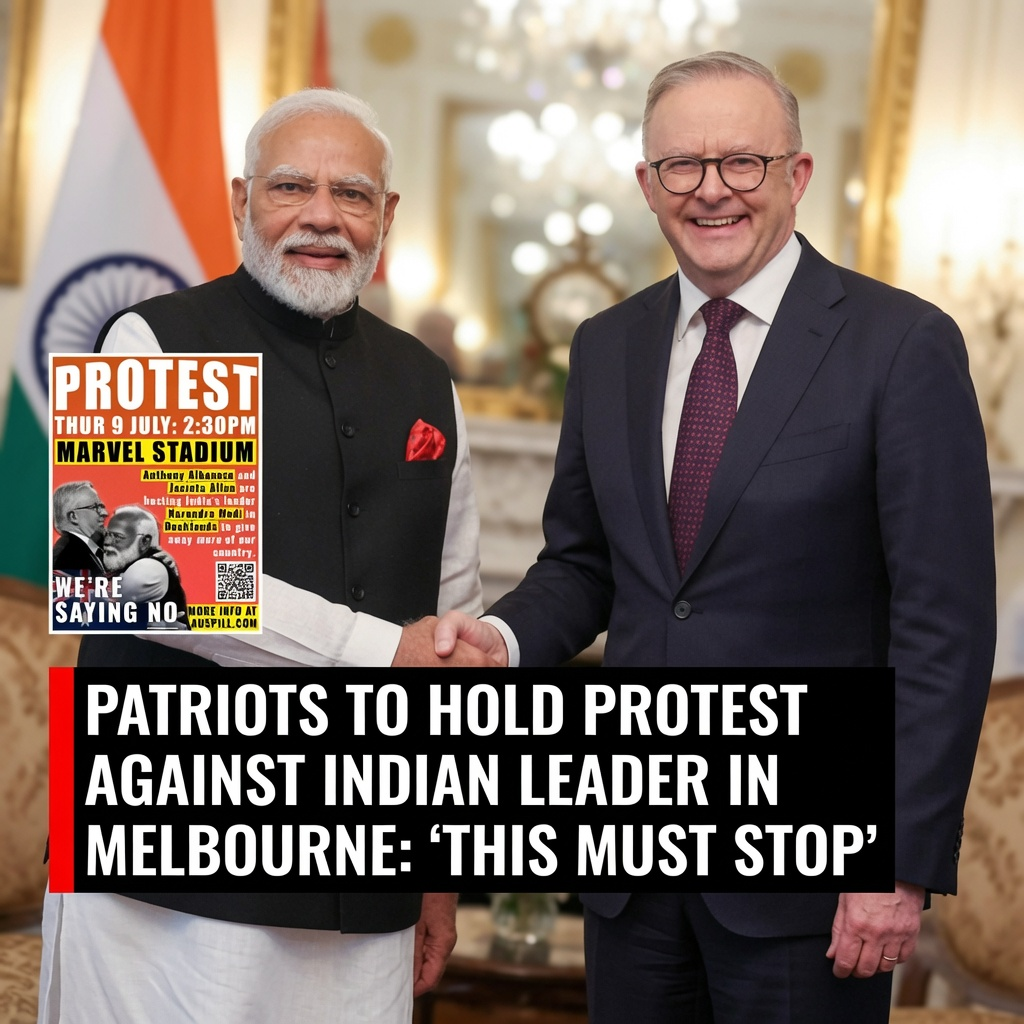
The planned demonstration comes as Australia continues to deepen its relationship with India, one of the country’s fastest-growing strategic and economic partners. In recent years the two governments have expanded cooperation across defence, technology, education, critical minerals and clean energy while strengthening engagement through the Quad partnership alongside the United States and Japan.
For supporters of closer ties, the visit represents another milestone in a relationship that has become increasingly important for both countries. Community organisations have spent months preparing cultural performances and welcoming ceremonies, with thousands of volunteers helping organise one of the largest public receptions ever held for an overseas leader in Australia.
Event organisers have said attendance is expected to reach tens of thousands, reflecting both the size of Australia’s Indian diaspora and the growing importance many community members place on the bilateral relationship. Australia is home to one of the world’s largest overseas Indian communities, with Indian-born residents now representing one of the country’s fastest-growing migrant groups. :contentReference[oaicite:1]{index=1}
At the same time, Mr Modi’s visit has also attracted criticism from a range of groups representing different viewpoints. Human rights organisations have urged the Australian Government to raise concerns over issues including press freedom and minority rights during official discussions with the Indian leader. Other activist groups have announced separate demonstrations focused on different aspects of India’s domestic policies. :contentReference[oaicite:2]{index=2}
The differing reactions highlight the complexity surrounding visits by high-profile international leaders. Large diplomatic events often attract both supporters and critics, with Australia’s democratic system allowing peaceful public demonstrations provided organisers comply with relevant laws and police directions.
Victoria Police and federal authorities are expected to maintain a significant security presence throughout the visit. Security planning has received additional attention after Australian Federal Police recently investigated an online threat directed at Mr Modi ahead of his arrival. Authorities identified the individual involved, issued a formal warning and said there was no ongoing threat to public safety. :contentReference[oaicite:3]{index=3}
Beyond the public events, the official program is expected to focus heavily on strengthening economic and strategic cooperation between Canberra and New Delhi. Australia and India have steadily expanded collaboration since signing a Comprehensive Strategic Partnership in 2020, with both governments seeking closer cooperation across supply chains, defence, critical technologies and regional security in the Indo-Pacific.
Trade has also become a central feature of the relationship. An interim free trade agreement that entered into force in 2022 has reduced tariffs on many goods and encouraged further business investment between the two countries. Education remains another major area of cooperation, with India representing one of Australia’s largest international student markets.
For Melbourne itself, the visit carries both diplomatic and community significance. Victoria has Australia’s largest Indian-born population, and state leaders have emphasised the economic and cultural contribution made by Indian Australians across business, healthcare, education, technology and professional services.
As with many high-profile international visits, Thursday’s events are expected to showcase sharply different perspectives. Thousands are likely to gather inside Marvel Stadium to celebrate the relationship between the two countries, while protesters outside seek to draw attention to concerns about government policy and Australia’s future direction.
Although opinions differ over immigration, foreign policy and Australia’s relationship with India, the official meetings between Mr Albanese and Mr Modi are expected to remain focused on expanding bilateral cooperation in areas regarded by both governments as strategically important. The visit underscores how Australia–India relations have become a significant part of Canberra’s foreign policy while also illustrating how major international engagements can generate robust public debate within Australia’s democratic system.






