Anthony Albanese Reaffirms Support for Multicultural Australia Amid Ongoing National Debate
Prime Minister Anthony Albanese has reiterated his support for Australia’s multicultural identity, describing it as one of the country’s defining strengths while responding to questions about recent comments from actor Paul Hogan.
Speaking during media interviews, Mr Albanese said Australia has benefited from welcoming people from around the world over many decades. He argued that Australians from diverse cultural backgrounds have helped shape the nation’s economy, communities and institutions while sharing a common commitment to the country.
His comments came after renewed public discussion about multiculturalism and national identity, topics that have featured prominently in political debate over recent months alongside broader conversations about migration, housing, infrastructure and social cohesion.
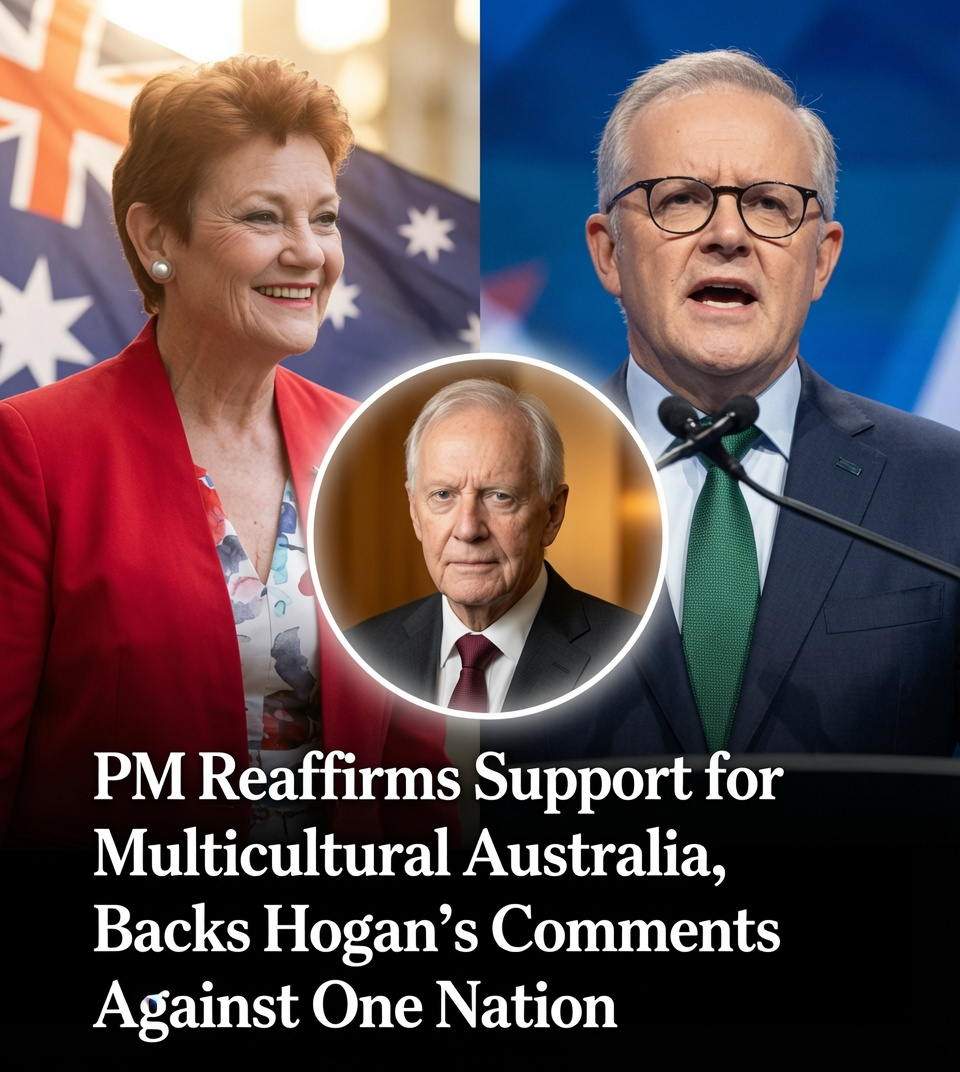
Mr Albanese also expressed support for comments made by Australian film and television star Paul Hogan, who recently reflected on Australia’s multicultural character. According to the Prime Minister, people from many different backgrounds have successfully built lives in Australia while contributing to a shared national identity.
The Prime Minister said Australians can celebrate their cultural heritage while also embracing a common identity as Australians. He argued that multiculturalism has played an important role in the country’s development and remains a source of national strength.
The discussion comes at a time when immigration policy continues to receive significant public attention. Australia has experienced elevated migration levels in recent years following the reopening of international borders after the COVID-19 pandemic, contributing to debates over housing availability, infrastructure capacity and workforce needs.
While the government has introduced measures aimed at reducing net overseas migration from recent peaks, ministers have maintained that Australia will continue to rely on skilled migration and international talent to support economic growth in sectors experiencing labour shortages.
Opposition parties and minor parties have proposed different approaches to migration and multicultural policy. Some have argued for tighter migration settings or greater emphasis on cultural integration, while others continue to support maintaining Australia’s long-standing multicultural framework. Those differing views have ensured the issue remains a prominent part of national political discussion.
Australia formally adopted multicultural policies during the 1970s after decades in which immigration increasingly expanded beyond traditional European sources. Since then, successive governments from both major political parties have generally recognised multiculturalism as a central feature of Australian society, although debates over migration levels, integration and national identity have periodically intensified.
Supporters of multiculturalism argue that cultural diversity has strengthened Australia’s economy, enriched its communities and enhanced its international connections. Critics, meanwhile, often focus on practical issues such as population growth, housing demand, public services and the pace of migration rather than multiculturalism itself.
Political analysts note that these discussions frequently become more prominent during periods of economic pressure, particularly when concerns over housing affordability and cost of living are high. Questions surrounding immigration policy and national identity often intersect with broader debates about economic planning, infrastructure investment and workforce shortages.
For the Albanese Government, reaffirming support for multicultural Australia reflects a continuation of its broader policy position that diversity and social cohesion can coexist. At the same time, ministers have acknowledged community concerns about migration levels by outlining plans to moderate future intake while continuing to attract skilled workers and international students under revised settings.
As debate continues, multiculturalism is expected to remain a significant issue in Australia’s political landscape. While parties differ on migration settings and related policies, the discussion increasingly centres on how Australia balances economic needs, population growth and social cohesion in the years ahead.