The Victorian Government has announced a new $5 million funding package for multicultural community organisations, saying the investment is intended to strengthen social cohesion and support communities facing rising concerns about discrimination and hate-related incidents.
According to the government, the funding will be distributed among organisations representing a broad range of cultural and religious communities across Victoria. The grants are intended to support community programs, educational initiatives, cultural engagement activities and projects designed to strengthen inclusion and improve community resilience.
Government representatives said the initiative reflects the importance of maintaining social cohesion in one of Australia’s most culturally diverse states. Victoria is home to people from hundreds of cultural backgrounds, with multilingual and multifaith communities forming a significant part of the state’s population and economy.
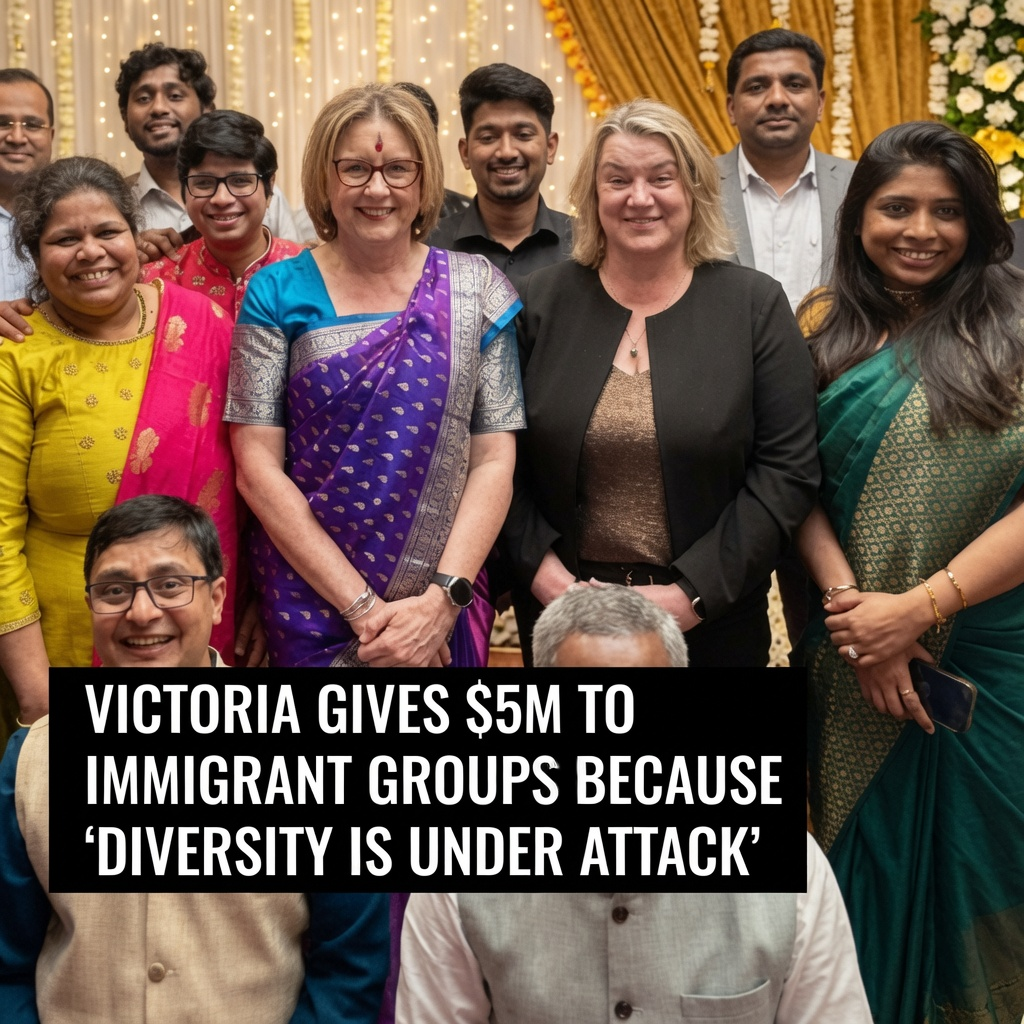
Ministers said the funding package responds to growing concern about incidents involving racial and religious hostility, arguing that community organisations often play an important role in supporting vulnerable groups, promoting intercultural understanding and helping residents access government services.
The announcement has also prompted discussion about the appropriate use of public funding. Supporters argue that grants for community organisations can strengthen social connections, improve public participation and help reduce discrimination by supporting education and community engagement programs.
Critics, however, have questioned whether taxpayer funding should be directed toward a large number of representative organisations or whether resources could instead be concentrated on broader services that benefit all Victorians regardless of cultural background. Others have called for ongoing evaluation to ensure funded programs achieve measurable outcomes and provide value for public money.
Public grants for community organisations are common across Australian governments at the federal, state and local levels. Funding programs typically support projects in areas such as settlement services, language assistance, cultural festivals, leadership development, youth engagement and initiatives aimed at strengthening community participation.
Policy experts note that decisions involving public grants often involve balancing several objectives, including social cohesion, equality of opportunity, efficient use of public funds and transparent administration. Governments generally publish eligibility criteria and assessment processes to ensure funding decisions are made through established programs rather than ad hoc allocations.
The latest announcement comes amid broader national debate about multiculturalism, migration and community cohesion. Political parties continue to hold differing views on how governments should support culturally diverse communities, reflecting wider discussions about national identity, immigration policy and the role of public institutions.
As the funding program moves forward, attention is likely to focus on how grants are allocated, the outcomes achieved by participating organisations and whether the initiatives contribute to stronger community relationships across Victoria. The debate illustrates the continuing challenge of balancing public investment, accountability and support for a diverse society.






