Few films released this year have generated as much debate as Citizen Vigilante. Long before many audiences had the chance to watch it, the action thriller was already attracting attention because of its subject matter, its director and the public reaction it sparked across multiple countries.
Directed by Uwe Boll and starring Armie Hammer, the film follows a former soldier who becomes frustrated with what he sees as a failing justice system and begins taking the law into his own hands. Set against a backdrop of crime, social unrest and political tension, the story explores themes of vigilantism, immigration and public confidence in government institutions.
The film has divided audiences almost immediately after its release. Supporters argue that it raises difficult questions about crime, border security and the limits of government responsibility. Some commentators have described it as a provocative examination of issues they believe receive insufficient attention in mainstream entertainment.
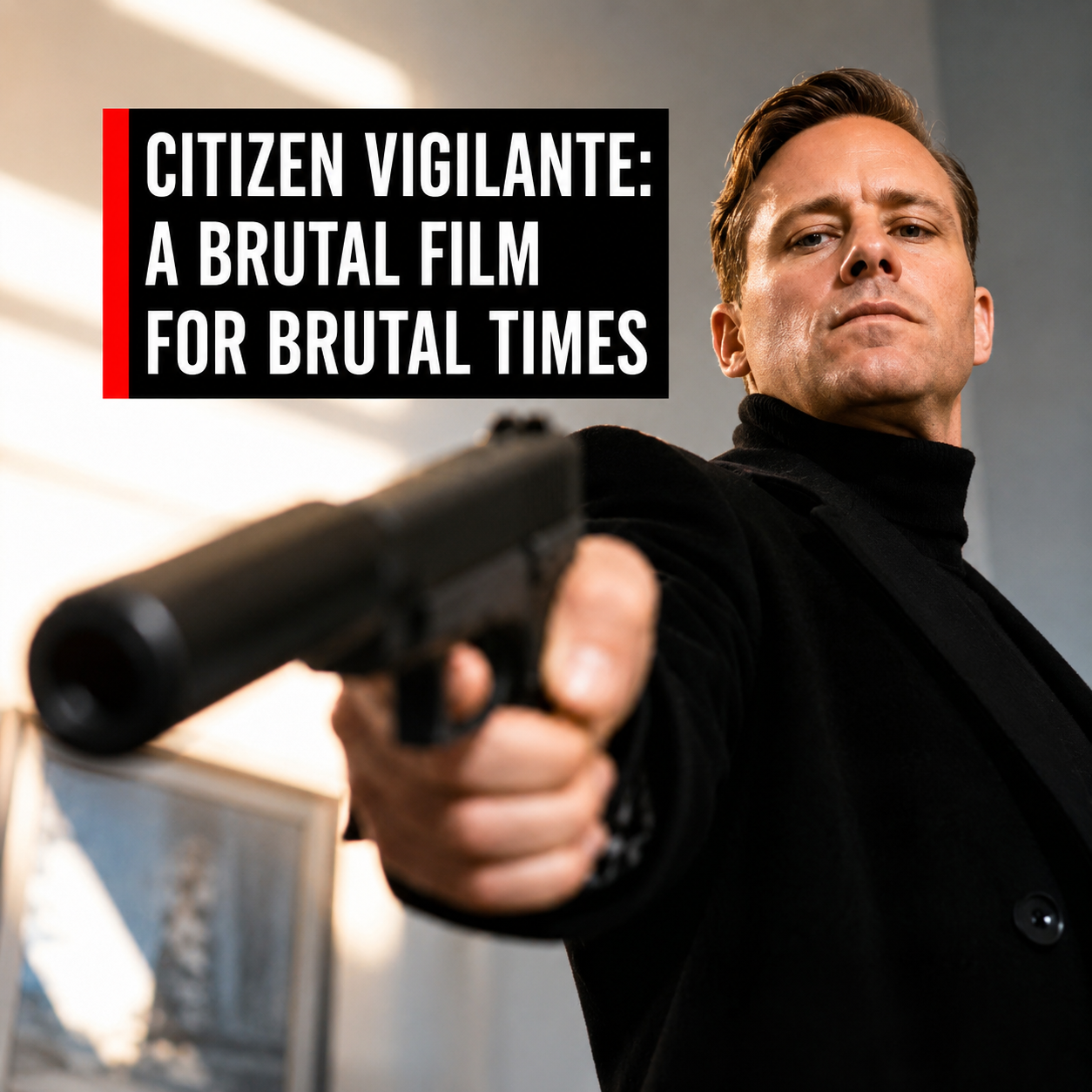
Critics, however, have reached very different conclusions. A number of reviewers argue that the film presents an overly simplistic portrayal of complex social issues and relies heavily on graphic violence. Others contend that its depiction of migrants and political institutions risks reinforcing divisive narratives rather than encouraging thoughtful discussion.
The controversy extends beyond the story itself. The film has received extensive media coverage because of debates surrounding its distribution, public endorsements and differing responses from critics and audiences. While some viewers have praised it as an uncompromising political thriller, others have described it as inflammatory and irresponsible.
One reason the discussion has become so prominent is that the movie arrives during a period of intense public debate in many Western countries over immigration, crime and community safety. These issues remain politically sensitive, meaning cultural works that address them often generate strong and conflicting reactions.
Film analysts note that controversy alone does not determine a movie’s artistic quality. Instead, Citizen Vigilante has become an example of how cinema can act as a focal point for wider social and political debates. Viewers often bring their own experiences and beliefs into the conversation, leading to sharply different interpretations of the same work.
As a piece of filmmaking, the movie blends action sequences with political themes, placing greater emphasis on provoking discussion than delivering a conventional action narrative. Whether audiences view that approach as successful depends largely on their expectations and their interpretation of the issues presented.
Ultimately, Citizen Vigilante is likely to remain one of the year’s most talked-about releases not because there is broad agreement about its message, but because it has prompted vigorous debate over the relationship between entertainment, politics and freedom of expression. That conversation is expected to continue as the film reaches wider international audiences and more viewers form their own opinions after seeing it.






