Australia’s long-running debate over which generation had the toughest path to home ownership has taken a new turn, with fresh economic analysis suggesting today’s borrowers are carrying a heavier mortgage burden than those who faced interest rates of around 17 per cent in the late 1980s.
The analysis, prepared by KPMG using historical Australian Bureau of Statistics data, argues that focusing on headline interest rates alone does not provide a complete picture of housing affordability. While mortgage rates were dramatically higher more than three decades ago, the average amount Australians now need to borrow has increased substantially because of rising property prices.
According to the report, the share of household income being spent on interest repayments has recently reached levels that exceed those recorded during the 1989–90 interest rate cycle. KPMG says larger loan balances have outweighed the benefit of lower borrowing rates, leaving many households under greater financial pressure.
For many Australians, the finding challenges a common belief that previous generations had a more difficult experience simply because interest rates reached double digits. The report suggests affordability should instead be assessed by considering both borrowing costs and the size of the debt required to purchase a home.
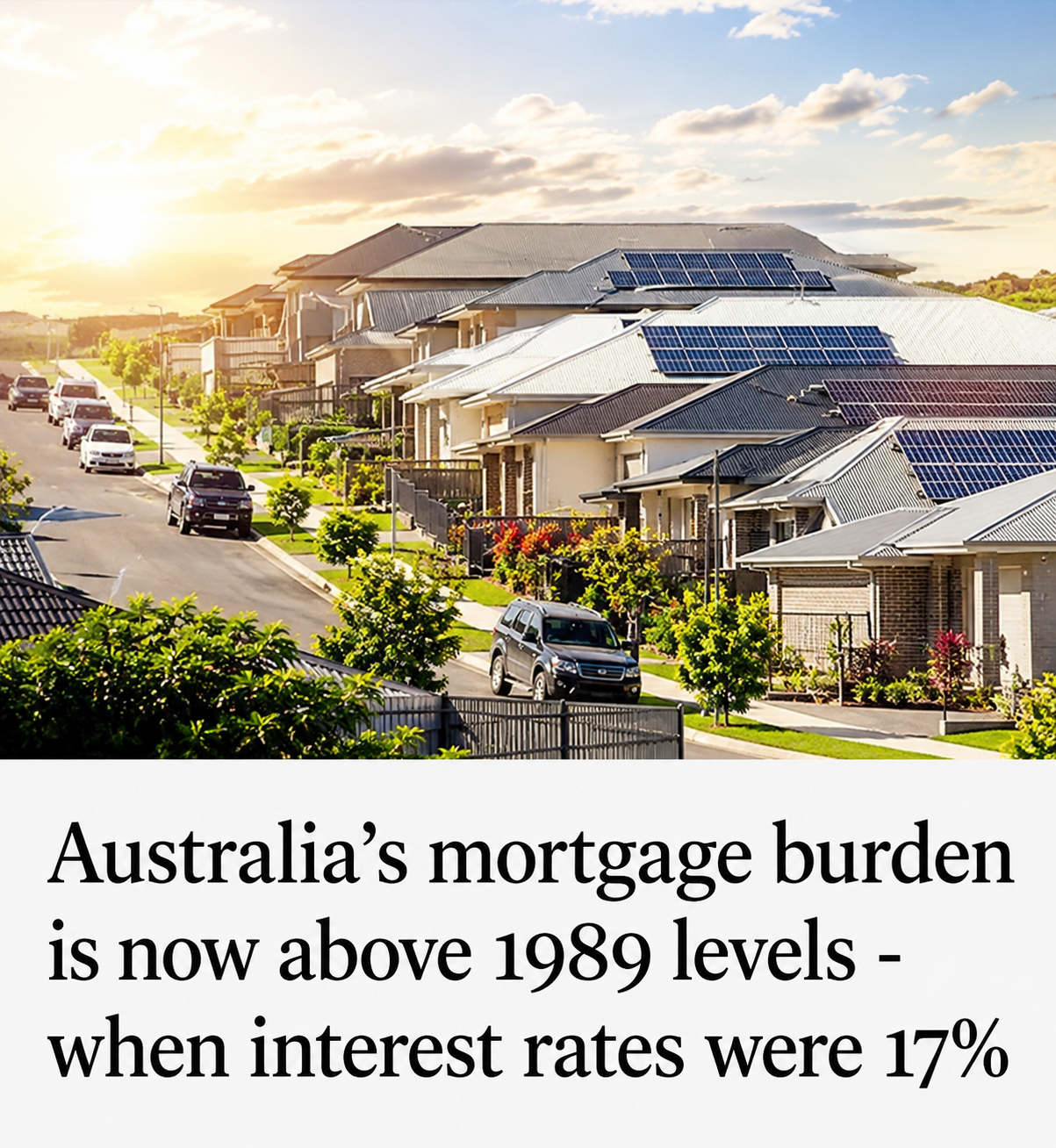
Housing affordability has become one of Australia’s most significant economic issues in recent years. Strong growth in property prices across many parts of the country has pushed first-home buyers to take on increasingly large mortgages, even though lending rates remain well below the peaks experienced in previous decades.
Economists note that the challenge facing today’s buyers extends beyond mortgage repayments alone. Higher living costs, including groceries, insurance, energy bills and other household expenses, have added further pressure to family budgets. At the same time, many prospective buyers continue to face difficulties saving for a deposit while paying elevated rents.
The report also highlights that comparing generations is more complex than looking at one economic indicator. Older Australians who purchased homes when prices were relatively lower often faced much higher interest rates, while younger buyers typically encounter lower rates but significantly larger loan balances and higher entry prices.
Housing industry groups continue to argue that increasing the supply of new homes will be essential to improving affordability over the longer term. Many economists also point to planning regulations, construction capacity, population growth and infrastructure as factors that influence both housing supply and prices.
Although property values have softened in some markets during recent months, affordability remains a major concern for many households. Changes in interest rates may alter monthly repayments, but the overall cost of entering the housing market continues to be shaped by the relationship between incomes, home prices and borrowing requirements.
The KPMG analysis adds another perspective to an ongoing national conversation about housing affordability rather than providing a definitive answer. As economic conditions evolve, policymakers, industry groups and prospective homeowners are likely to continue debating the most effective ways to improve access to home ownership while maintaining a stable housing market.






