Fresh opinion polling suggests support for Pauline Hanson’s One Nation has eased following her high-profile National Press Club address, with the latest surveys also indicating the federal Coalition remains under pressure. The results have fuelled renewed political debate over whether the speech broadened the party’s appeal or alienated some voters.
The polling was conducted in the period after Senator Hanson delivered a widely discussed address to the National Press Club, where she outlined a range of policy proposals and made comments on issues including multiculturalism, immigration, government spending and the role of public institutions.
Several of those remarks attracted significant criticism from political opponents and community groups, while supporters argued the speech reflected concerns held by many Australians on issues such as national identity, border security and the cost of living.
According to the latest published polling, One Nation’s level of support declined compared with earlier surveys conducted before the speech. The Coalition also remained at historically weak levels in some polls, while Labor improved its position. Polling results can vary between firms because of differences in methodology, sample size and the timing of surveys.
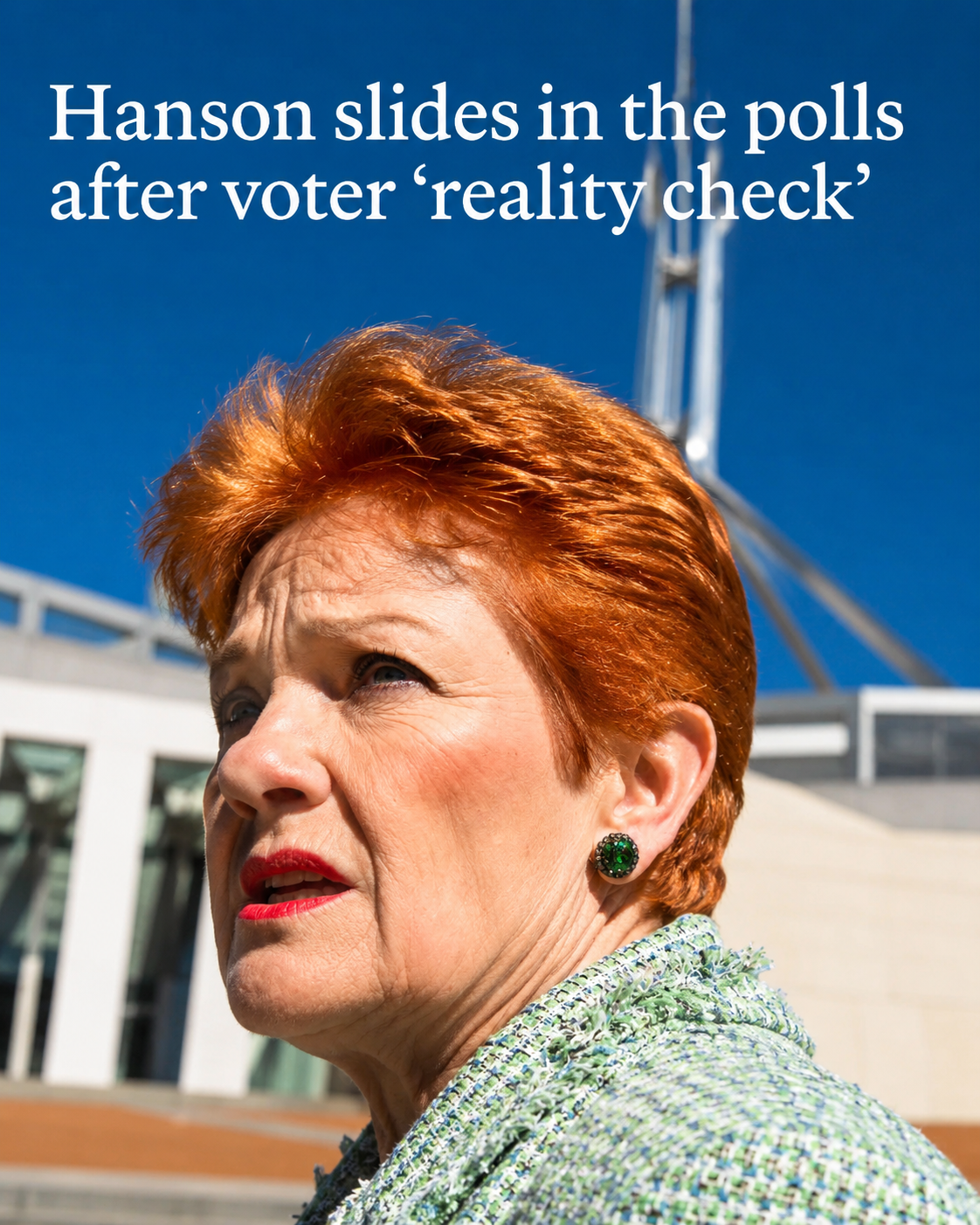
Labor was quick to seize on the figures, describing them as a “reality check” for Australians following the National Press Club appearance. Government representatives argued the polling suggested voters had carefully considered the proposals outlined in the speech and were not persuaded by several of the more controversial positions.
One Nation has not accepted the suggestion that the speech represented a political setback. The party has continued to defend its policy platform, arguing it is addressing issues that the major parties have failed to confront directly. Hanson has previously maintained that topics such as migration, government spending and cultural integration deserve broader public discussion regardless of criticism.
The polling comes during a period of significant change in Australia’s political landscape. Since the federal election, both the Coalition and minor parties have been seeking to redefine their positions while Labor attempts to consolidate its electoral advantage. At the same time, voter support has become increasingly fragmented, with independents and smaller parties continuing to attract attention across several states.
Political analysts caution against drawing firm conclusions from a single set of polling results. Opinion surveys provide a snapshot of public sentiment at a particular moment rather than a prediction of future election outcomes, and support can shift rapidly as new issues emerge or parties adjust their messaging.
The debate surrounding Hanson’s National Press Club address also highlights the broader challenge facing minor parties. High-profile speeches can increase public visibility and energise existing supporters, but they may also expose policies to greater scrutiny from political opponents, the media and undecided voters.
While One Nation’s national polling has softened in some recent surveys, the party continues to remain a significant force in parts of Australia, and different polls have produced varying results depending on the jurisdiction and methodology used. Some state-level polling released around the same period has shown stronger support for the party in particular regions, illustrating that public opinion is not uniform across the country.
With Parliament entering its winter break, both the government and opposition parties are expected to spend the coming weeks refining their policy messages before political campaigning intensifies again. Future polling will help indicate whether the recent movement reflects a temporary reaction to a high-profile speech or the beginning of a longer-term shift in voter sentiment.






