Australia’s housing affordability debate has intensified after One Nation leader Pauline Hanson questioned the federal government’s 5% deposit home buyer scheme following the largest monthly decline in national home values in several years.
The renewed discussion comes after fresh housing market data showed property prices softened across several major cities during June, prompting concerns about the financial position of some recent first-home buyers who entered the market with relatively small deposits.
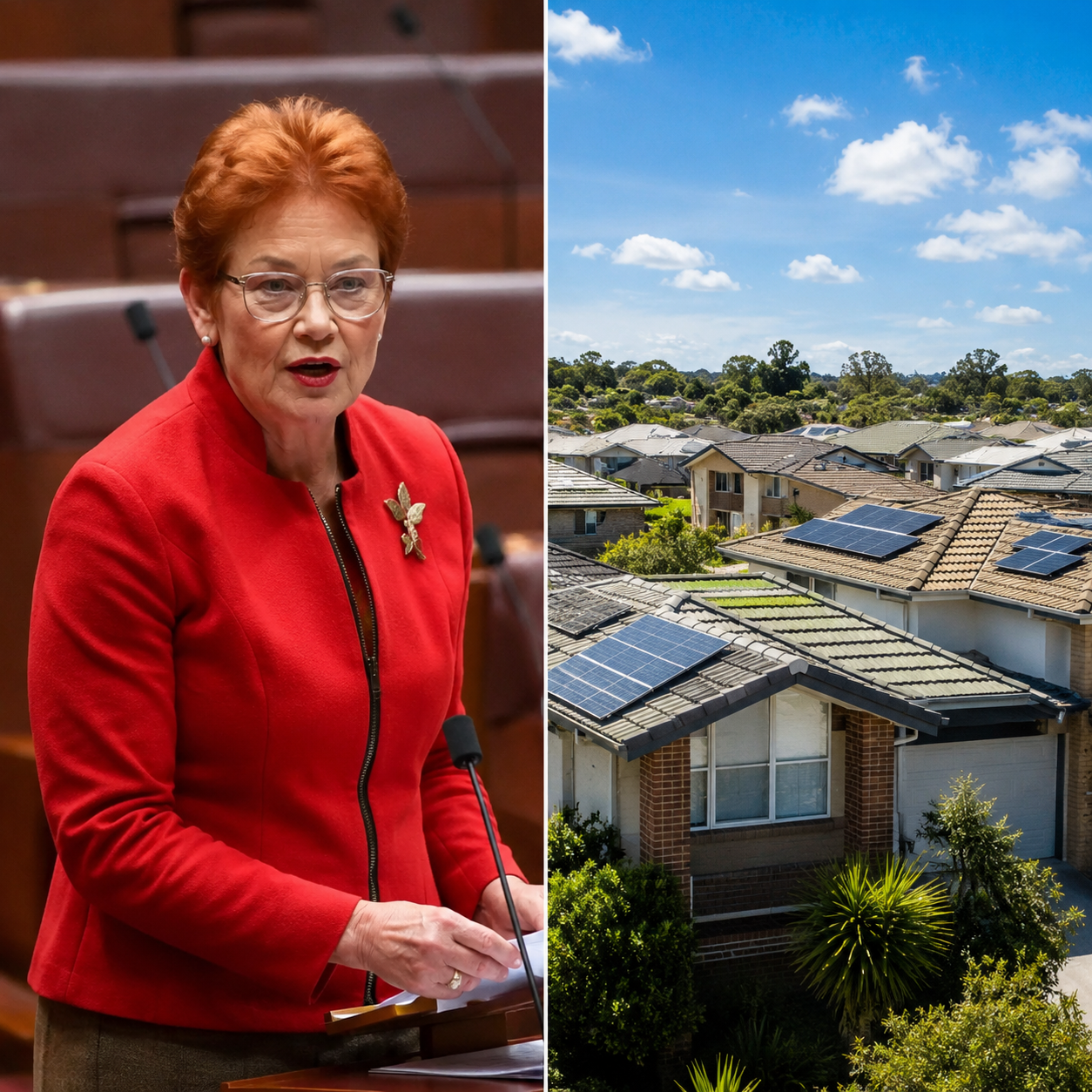
Hanson argued that encouraging Australians to purchase homes with only a 5% deposit could expose buyers to financial risk if property values continue to decline. She said some households may find themselves owing more on their mortgage than their home is worth should prices fall significantly, particularly if they need to sell soon after purchasing.
The comments follow the release of market data showing national dwelling values recorded their largest month-on-month decline since late 2022, with Sydney and Melbourne leading the downturn. Analysts say the softer conditions reflect a combination of higher borrowing costs, changing investor sentiment and recent policy reforms affecting the housing market.
The federal government’s First Home Guarantee allows eligible buyers to purchase a property with a deposit as low as 5% without paying lenders mortgage insurance, with the Commonwealth guaranteeing part of the loan. The scheme was introduced to help reduce one of the biggest barriers to home ownership for first-home buyers.
Government ministers have continued to defend the program, arguing it has enabled tens of thousands of Australians to purchase a home sooner than would otherwise have been possible. They also note that participants remain subject to normal lending assessments and must demonstrate they can service their loans before approval.
Housing economists say the risks faced by buyers depend on several factors, including where they purchased, how long they intend to own the property and broader economic conditions. While falling prices can reduce equity in the short term, many experts note that owner-occupiers who keep their homes over the longer term are generally less affected by temporary market fluctuations than those forced to sell quickly.
Some analysts have also cautioned against attributing recent price declines to a single policy. They point to a range of influences, including interest rates, housing supply, population growth, investor confidence and affordability pressures, all of which continue to shape conditions across different parts of Australia.
The debate has highlighted the competing policy priorities facing governments. Measures designed to improve housing affordability often seek to help first-home buyers enter the market, while policymakers must also consider the potential impact on prices, investment activity and future housing supply.
Industry groups remain divided over the best approach. Some believe demand-side assistance should be matched with significantly higher housing construction to improve affordability over the long term, while others argue tax and planning reforms are needed to increase supply and reduce pressure on prices.
For Australians considering purchasing their first home, financial advisers continue to recommend assessing borrowing capacity carefully, maintaining a financial buffer and planning for possible changes in property values and interest rates over time.
As housing affordability remains one of Australia’s most significant economic challenges, discussion over the effectiveness of buyer assistance programs is likely to continue alongside broader debates about taxation, planning policy and the supply of new homes.






