Questions are being raised about the growing influence of overseas-based social media networks after recent investigations suggested that large volumes of political content supporting One Nation are being distributed to Australian audiences through accounts operated outside the country.
The reports focus on Facebook pages, online communities and digital creators that appear to publish highly engaging political material designed to reach Australian users. Researchers say many of the accounts are administered from overseas while attracting substantial interaction from genuine Australian users.
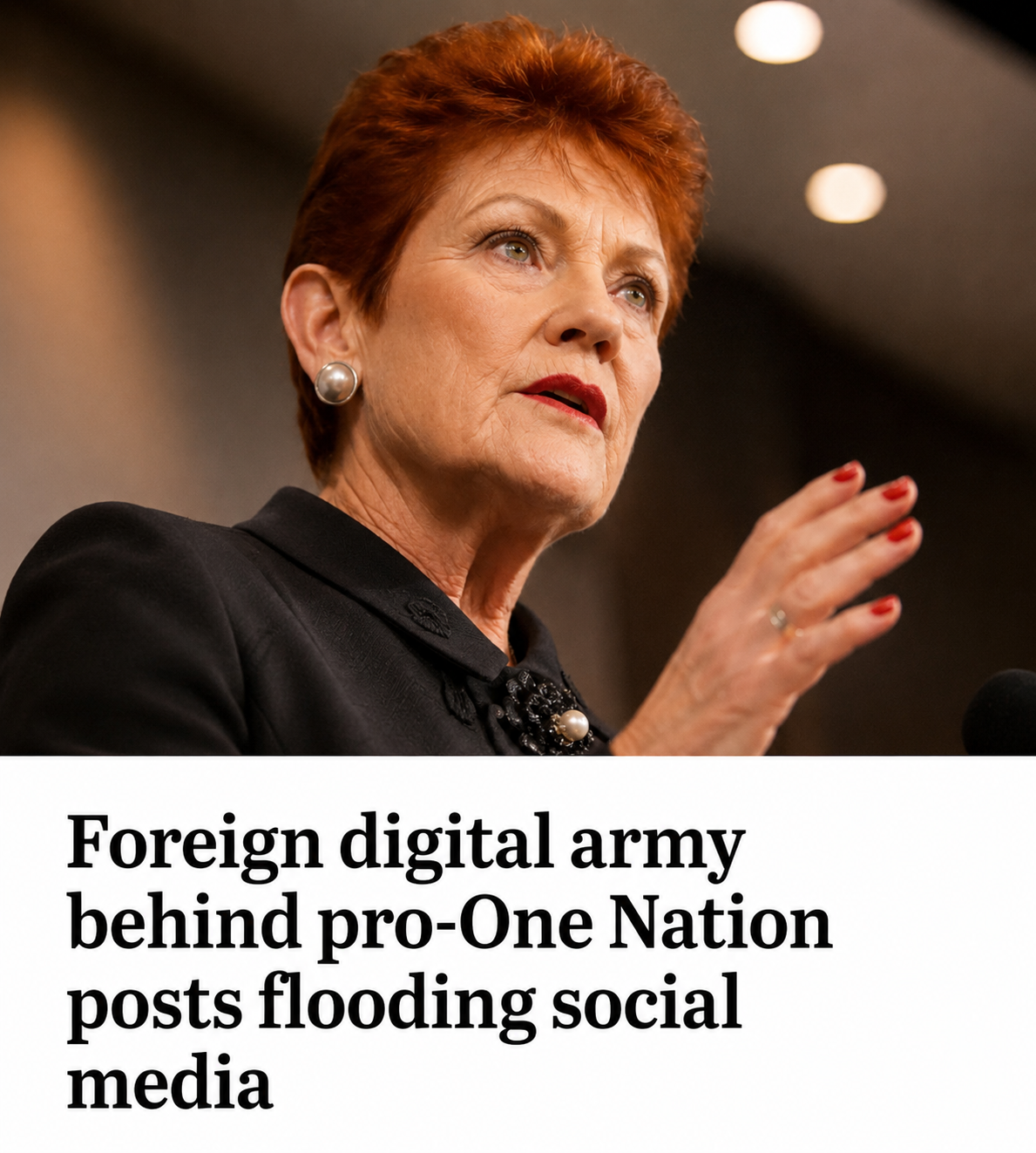
According to researchers quoted in recent media investigations, many of these pages resemble commercial engagement operations rather than traditional political campaign organisations. Their content frequently combines emotionally charged headlines, AI-generated imagery, viral memes and discussion prompts that encourage comments and shares, allowing posts to spread widely through social media algorithms.
Some researchers believe the operators may be motivated primarily by advertising revenue and audience growth rather than political ideology. Popular political topics often generate strong engagement, making them attractive for pages that earn income through platform monetisation programs. Other experts caution that some coordinated influence campaigns may pursue broader political objectives, making each network difficult to assess without further evidence.
The investigations also reported that a significant proportion of the engagement comes from real Australian users, even when the pages themselves appear to be administered from countries outside Australia. That combination has prompted renewed discussion about how overseas digital operators can influence online political conversations without necessarily being directly connected to political parties.
Importantly, the available reporting does not establish that One Nation organised, funded or directed these overseas accounts. The party has publicly denied any involvement in coordinated foreign influence campaigns and has maintained that its online growth reflects genuine public support rather than artificial amplification.
The issue extends beyond a single political party. Digital media specialists have warned for several years that low-cost content production, artificial intelligence tools and automated publishing systems have made it easier for overseas operators to target audiences in other countries. Similar concerns have been raised internationally across elections involving parties from different parts of the political spectrum.
Australia already has laws governing electoral advertising, foreign interference and transparency in political campaigning, while technology companies are expected to remove coordinated inauthentic behaviour and other policy violations from their platforms. Even so, experts argue that identifying the true operators behind anonymous online pages remains challenging, particularly when accounts are managed across multiple countries.
The recent reports have renewed calls for greater transparency around political content distributed on social media. Some analysts have suggested stronger disclosure requirements for administrators of large political pages, while others favour closer cooperation between government agencies, researchers and technology companies to detect coordinated influence operations more quickly.
For Australian voters, the investigations highlight the importance of checking the origin of political content before sharing it. Experts recommend looking for information about page administrators, comparing claims with multiple reputable news organisations and treating highly emotional or sensational posts with caution until their authenticity can be verified.
As digital campaigning continues to evolve, questions about the role of overseas content creators, monetised engagement networks and artificial intelligence are likely to remain part of Australia’s broader discussion about election integrity, online transparency and public trust. Further investigations and platform reviews may provide a clearer picture of how these networks operate and what influence, if any, they have on political opinion.