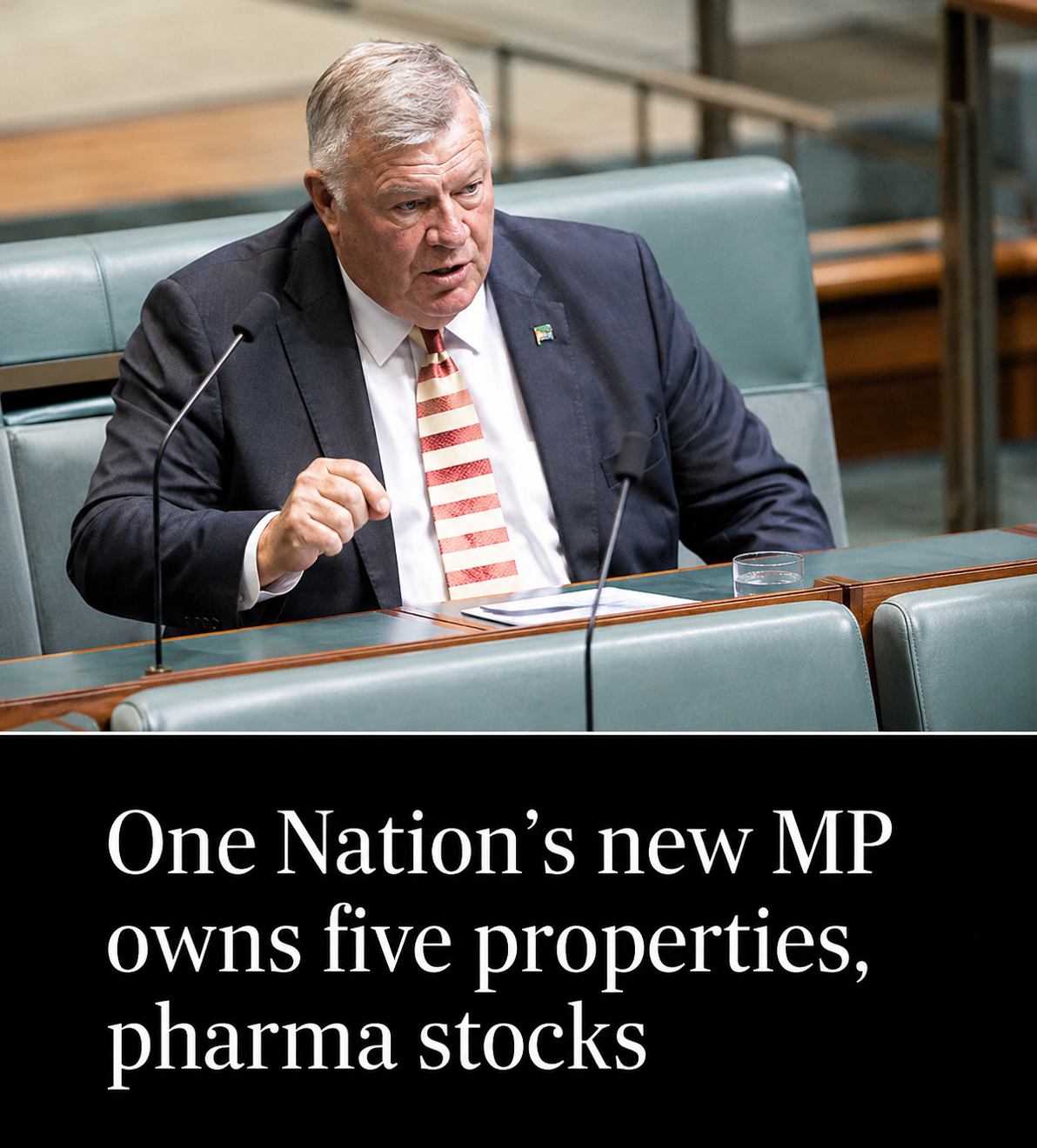
Newly elected One Nation MP David Farley has lodged his first Register of Interests since entering the Australian Parliament, offering the public its first detailed look at his financial holdings under the disclosure rules that apply to all federal parliamentarians.
The register lists a broad range of personal assets, including five investment properties, multiple trading and investment accounts, and shareholdings across several companies listed on the Australian Securities Exchange (ASX). Among those investments are positions in a number of smaller pharmaceutical businesses as well as other listed companies.
Every senator and member of the House of Representatives is required to declare specified financial interests after taking office. The purpose of the register is to promote transparency by allowing the public to see financial interests that could become relevant during parliamentary work.
Importantly, appearing on the register does not imply that a conflict of interest exists or that any rules have been broken. Instead, it provides a public record of assets and investments so they can be considered if parliamentary decisions overlap with a member’s private financial interests.
According to Mr Farley’s disclosure, his assets include five properties together with various investment and trading accounts. His share portfolio includes holdings in several ASX-listed companies, including a number of smaller pharmaceutical firms that are not widely followed by retail investors.
The publication of the register follows Mr Farley’s recent arrival in federal politics after winning the Farrer by-election. His victory marked a significant milestone for One Nation, giving the party representation in the House of Representatives through a directly elected member.
Like other newly elected MPs, Mr Farley was required to complete the parliamentary disclosure process shortly after taking office. The register covers a range of financial interests including real estate, company shareholdings, directorships, trusts, liabilities and other interests that fall within parliamentary reporting requirements.
Australia’s disclosure system is intended to strengthen accountability rather than discourage private investment. Many members of parliament enter public office after careers in business, farming, law, medicine or other professions and often continue to hold investments accumulated before entering politics. Public disclosure allows those interests to be assessed openly whenever relevant issues arise during parliamentary debates or committee work.
Financial registers also provide journalists, researchers and voters with a clearer understanding of the backgrounds of elected representatives. While some declarations attract media attention because of the size or diversity of an individual’s portfolio, the publication of these records is a routine part of parliamentary administration and applies across all major and minor political parties.
Mr Farley’s disclosure is one of many expected from newly elected members following recent changes to the composition of the federal Parliament. As parliamentary business resumes, the register will continue to be updated whenever members acquire new interests or their financial circumstances change, ensuring the information remains available for public scrutiny throughout their time in office.