A nationwide billboard campaign criticising the Albanese government’s investment tax reforms has intensified public debate over whether Australia’s new housing tax policies strike the right balance between improving affordability and encouraging long-term wealth creation.
The campaign, launched by mortgage broker Joseph Daoud, describes the government’s changes as an “ambition tax” and argues they make it more difficult for ordinary Australians to build wealth through investment. Large roadside billboards and digital advertising have appeared in several locations, drawing attention to concerns about proposed changes to capital gains tax concessions and negative gearing.
Supporters of the campaign argue that Australians seeking to invest in property, shares or small businesses should continue to have access to tax settings that reward long-term investment. They contend that reducing those incentives could discourage entrepreneurship, investment and financial planning for future generations.
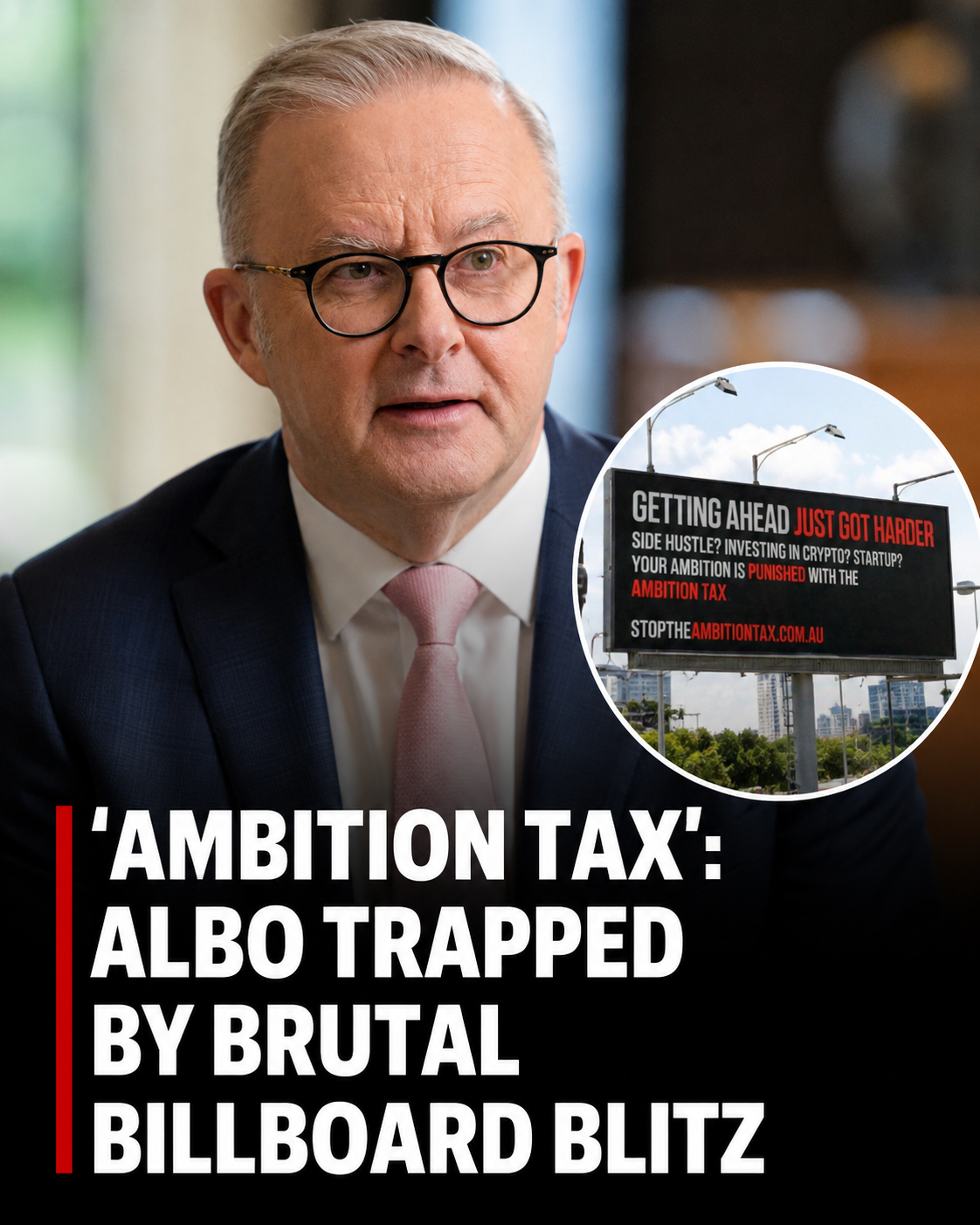
One of the central arguments raised by the campaign concerns the government’s decision to grandfather existing investments. Under Labor’s reforms, Australians who already own investment properties before the new rules take effect will retain existing tax concessions, while different rules will apply to many future investments. Critics argue this creates two groups of investors operating under different tax systems and say it limits opportunities for younger Australians hoping to build wealth in the future.
The campaign also highlights Anthony Albanese’s own property investments, arguing that the Prime Minister benefited from tax settings that future investors may no longer receive. Campaign organisers claim this creates an appearance of unequal treatment because current asset owners continue to benefit from concessions that will become less generous for new entrants into the market. Those claims have become one of the most widely discussed aspects of the advertising campaign.
The Albanese government rejects that criticism. Ministers argue the reforms are designed to redirect investment toward newly constructed housing rather than existing homes, with the objective of increasing housing supply and improving affordability for first-home buyers. They also maintain that grandfathering is a common feature of major tax reforms because it provides certainty for people who made investment decisions under previous rules.
The proposed changes represent one of the most significant adjustments to Australia’s investment tax system in decades. Among the key reforms are restrictions on negative gearing for future purchases of established residential properties and changes to the way capital gains are taxed on newly acquired assets. Existing investments are generally protected from the new arrangements through transitional provisions.
Business organisations, property industry groups and investment specialists remain divided over the likely consequences. Some argue that reducing tax incentives could discourage private investment, reduce rental supply and weaken confidence in long-term investment decisions. Others believe the reforms will encourage capital to flow into new housing construction while reducing investor competition for existing homes, making it easier for owner-occupiers to enter the market.
Economists likewise remain divided over the likely long-term effects. Some research suggests changes to investment tax concessions may place downward pressure on prices for existing homes while encouraging construction activity. Other analysts caution that the ultimate impact will depend on housing supply, interest rates, population growth, investor behaviour and broader economic conditions rather than taxation alone.
Politically, the billboard campaign demonstrates how tax policy has become one of the defining issues of the current parliamentary term. Rather than remaining confined to parliamentary debate, the discussion has expanded into public advertising campaigns, community meetings and social media, where both supporters and opponents continue to argue over the long-term consequences of the reforms.
For voters, the debate extends beyond the technical details of tax law. It raises broader questions about how governments should balance housing affordability with incentives for investment, whether tax concessions should be preserved or redesigned, and how policy changes affect different generations of Australians. Those questions are likely to remain central to public discussion as the reforms move from legislation toward implementation.
Whether the government’s approach ultimately achieves its stated objectives will become clearer over time as the new tax framework takes effect. Until then, campaigns such as the current billboard initiative are expected to remain part of a wider national conversation about aspiration, housing, investment and the role tax policy should play in shaping Australia’s economic future.






