A discussion over specialist banking products has moved into Australia’s political arena after One Nation criticised the National Australia Bank’s Islamic finance offering, arguing that the products raise broader questions about fairness, banking policy and the way financial institutions serve different customer groups.
The debate centres on NAB’s Sharia-compliant finance products, which are structured to meet Islamic financial principles. Unlike conventional lending, these arrangements avoid charging or paying interest in the traditional sense and instead use alternative contractual structures that comply with recognised Islamic finance standards while aiming to deliver a similar commercial outcome. NAB says the products are available to eligible business customers regardless of their religion.
One Nation has argued that the bank should explain why specialised financial products are being offered and whether they are consistent with the principle of providing equal services to all Australians. Party representatives have also questioned whether major financial institutions should develop products designed around specific religious principles.
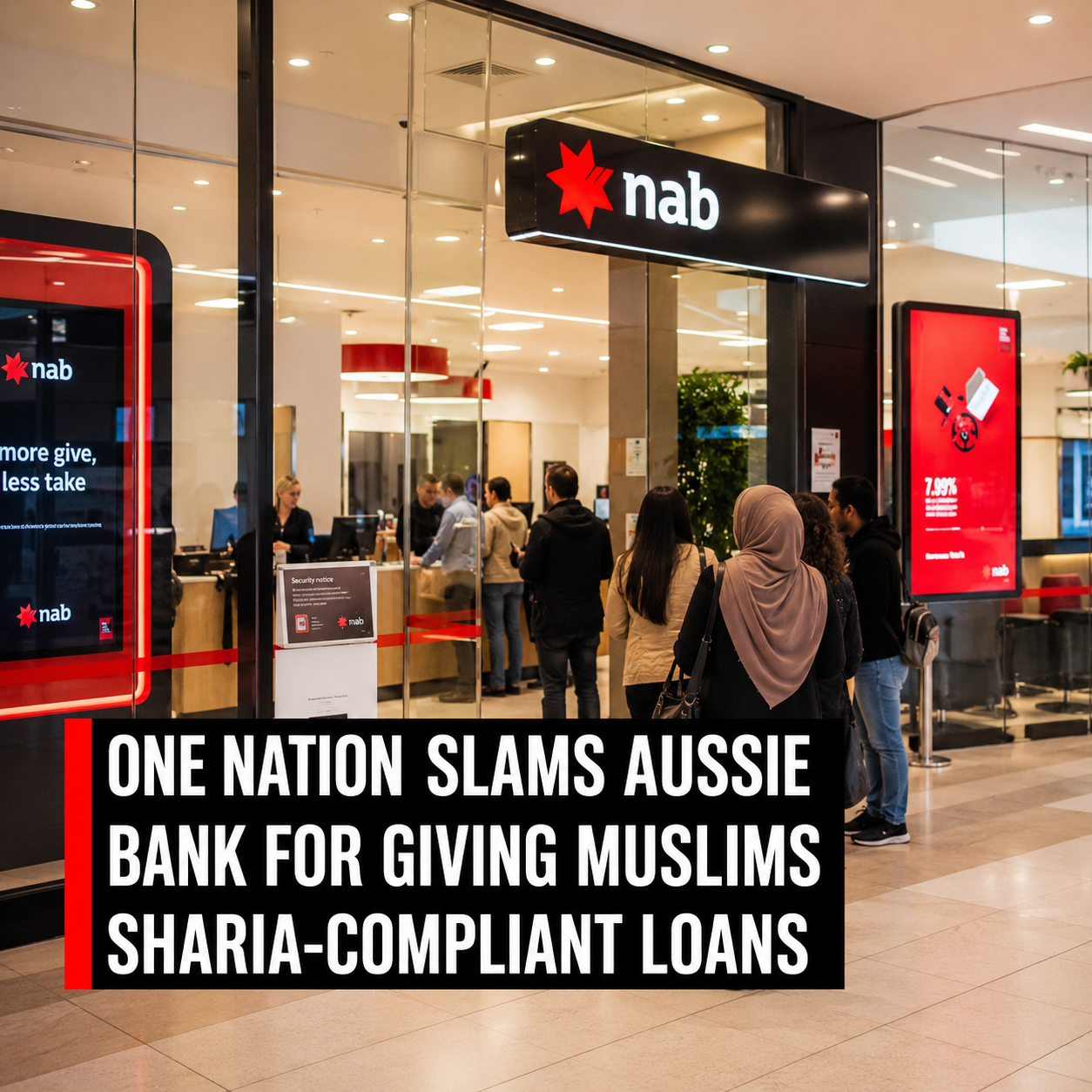
NAB, however, describes Islamic finance as another commercial banking option designed to meet the needs of businesses seeking financing that complies with Islamic law. According to the bank, the economic value of these products is intended to be broadly comparable with conventional finance, although the legal structure differs because ownership, leasing or partnership arrangements replace traditional interest-bearing loans. The bank also notes that financing is assessed using the same commercial lending standards applied to other business customers.
Islamic finance has existed internationally for decades and represents a significant segment of the global financial system. In Australia, however, the market remains relatively small compared with conventional banking. The growth of the country’s Muslim population, together with increasing demand from businesses involved in international trade and investment, has encouraged several financial institutions to explore products designed for customers seeking Sharia-compliant alternatives.
Supporters of Islamic finance argue that the products simply provide additional consumer choice within Australia’s existing financial system. They note that banks already offer a wide variety of specialised products designed for different commercial sectors, industries and customer needs. From this perspective, Sharia-compliant finance represents another optional financial structure rather than a separate regulatory system.
Critics take a different position. Some argue that banking products developed around religious principles risk creating unnecessary distinctions within a financial system that is otherwise intended to operate under a common legal framework. Others question whether consumers fully understand how Islamic finance products differ from conventional lending and whether greater transparency would improve public confidence.
Financial experts generally point out that Islamic finance remains subject to Australian banking regulation, consumer protection laws and prudential supervision in the same way as other financial products. While the contractual arrangements differ, participating institutions must still comply with Australian legal and regulatory requirements.
The discussion has also highlighted the broader challenge facing Australia’s banking sector as it serves an increasingly diverse customer base. Large financial institutions regularly develop products tailored to different industries, communities and commercial activities, raising ongoing questions about where product innovation ends and preferential treatment begins. Those questions are not unique to Islamic finance and have emerged in other areas of specialised banking over many years.
Politically, the issue illustrates how financial services can become part of wider debates about national identity, multiculturalism and public policy. Supporters of One Nation argue the discussion is about equal treatment and transparency rather than religion itself, while critics of the party contend that specialised financial products are a commercial response to customer demand within Australia’s existing legal framework.
Whether the current debate results in policy changes remains uncertain. For now, NAB has continued to offer its Islamic finance products under its existing business banking program, while political discussion is likely to continue over the role specialised financial products should play within Australia’s banking system. As with many issues involving finance and public policy, the debate ultimately extends beyond a single product to broader questions about consumer choice, market demand, regulatory oversight and the evolving needs of Australia’s diverse business community.






