A new housing project for homeless veterans in Perth has attracted national attention after mining executive Gina Rinehart purchased a beachside apartment complex and named it in honour of former SAS soldier Ben Roberts-Smith.
The property, located in the suburb of Scarborough, was acquired for approximately $8.75 million and converted into accommodation for former Australian Defence Force personnel experiencing homelessness or housing insecurity. It forms part of Rinehart’s previously announced $200 million commitment to expand accommodation for veterans across Australia.
While the project itself has been welcomed by organisations working with veterans, the decision to name the complex after Roberts-Smith has generated significant public discussion because of his ongoing legal proceedings.
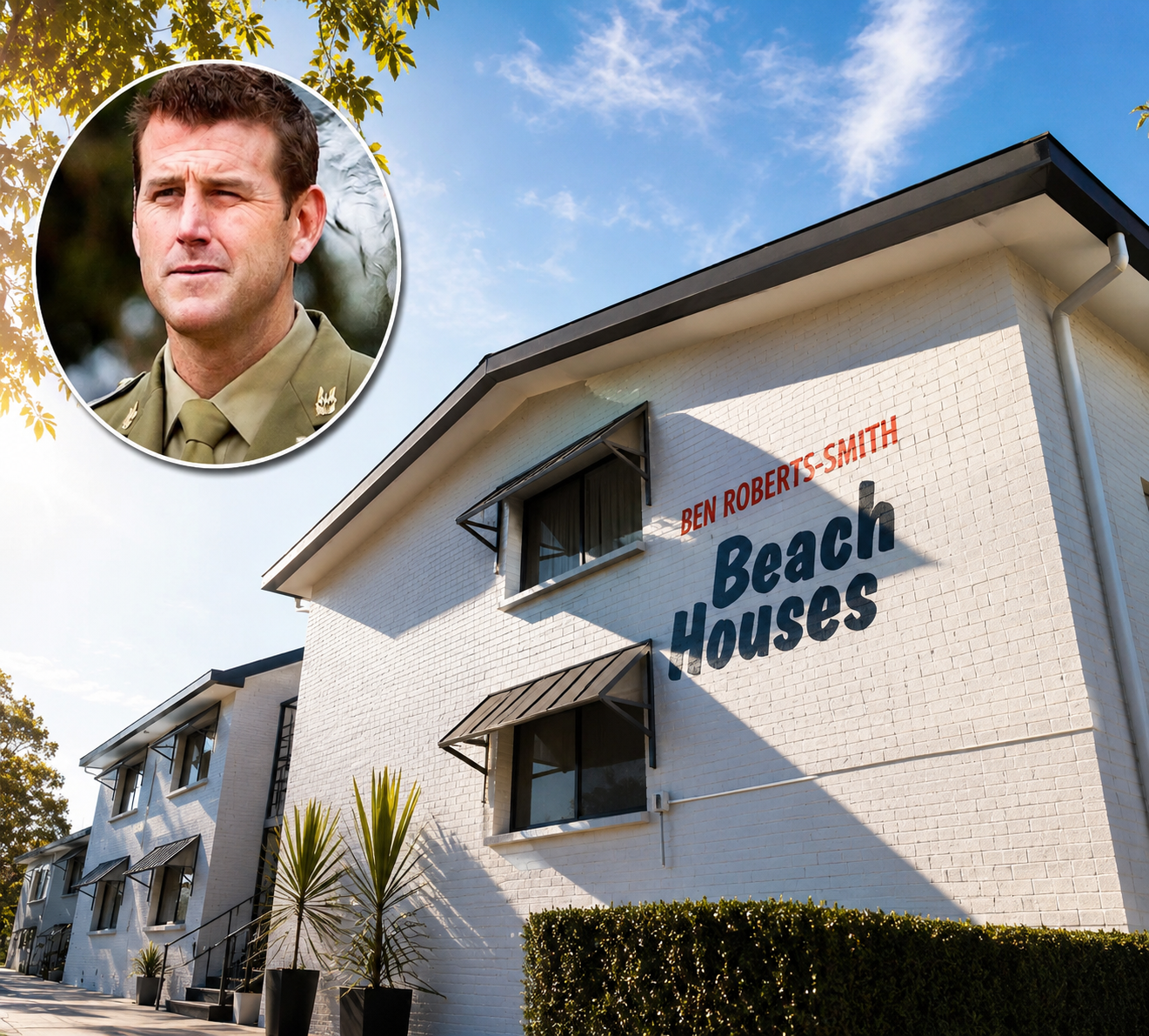
The accommodation, now known as Ben Roberts-Smith Beach Houses, provides both short-term and longer-term housing for veterans and is managed by Veteran Housing Australia. The first residents have already moved into the refurbished apartments, with additional veteran housing projects planned in other locations.
Rinehart said the project was created to address veteran homelessness, arguing that practical assistance is needed for former service personnel who continue to face financial hardship, mental health challenges and difficulties transitioning to civilian life after leaving the Australian Defence Force. She has also urged governments to make greater use of unused or underutilised defence accommodation to support veterans in need.
Veteran Housing Australia estimates that thousands of former service members across the country experience homelessness or are at risk of losing stable accommodation each year. Housing providers say secure accommodation often becomes the first step before veterans can access health care, employment assistance and other long-term support services.
Much of the public attention, however, has focused on the name chosen for the Scarborough complex.
Ben Roberts-Smith is Australia’s most decorated living soldier and received the Victoria Cross for his service in Afghanistan. He is also currently facing criminal charges alleging the unlawful killing of Afghan civilians during military deployments between 2009 and 2012. He has consistently denied the allegations, has not entered guilty pleas and remains on bail while the criminal proceedings continue. Those charges have not been determined by a jury.
The naming decision therefore represents two separate issues that have become intertwined in public debate. One concerns the veteran housing initiative itself and whether more accommodation is needed for former service personnel. The other concerns whether it is appropriate to publicly honour someone whose criminal case remains before the courts.
Supporters of Rinehart’s decision argue that Roberts-Smith’s military service and his Victoria Cross remain significant parts of Australia’s military history, and they view the housing project as recognition of service to veterans more broadly. Others believe public recognition should be approached cautiously while serious criminal allegations remain unresolved.
The discussion also highlights the different standards that apply in Australia’s legal system. Roberts-Smith previously lost a high-profile civil defamation case, in which a Federal Court found that newspaper allegations were substantially true on the civil standard of proof. The current criminal prosecution is separate and must be determined under the much higher criminal standard of proof, requiring guilt to be established beyond reasonable doubt before any conviction could occur.
Beyond the debate over the building’s name, the project has renewed attention on veteran homelessness itself. Advocacy groups have long argued that former service personnel can face unique challenges after leaving military life, including physical injuries, post-service trauma, relationship breakdowns and financial instability. These issues can increase the risk of housing insecurity without appropriate support networks.
Rinehart has indicated that the Scarborough complex is only the first stage of a broader national program. Additional accommodation projects are expected to open in Western Australia and other states as further properties are acquired and refurbished for veteran use.
As the legal proceedings involving Roberts-Smith continue through the courts, discussion surrounding the housing project is likely to remain divided. For some Australians, the focus will remain on the significance of the name attached to the building. For others, the more enduring question is whether initiatives like this can help address the ongoing shortage of secure housing for veterans who need support after their military service has ended.






