A new national poll has triggered one of the biggest political conversations Australia has seen in years.
For decades, Pauline Hanson has been viewed as a political outsider.
Now a major survey suggests she may be something very different.
According to the latest Resolve Political Monitor, Hanson has overtaken Prime Minister Anthony Albanese as Australia’s preferred prime minister.
The result has left political observers asking a question that once seemed almost impossible.
Do Australians genuinely want Pauline Hanson leading the nation?
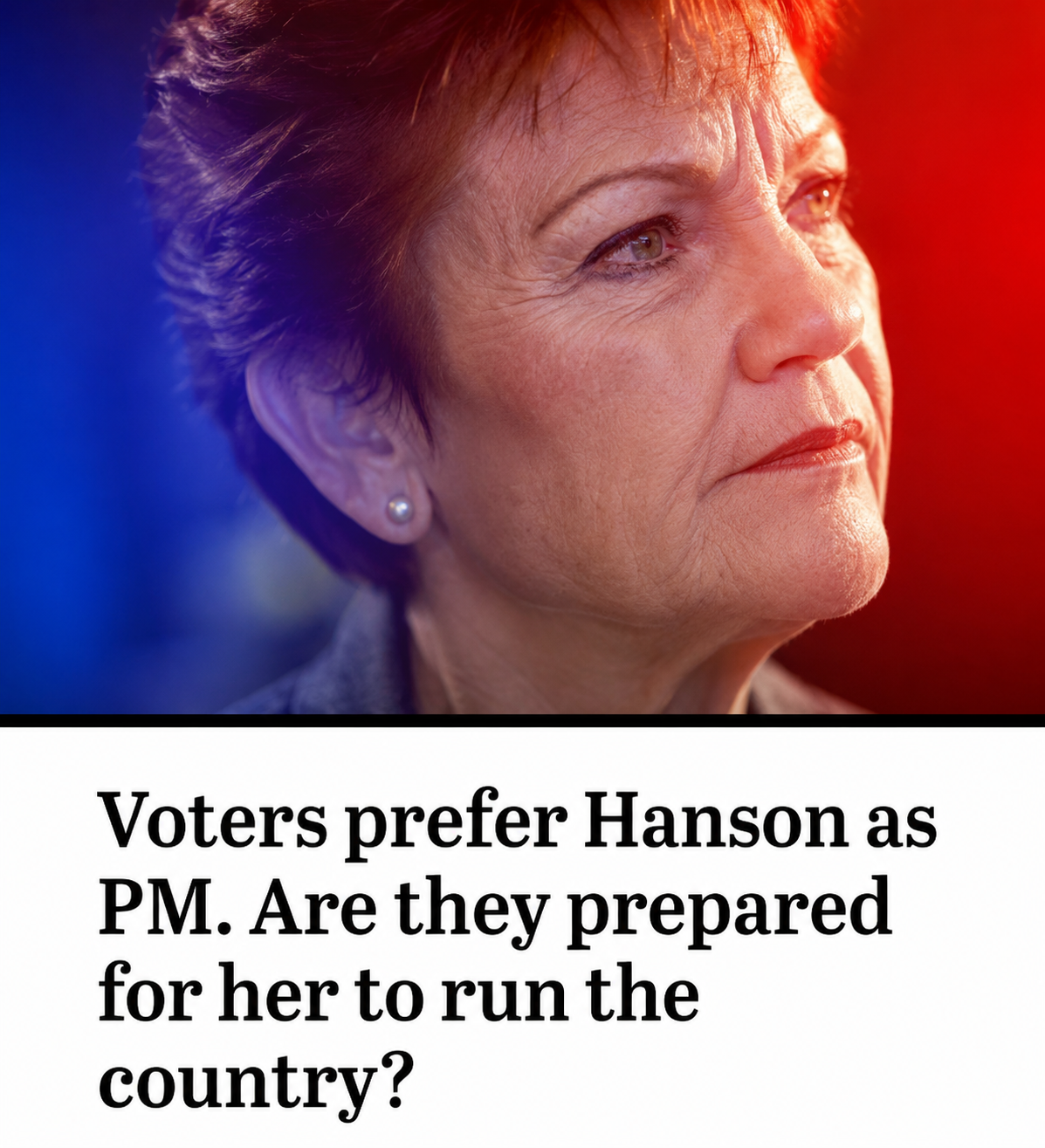
The poll found Hanson recording stronger support than Albanese in the preferred prime minister category while One Nation surged to the top of the primary vote standings in the same survey.
The figures represent one of the most dramatic shifts in Australian political sentiment in recent memory.
For many voters, the numbers are less about Pauline Hanson herself and more about what they say regarding public frustration.
Australians have spent years dealing with rising housing costs, increasing energy bills, higher grocery prices and growing concerns about migration levels.
Trust in major political parties has also weakened.
As dissatisfaction has grown, support for alternatives has increased.
One Nation appears to be benefiting from that mood.
The party has positioned itself as an anti-establishment force willing to challenge policies on immigration, housing, energy and government spending.
Supporters argue Hanson speaks more directly than traditional politicians and is willing to address issues they believe others avoid.
Critics argue the party relies heavily on anger and protest politics rather than practical governing solutions.
The most striking aspect of the poll is not simply that One Nation is gaining support.
It is that Hanson is now being considered by some voters as a potential national leader rather than merely a protest figure.
That represents a major change in how sections of the electorate view her political role.
For years, discussions about Hanson focused on her influence over debates.
Now they increasingly focus on her ability to shape outcomes.
The result has also intensified scrutiny of Australia’s major parties.
Labor has spent recent weeks responding to One Nation’s rise and attempting to counter its appeal among working-class voters.
At the same time, the Coalition faces pressure because many analysts believe One Nation is drawing support from voters who traditionally backed conservative parties.
Political analysts caution that polling surges do not automatically translate into election victories.
Australia’s preferential voting system can produce very different outcomes from primary vote figures alone.
Winning government also requires candidates, resources and support across dozens of electorates nationwide.
Those remain significant hurdles for any minor party.
Nevertheless, the numbers are difficult to ignore.
They suggest a growing number of Australians are prepared to look beyond the traditional Labor-versus-Coalition contest.
That shift may ultimately prove more important than any single poll result.
The trend appears strongest among voters who feel economically squeezed.
Recent analysis has shown growing support for One Nation among Australians frustrated by declining affordability, housing pressures and concerns about their financial future.
For those voters, backing Hanson may be less about ideology and more about sending a message.
They want the political system to understand that patience is running out.
Whether that message translates into long-term support remains unclear.
Polls can change quickly.
Campaigns matter.
Policies matter.
Leadership performances matter.
Yet the symbolism of the latest survey is undeniable.
A politician who spent much of her career on the political fringe is now being measured against a sitting prime minister and, in some polling, coming out ahead.
That alone represents a remarkable political moment.
It also helps explain why the conversation has moved beyond One Nation’s traditional support base.
The question is no longer whether Pauline Hanson can attract attention.
She has done that for decades.
The question now being asked is whether a growing number of Australians are prepared to imagine her exercising real national power.
That is the debate sparked by the latest Resolve poll.
And regardless of what happens next, it is a debate that neither Labor nor the Coalition can afford to ignore.