Australian taxpayers are set to fund a new round of grants to help climate organisations and Aboriginal groups travel to this year’s United Nations climate conference in Turkey, after the federal government quietly announced a $650,000 funding program that has quickly become the focus of political criticism.
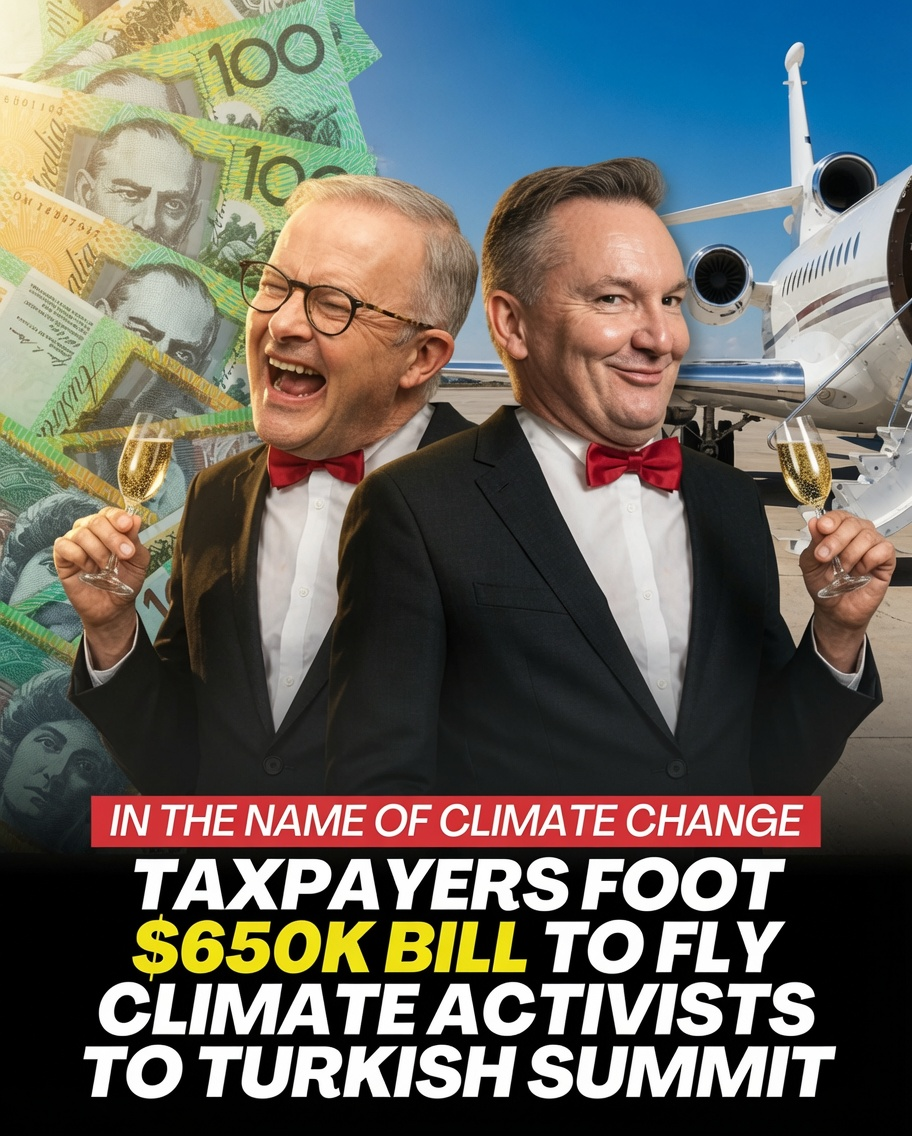
Under the scheme, eligible Australian civil society organisations can apply for grants of up to $20,000 to help cover the costs of attending the UN climate negotiations, commonly known as the Conference of the Parties, or COP. The funding is intended to assist delegates with international travel, accommodation, registration and other expenses associated with participating in the annual summit.
The announcement attracted immediate attention after critics questioned whether taxpayers should be funding overseas travel at a time when many Australian households continue to grapple with elevated living costs, high mortgage repayments and persistent inflationary pressures.
Opposition figures and conservative commentators have argued that the grants represent misplaced priorities, contending the government should focus on easing domestic financial pressures rather than subsidising attendance at an international climate conference.
Particular attention has been directed towards the program’s assessment criteria, which identify Aboriginal and Torres Strait Islander organisations among the priority groups eligible for support. The funding guidelines are designed to encourage participation from a broad range of Australian civil society organisations, including First Nations representatives, youth organisations, environmental groups, business associations and other non-government stakeholders.
Critics have characterised the grants as an unnecessary use of public money, arguing that organisations wishing to advocate for climate action should finance their own attendance rather than relying on government assistance.
The debate has unfolded against the backdrop of Australia’s ongoing cost-of-living challenges. Although inflation has eased considerably from its post-pandemic peak, many Australians continue to experience pressure from higher food prices, housing costs, insurance premiums and energy bills.
Those economic pressures have become one of the defining political issues facing the Albanese government, with the Coalition frequently accusing Labor of failing to sufficiently address household budgets while continuing to increase government expenditure across multiple policy areas.
The new grant program has therefore become another flashpoint in the broader political argument over public spending, fiscal discipline and the government’s climate agenda.
According to the program details, the grants are intended to improve Australian civil society participation in the international climate negotiations. Governments routinely attend COP meetings alongside representatives from business, scientific institutions, environmental organisations, Indigenous communities and other non-government groups.
The annual UN climate conference serves as the primary forum for countries negotiating global responses to climate change under the United Nations Framework Convention on Climate Change. Delegates discuss emissions reduction targets, climate finance, adaptation measures and international cooperation on environmental policy.
Australia has traditionally sent government ministers, departmental officials and technical experts to the conference, while non-government organisations frequently attend independently or with external funding from philanthropic bodies, universities or industry groups.
The federal government’s grant scheme is designed to broaden participation by reducing financial barriers that might otherwise prevent smaller organisations from attending.
Supporters of similar programs argue that Indigenous organisations can provide valuable perspectives on land management, traditional ecological knowledge and the impacts climate change has on remote communities.
Environmental organisations likewise contend that participation by civil society contributes to transparency and allows Australian stakeholders to engage directly with international policy discussions.
However, opponents argue there is little measurable benefit for ordinary taxpayers from subsidising overseas attendance, particularly when the conferences often involve thousands of delegates and produce outcomes negotiated primarily between national governments.
The criticism also reflects wider scepticism among some sections of the Australian community regarding the effectiveness of the annual climate summits. While supporters view COP meetings as essential mechanisms for international cooperation, critics question whether repeated conferences deliver sufficient practical outcomes to justify their considerable costs.
The Albanese government has made climate policy one of its central priorities since taking office. It legislated Australia’s strengthened national emissions reduction target, expanded investment in renewable energy and committed significant funding towards clean energy industries, transmission infrastructure and low-emissions technologies.
Labor has consistently argued that stronger climate action is necessary not only to reduce emissions but also to improve Australia’s long-term economic competitiveness as global markets increasingly transition towards cleaner forms of energy.
The government has also sought to rebuild Australia’s international reputation on climate policy after years of political division over emissions reduction and energy policy.
Participation in international climate negotiations has therefore become an important component of Australia’s broader diplomatic strategy, with ministers regularly emphasising the country’s commitment to meeting international climate obligations.
The latest funding announcement comes as Australia continues pursuing a bid to host a future UN climate conference in partnership with Pacific nations. Government ministers have argued that hosting a future COP meeting would strengthen Australia’s regional leadership and showcase domestic climate initiatives.
That proposal has itself generated debate, with supporters highlighting diplomatic and economic opportunities while critics question the potential costs of staging one of the world’s largest annual international conferences.
For Indigenous organisations, participation at COP events has increasingly become an avenue to promote issues including cultural heritage protection, traditional land management practices and the disproportionate impacts climate change can have on remote communities.
Australian First Nations representatives have attended previous climate conferences alongside Indigenous delegates from around the world, contributing to discussions on adaptation, biodiversity conservation and sustainable land stewardship.
Environmental organisations also use the annual meetings to engage with international networks, monitor negotiations and advocate for stronger climate commitments from participating governments.
Business groups, industry representatives, academic institutions and research organisations likewise attend many COP conferences, reflecting the broad range of interests involved in international climate policy.
Although governments conduct the formal negotiations, the conferences attract tens of thousands of delegates from across civil society each year, making them among the largest recurring diplomatic gatherings in the world.
The political controversy surrounding the new grants therefore extends beyond the relatively modest size of the funding itself. Rather, it reflects competing views over the appropriate role of government in supporting advocacy groups and Australia’s broader climate engagement.
Those supporting the grants argue that ensuring diverse Australian voices are represented internationally strengthens policy development and reflects Australia’s multicultural and democratic society.
Opponents counter that taxpayer funding should instead be directed towards domestic priorities, particularly while many households continue adjusting to higher living expenses and slower economic growth.
The debate also illustrates the continuing political sensitivity surrounding climate policy in Australia, where questions about emissions reduction frequently intersect with broader discussions about government spending, taxation and economic management.
While the total grant pool of $650,000 represents only a tiny fraction of overall Commonwealth expenditure, the announcement has become politically significant because it touches on both climate policy and cost-of-living concerns—two issues that remain among the highest priorities for Australian voters.
As applications open under the scheme, the government is likely to continue defending the program as an investment in inclusive participation and international engagement, while critics are expected to maintain pressure over whether overseas travel for advocacy organisations represents an appropriate use of public funds.
The issue is expected to remain part of the broader political debate over Labor’s fiscal priorities as Australia continues balancing economic pressures at home with its international commitments on climate policy.