An unauthorised political art installation erected outside Victoria’s Parliament House has prompted a police investigation and renewed debate about the boundaries of political protest, public art and freedom of expression.
The installation appeared in Melbourne’s Gordon Reserve early on Friday before being removed by City of Melbourne workers a short time later. It depicted Australian Prime Minister Anthony Albanese and former US President Donald Trump in a provocative and satirical scene intended to criticise contemporary political leadership.
An activist collective known as The New Radicals claimed responsibility for the work, describing it as a political statement rather than an act of vandalism. The group has previously staged several unauthorised public installations targeting prominent Australian political figures.
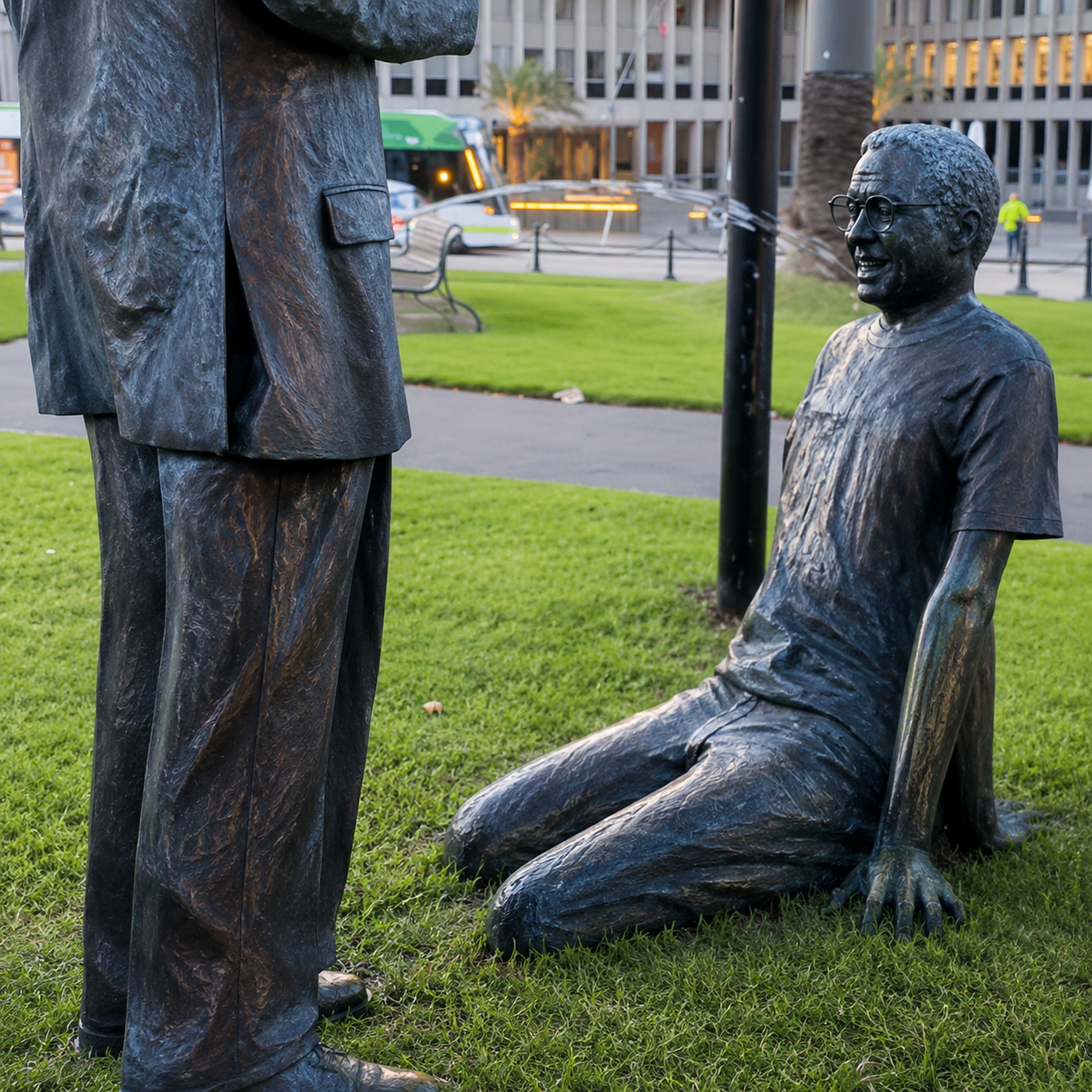
City of Melbourne officials said the structure had been installed without approval on public land and was removed after council officers became aware of it. The council also confirmed it was reviewing security camera footage and would provide relevant material to Victoria Police if requested as part of the investigation.
Victoria Police have indicated they are examining whether any offences were committed in connection with the installation. At this stage, authorities have not announced any charges or identified individuals involved in placing the structure at the site.
The incident has generated significant public attention because it combines political commentary with deliberately provocative imagery. Supporters of the installation have characterised it as satire intended to criticise political leadership and Australia’s relationship with the United States, while others have argued that its explicit nature distracted from any underlying political message.
Australia has a long tradition of political satire expressed through cartoons, public art, theatre and protest. However, works installed in public places without permission can raise separate legal issues relating to the use of public property, public amenity and local council regulations, regardless of the political message they convey.
Legal experts note that freedom of political communication is recognised under Australia’s constitutional framework, but it does not automatically exempt individuals from laws governing trespass, property damage or unauthorised use of public spaces. Whether any offences occurred in this case will depend on the outcome of the police investigation.
The installation also reflects a broader trend of activist groups using highly visual public displays to attract media attention and encourage discussion on political issues. Such tactics often generate extensive online debate, even when the works themselves remain on display only briefly.
For now, the artwork has been removed and the investigation remains ongoing. While the incident is likely to continue attracting political commentary, any legal consequences will depend on the findings of authorities once inquiries into the unauthorised installation have been completed.